The Most Expensive Dresses Ever Sold: Real Prices, Real Stories
Every figure in this guide is sourced to a specific verified auction transaction. No promotional valuations, no invented frameworks. Just what these dresses actually sold for, who bought them, and why the prices keep going where they go.
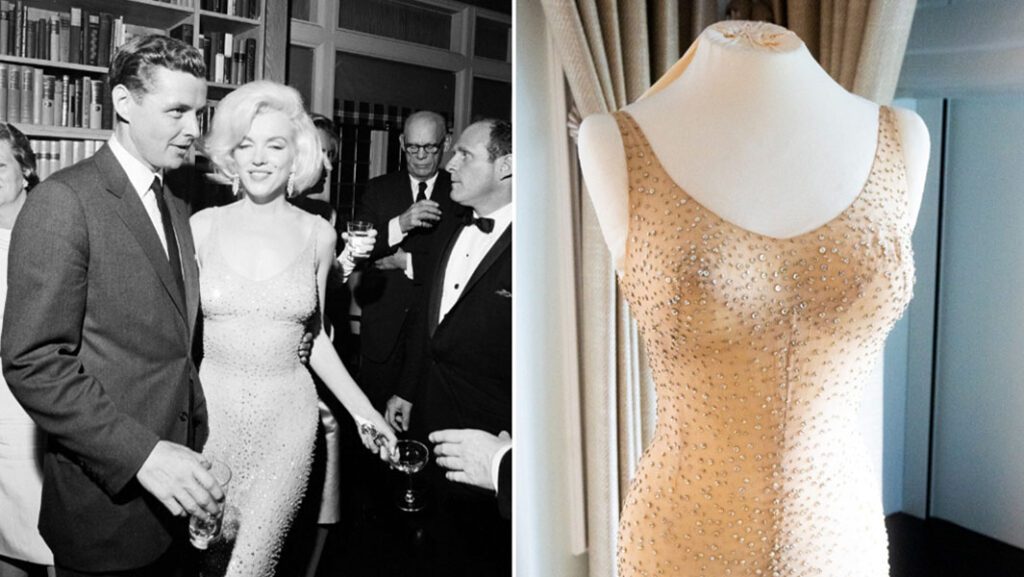
Suggested: Marilyn Monroe’s Happy Birthday dress on display at Julien’s, or Ripley’s museum exhibit
Alt: “Marilyn Monroe’s flesh-colored crystal-studded Happy Birthday Mr. President gown displayed in a glass case at Julien’s Auctions, Los Angeles, 2016”
[Editor: official Julien’s Auctions press images available for licensing. Insert hero image here. Alt text pre-filled above.]
Here’s what the original article got wrong: the Jennifer Lawrence Oscars dress doesn’t belong on this list. It was never sold at auction. The Nightingale of Kuala Lumpur’s $30 million figure was a promotional valuation for a competition display piece, not a sale. And the Queen Letizia wedding dress “value” is an estimate — no transaction ever occurred. Including those figures alongside verified auction records is how you undermine everything that’s actually interesting about this space.
What’s actually interesting: Marilyn Monroe’s Happy Birthday gown sold for $4.8 million in 2016 to Ripley’s Believe It or Not, and it’s now on permanent museum display. Before that, it sold in 1999 for $1.267 million — so within 17 years, the price nearly quadrupled. The original purchase price was $1,440. That trajectory is a real story. It doesn’t need embellishment.
The record that still stands
The most expensive dress ever sold at public auction is Marilyn Monroe’s “Happy Birthday, Mr. President” gown — the flesh-colored, crystal-studded Jean Louis creation she wore on May 19, 1962, at Madison Square Garden to serenade President Kennedy at his 45th birthday gala. Ripley’s Believe It or Not bought it at Julien’s Auctions in Beverly Hills in November 2016 for exactly $4.8 million. With fees, the total exceeded $5 million.
The dress had been expected to fetch $2–3 million. It beat the estimate by 60%. It also beat the previous record — Monroe’s own white pleated gown from The Seven Year Itch, which had sold for $4.6 million just five years earlier. Two of the three most expensive dresses ever auctioned are the same person’s.
That’s not coincidence. Marilyn Monroe is the only figure in fashion auction history who functions as her own sub-market. And the Happy Birthday gown specifically sits at the intersection of Hollywood, American political history, and scandal in a way that nothing else ever has or likely will. “There is only one Happy Birthday dress,” as Julien’s CEO Darren Julien put it after the sale. She died less than three months after wearing it.
“The dress was so tight Monroe had to be sewn into it backstage. She wore nothing underneath. The audience gasped when she took off her fur coat. Three months later, she was dead.”
Complete verified auction records April 2026
Every price below is sourced to a specific named auction with a verifiable result. Promotional valuations and estimated values are excluded. All amounts in USD.
| Dress | Sale price | Year | Auction house | Buyer (if known) |
|---|---|---|---|---|
| Marilyn Monroe — “Happy Birthday, Mr. President” gown World record | $4,800,000 | 2016 | Julien’s, Beverly Hills | Ripley’s Believe It or Not |
| Marilyn Monroe — white pleated gown, The Seven Year Itch | $4,600,000 | 2011 | Profiles in History | Anonymous |
| Audrey Hepburn — black Givenchy gown, Breakfast at Tiffany’s | $923,187 (£467,200) | 2006 | Christie’s, London | Anonymous (European buyer) |
| Judy Garland — blue gingham Dorothy dress, The Wizard of Oz | $1,560,000 | 2015 | Bonhams, New York | Anonymous |
| Princess Diana — Jacques Azagury black/blue evening gown (1985) | $1,148,080 | 2023 | Julien’s, Hollywood | Anonymous (proceeds to NY Historical Society) |
| Princess Diana — Victor Edelstein violet evening gown (1991) | $604,800 | 2023 | Sotheby’s | Anonymous |
| Princess Diana — Bellville Sassoon “Caring” day dress (1985) | $400,000 | 2025 | Auction, Beverly Hills | Renae Plant (virtual Princess Diana Museum) |
| Marilyn Monroe — “Happy Birthday” gown (first sale) | $1,267,500 | 1999 | Christie’s, New York | Martin Zweig (later estate) |
Sources: PBS NewsHour; Robb Report / Christie’s; NPR; Playbill / Bonhams. All prices include buyer’s premium.
Six dresses worth understanding closely
Marilyn Monroe’s Happy Birthday gown — the defining object
Marilyn Monroe — Happy Birthday, Mr. President (Jean Louis, 1962)
Jean Louis designed the dress in 1962 at Monroe’s commission. It’s flesh-colored, sheer, and covered with 2,500 hand-stitched rhinestone crystals. It was so tight fitting that Monroe had to be sewn into it minutes before walking on stage — and wore nothing underneath. She peeled off a white ermine fur coat to reveal it, and the audience at Madison Square Garden gasped audibly. Fifteen thousand people were in that room.
The dress first sold at Christie’s in 1999 for $1.267 million, establishing the then-world record for any dress. In 2016, Ripley’s beat the $3 million pre-auction estimate by 60% to acquire it at $4.8 million. It now lives in a climate-controlled display at Ripley’s. The increase from its original 1962 purchase price of $1,440 to $4.8 million represents a 333,233% gain over 54 years. That number is real.
Audrey Hepburn’s Givenchy — charity, surprise, and a world record at the time
Audrey Hepburn — black Givenchy, Breakfast at Tiffany’s (1961)
Hubert de Givenchy donated this dress — one of three versions made for Hepburn’s role as Holly Golightly — to author Dominic Lapierre and his wife to raise funds for the City of Joy Aid charity, which helps children in Calcutta. It was expected to fetch £50,000–£70,000. It sold at Christie’s London in December 2006 for £467,200 (~$923,187) — nearly seven times the high estimate. An anonymous European telephone bidder took it.
This was, at the time, the world record for a movie dress. Givenchy gave the dress away specifically to fund a school. The anonymous buyer paid almost a million dollars to help build one. That’s a detail most coverage skips past. Don’t.
Alt: “Audrey Hepburn wearing the black Givenchy gown as Holly Golightly in the opening scene of Breakfast at Tiffany’s, 1961”
[Editor: Paramount Pictures/Getty Images for still from film. Check current licensing for editorial use. Pre-filled alt text above.]
Judy Garland’s Dorothy dress — the one that keeps escaping
Judy Garland — blue gingham Dorothy dress, The Wizard of Oz (1939)
Approximately ten Dorothy dresses were made for the 1939 film. Four blue-and-white gingham versions are known to survive. The one that fetched $1.56 million at Bonhams in November 2015 was one of only two complete with the original white blouse.
A separate Dorothy dress — the one that was lost for decades and found in a shoebox on top of a faculty mailbox during renovations at Catholic University of America in 2021 — was scheduled to sell at Bonhams in May 2022 for an estimated $800,000–$1.2 million. A judge halted the sale before the hammer fell due to a disputed ownership claim. The dress remains in legal limbo. It has a handwritten “JUDY GARLAND 4223” label inside. The story around it is stranger than the film.
Why these prices happen: the real mechanism
The original article listed “rare materials” and “diamonds” as the primary price drivers. That’s partly right for bespoke gowns. But it completely misses why auction prices for worn garments hit seven figures.
The mechanism is simpler and stranger than material value. It’s about physical connection to irreplaceable moments. The Happy Birthday dress has over 2,500 crystals, yes — but the crystals aren’t why it sold for $4.8 million. It sold for $4.8 million because Marilyn Monroe wore it on a specific night in 1962 in front of 15,000 people to sing a birthday song to the President, and three months later she was dead. That context cannot be recreated. The dress is a physical object that was present at a moment in American history. The price reflects that.
The Givenchy dress from Breakfast at Tiffany’s isn’t even the version Hepburn wore on screen — the movie version was altered by Edith Head. The Christie’s dress is one of three originals. Still worth $923,000. Because Hepburn touched it, fitted it, took it home. Provenance travels through hands, not just through cameras.
The appreciation trajectory: what the data actually shows
Marilyn Monroe’s Happy Birthday dress: $1,440 in 1962 → $1,267,500 in 1999 → $4,800,000 in 2016. That’s a 269% increase in the 17 years between the two public sales — outpacing most equity indices over the same period. But note: the dress spent those 17 years in a private collection, requiring climate-controlled storage and specialist insurance. Liquidity is low; selling a dress at this level means going back to auction.
The Judy Garland Dorothy dress: $252,000 in 2005 → $480,000 in 2012 → $1,560,000 in 2015. Three sales, each roughly doubling or tripling the prior. The three-year jump from 2012 to 2015 reflects the “Last Dance”-style documentary effect — TCM’s involvement in the 2015 sale drove awareness and competitive bidding from non-traditional collectors.
Princess Diana dresses follow a different pattern: value has accelerated sharply since her death in 1997 and shows no signs of plateau. The 2023 Azagury gown sold for 11 times its estimate — a spread that signals bidders are still calibrated to pre-pandemic pricing in a market that has moved significantly.
The Princess Diana market: its own category
Princess Diana is the closest thing to Marilyn Monroe in terms of generating a self-sustaining dress auction sub-market. But the Diana market is still accelerating, while Monroe’s has been established for twenty years. That difference matters.
In December 2023, Diana’s Jacques Azagury evening gown sold for $1,148,080 at Julien’s — 11 times its $100,000–$200,000 estimate. Previously, the record for a Diana dress was $604,800 (the Victor Edelstein violet gown, Sotheby’s, January 2023). The gap between those two records — set in the same year — shows how fast the market moved in 2023 alone.
In June 2025, the “Caring Dress” — a Bellville Sassoon floral day dress Diana wore visiting hospitals, nicknamed for the warmth she showed patients — sold for $400,000 to Renae Plant, who founded the virtual Princess Diana Museum. That dress would not have fetched $400,000 in 2019. It’s the emotional register of Diana’s wardrobe that keeps appreciating: the working clothes, the casual pieces, the evidence that she was human. That’s a different driver from the Monroe market, which runs on scandal and spectacle.
Alt: “Princess Diana wearing the black velvet and blue organza Jacques Azagury evening gown at a dinner in Florence, Italy, April 1985”
[Editor: Getty Images/Princess Diana Archive. Licensed image recommended. Alt text pre-filled above.]
“The Azagury gown sold for 11 times its estimate. Which means the people who set the estimate were calibrating to a market that no longer exists.”
What buyers and collectors need to know
Most guides in this space make buying fashion collectibles sound more straightforward than it is. Here’s what the data and the auction houses’ own track records actually tell you.
Authentication is non-negotiable. The Dorothy dress saga — found in a shoebox, disputed ownership claim, auction halted by a judge — illustrates exactly what happens when provenance is contested. Bonhams had estimated the dress at $800,000–$1.2 million. The dispute froze the sale entirely. Before bidding on any garment above $50,000, verify the chain of ownership back to the original event. For Hollywood costumes, this means studio records, costume department documentation, and third-party specialist assessment.
Storage costs are real and ongoing. The Happy Birthday dress costs Ripley’s to maintain — climate control, humidity monitoring, specialized lighting, ongoing insurance. For a private collector holding a seven-figure garment, budget 1–2% of value annually for proper storage and insurance. On a $1 million dress, that’s $10,000–$20,000 a year before you’ve taken it anywhere.
Liquidity is auction-dependent and slow. You cannot sell a $4 million dress in an afternoon. Major auction house consignment agreements typically require 3–6 months lead time. The right timing matters — the Azagury gown’s 11× result in December 2023 partly reflects Julien’s 20th anniversary event and TCM co-branding driving unusual buyer attention. That same dress in a quiet February sale would not have achieved the same result.
Charity provenance adds a layer of sentiment that tends to inflate results. The Givenchy dress was expected to fetch £70,000. It made £467,200. The Azagury gown’s proceeds went to The New York Historical Society. Diana’s estate dresses donated to charity in 1997 established the model. When buyers know the proceeds fund something meaningful, competitive bidding intensifies beyond what the object’s market value would otherwise produce. If you’re selling, this is a lever worth pulling.
The Jennifer Lawrence dress, the Nightingale of Kuala Lumpur, the Queen Letizia gown — these do not belong in this category. No verified auction transaction exists for any of them at the prices frequently cited. They are promotional valuations or estimated values. They inflate lists, they don’t inform buyers, and they make it harder to understand a market that is genuinely fascinating when you look at verified numbers.
The most expensive dress ever sold at auction is 62 years old, made of sheer fabric and rhinestones, and now lives behind glass in a tourist attraction. Its journey from $1,440 to $4.8 million tells you everything you need to know about what drives value in this market: not the materials, not even the craftsmanship. Presence. The physical proof that something happened.
The Princess Diana market is the one to watch — it’s still in its acceleration phase, with 2023 and 2025 results showing that estimate-setting hasn’t caught up to where collectors are actually bidding. The next world record for a fashion garment will almost certainly come from either Diana’s wardrobe or a Monroe piece that hasn’t surfaced publicly yet. Both are plausible within five years.
Sources
- PBS NewsHour — Monroe Happy Birthday dress fetches $4.8M (November 2016)
- Ripley’s Believe It or Not — Marilyn Monroe’s Happy Birthday Dress
- Antique Trader — Monroe’s Iconic Happy Birthday Dress full history
- Rolling Stone — Monroe dress auction result and Ripley’s acquisition
- Robb Report — Audrey Hepburn’s Givenchy dress, $923,187
- TODAY / AP — Hepburn Tiffany’s dress sells at Christie’s, December 2006
- Wikipedia — Black Givenchy dress of Audrey Hepburn (full provenance)
- Playbill — Judy Garland Dorothy dress, $1.56M at Bonhams 2015
- Artnet News — Judge halts Dorothy dress auction (May 2022)
- NPR — Princess Diana Jacques Azagury dress breaks record at $1.14M (December 2023)
- WWD — Princess Diana Azagury gown auction details, December 2023
- Woman & Home — Diana “Caring Dress” sells for $400,000, June 2025
- Most Expensives — Luxury collectibles and auction records
Most Expensive Rings in the World 2026: The $71.2M CTF Pink Star Still Reigns – Ranked by Verified Auction Records
Most Expensive Parties Ever (2026): Verified Billion-Dollar Celebrations Ranked by Real Cost
The Most Expensive Jackets Ever Sold — Ranked by Verified Hammer Price
The Most Expensive Patek Philippe Watches Ever Sold: Records, Record Holders, and the Forces Behind the Prices
Most Expensive Sneakers Ever Sold: 2026 Auction Records & Stories
Leave a Reply