
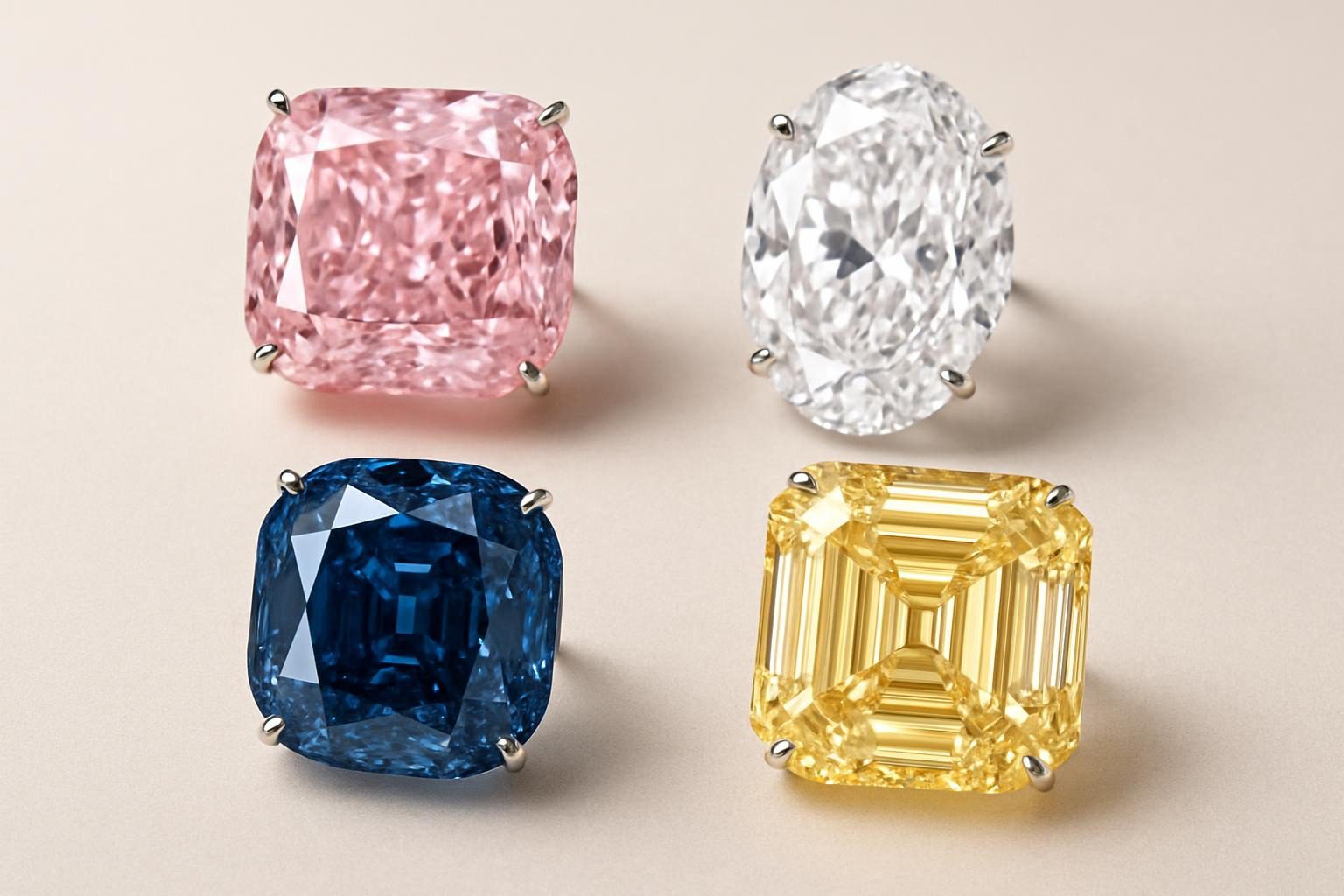

The World’s Most Expensive Diamonds
Imagine holding a single gem that has sparked wars, toppled empires, and now commands a value exceeding the fortunes of entire nations. The Koh-i-Noor diamond, a stone of unparalleled historical weight, is deemed priceless—yet experts whisper estimates soaring into the billions, dwarfing even the cost of a fleet of superyachts owned by the world’s elite. In the rarified air of high-stakes auctions and royal vaults, these diamonds aren’t just jewelry; they’re timeless symbols of power and prestige that continue to captivate collectors and historians alike.
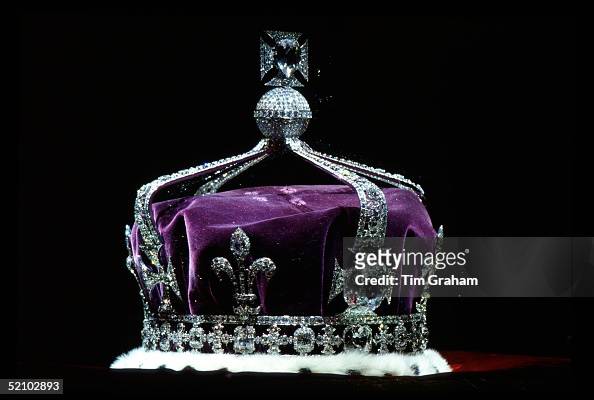
There are 25 stock photos of the Kohinoor Diamond Crown available, including high-resolution pictures.
FAST FACTS
- Item name: Koh-i-Noor Diamond
- Price: Priceless (estimated $2–10 billion)
- Year: Mined circa 13th century
- Units produced: 1 (unique natural formation)
- Record held: Most valuable diamond by historical and cultural significance
- Why it matters: Embodies centuries of conquest and royalty, influencing global gem valuation standards
A Glittering Legacy: The Pinnacle of Diamond Value
Diamonds have long transcended mere adornment, evolving into investments that rival fine art and real estate. What elevates certain stones to stratospheric prices? Rarity, of course—fancy colored diamonds like vivid pinks and blues comprise less than 0.1% of global production. But beyond carats and clarity, it’s provenance that seals the deal. Heritage experts often say that stones with royal lineages or auction pedigrees are irreplaceable because their stories are part of history.
In museum-grade collections, the Cullinan stands out as a technical marvel, its original rough form yielding gems that adorn scepters and crowns. Automotive historians might draw parallels to vintage hypercars, but diamonds like these outlast even the most enduring machines, appreciating silently in vaults.
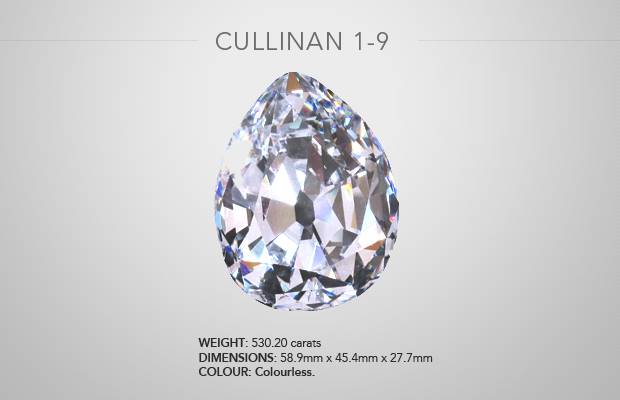
Cullinan 1-9: World Famous Diamonds – Jeweller Magazine is a notable source for information on these gems.
Top 10 Most Expensive Diamonds: A Comparison
To contextualize these gems’ worth, here’s a definitive table of the world’s priciest diamonds, based on auction sales and expert valuations as of 2025. Note the blend of sold pieces and estimated values for unsold icons.
| Rank | Diamond Name | Carats | Color/Type | Price/Estimate | Year Discovered/Sold |
|---|---|---|---|---|---|
| 1 | Koh-i-Noor | 105.6 | Colorless | Priceless ($2–10B est.) | ~13th century |
| 2 | Cullinan | 3,106 (rough) | Colorless | $400M–$2B | 1905 |
| 3 | Hope Diamond | 45.52 | Fancy Deep Blue | $200–350M | ~1600s |
| 4 | Centenary | 273.85 | Colorless (D) | $100M+ | 1986 |
| 5 | Pink Star (CTF) | 59.6 | Fancy Vivid Pink | $71.2M | 2017 (sold) |
| 6 | Williamson Pink Star | 11.15 | Fancy Vivid Pink | $57.7M | 2022 (sold) |
| 7 | Oppenheimer Blue | 14.62 | Fancy Vivid Blue | $57.5M | 2016 (sold) |
| 8 | De Beers Cullinan Blue | 15.10 | Fancy Vivid Blue | $57.4M | 2022 (sold) |
| 9 | Pink Legacy | 18.96 | Fancy Vivid Pink | $50M | 2018 (sold) |
| 10 | Blue Moon of Josephine | 12.03 | Fancy Vivid Blue | $48.4M | 2015 (sold) |
This table underscores why colored diamonds dominate recent auctions—their scarcity drives per-carat prices skyward, often surpassing $4 million.
Historical Timeline of Iconic Diamonds
- 13th Century: The Koh-i-Noor emerges from India’s Golconda mines, beginning its journey through empires.
- 1600s: The Hope Diamond is mined; it later becomes part of the French Crown Jewels amid tales of a curse.
- 1905: Cullinan was discovered in South Africa, the largest rough diamond ever, gifted to British royalty.
- 1958: Hope was donated to the Smithsonian, drawing millions of visitors annually.
- 1986: The Centenary is found, marking De Beers’ 100th anniversary with flawless craftsmanship.
- 2010: The Graff Pink sells for $46.2M, highlighting the rise of pink diamonds.
- 2015–2022: Surge in colored diamond auctions, with Pink Star ($71.2M) and Williamson ($57.7M) setting records.
- 2025: Mediterranean Blue fetches $21.5M, signaling sustained market heat.
Collectors widely agree that this timeline reflects diamonds’ shift from royal heirlooms to billionaire investments, with auction houses like Sotheby’s and Christie’s as modern battlegrounds.
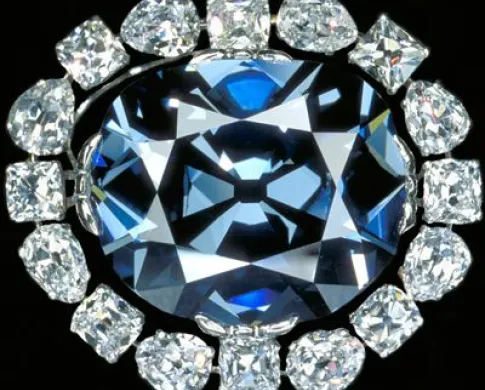
Hope Diamond | Smithsonian National Museum of Natural History
5 Wow Facts About These Diamonds
- Before cuttings, the Koh-i-Noor weighed 793 carats—imagine a gem as large as a fist reshaping history.
- Cullinan’s cutting took three years and yielded 105 stones, with the largest rivaling the value of a small country’s economy.
- The Hope Diamond glows red under UV light, a phenomenon tied to its boron content and mythical “curse.”
- Pink Star’s $71.2M sale equated to over $1.2M per carat, more than a luxury penthouse in Manhattan.
- Blue Moon was renamed by billionaire Joseph Lau for his daughter, blending personal sentiment with investment savvy.
These facts evoke awe, much like comparing a diamond’s price to owning multiple private islands or a SpaceX launch.
People Also Ask
What is the most expensive diamond ever sold at auction?
The Pink Star diamond holds the record, fetching $71.2 million at Sotheby’s in 2017. This 59.6-carat fancy vivid pink gem, internally flawless, outpaced all others due to its rare color and size. It’s legally owned by Chow Tai Fook and not available for public purchase.
Why are blue and pink diamonds so expensive?
Colored diamonds command premiums because of their rarity—structural defects or trace elements like boron create hues in fewer than 1 in 10,000 stones. Auction trends show vivid blues and pinks appreciating faster than colorless ones, driven by dwindling mine supplies.
Can you buy the Koh-i-Noor or Hope Diamond?
No, these are not for sale. The Koh-i-Noor is part of the British Crown Jewels, while the Hope resides permanently at the Smithsonian. Ownership is restricted to institutions, emphasizing their cultural rather than commercial value.
How do these diamonds compare to the most expensive artworks?
Top diamonds like the Pink Star rival artworks such as Salvator Mundi ($450M), but diamonds offer portability and durability. A single stone can exceed the price of a Picasso, appealing to discreet ultra-wealthy collectors.
Are expensive diamonds a beneficial investment?
Yes, for high-net-worth individuals, the values of rare colored stones have risen by 5–10% annually. However, liquidity depends on auction markets, and they outperform stocks in inflation hedges, per Heritage experts.

The Pink Star Sells for $71M at Sotheby’s | National Jeweler
Frequently Asked Questions
What makes the provenance of these diamonds so crucial to their value?
Provenance—the documented history of ownership—elevates a diamond from mere rock to artifact. For instance, the Koh-i-Noor’s path through Mughal, Persian, and British hands adds intangible worth, far beyond its 105.6 carats. Collectors prize chains of custody verified by institutions like the GIA, as fakes or dubious origins can slash values by 50% or more. In heritage collections, this narrative often trumps even flawless clarity, making stones like the Hope invaluable for their storied pasts.
How do collectors maintain and insure such expensive diamonds?
Maintenance involves professional cleaning every few years to preserve brilliance, avoiding harsh chemicals that could etch surfaces. Insurance for gems like the Cullinan runs into millions annually, often through specialized firms like Lloyd’s of London, covering theft, loss, or damage. Billionaire owners store them in climate-controlled vaults with biometric security. Automotive historians note parallels to rare car collections, where condition reports from experts ensure long-term value retention.
What is the investment potential of colored diamonds versus colorless ones?
Colored diamonds have shown superior returns, with pinks and blues appreciating up to 15% yearly over the past decade, per auction data. Unlike colorless stones, which face lab-grown competition, natural colored gems remain scarce as mines like Argyle close. Investors like Joseph Lau treat them as portfolio diversifiers, similar to fine wine or art. However, entry barriers are high—expect $10M+ for top-tier pieces—with liquidity tied to global economic moods.
What technical details set the Pink Star apart from other pink diamonds?
The Pink Star’s oval mixed cut, 59.6 carats, and internally flawless rating from the GIA make it exceptional. Its vivid pink hue stems from crystal lattice distortions under extreme pressure, a rarity in nature. Compared to the Williamson Pink Star (11.15 carats, $57.7M), its size amplifies value exponentially. Gemologists emphasize the Type IIa classification, denoting chemical purity, which enhances light performance and desirability among connoisseurs.
How has the market for expensive diamonds evolved recently?
From 2010 to 2025, auctions have shattered records, with Asia’s rising wealth fueling demand—Chow Tai Fook’s Pink Star purchase exemplifies this shift. Per-carat prices for blues hit $4M+, while pinks face supply shortages. Experts predict continued growth but warn of volatility from geopolitical tensions affecting mining. Collectors agree that digital provenance via blockchain could further boost transparency and values.
What role do diamonds play in cultural heritage beyond their price?
Beyond finances, these gems symbolize endurance and legacy. The Hope Diamond, viewed by over 7 million annually at the Smithsonian, educates on geology and history. In royal contexts, like the Cullinan in Britain’s regalia, they reinforce national identity. Philanthropic donations, such as Harry Winston’s gift of the Hope, underscore their role in public enrichment, blending opulence with accessibility.
Why This Will Likely Never Be Surpassed
As modern mining yields fewer mega-rough stones amid ethical sourcing pressures, the Koh-i-Noor and Cullinan represent peaks unlikely to eclipse. With the Golconda mines exhausted and regulations tightening, discoveries like the 1905 Cullinan are historical anomalies. Collectors consistently observe that replicating cultural icons with centuries of lore is impossible, thereby ensuring their supremacy in value hierarchies.
Is It Worth the Price? (Expert Perspective)
Absolutely, for the right buyer. According to heritage experts, the emotional and status dividends—owning a piece of history—outweigh raw costs. Compare the Pink Star’s $71.2M to a superyacht depreciating annually; diamonds hold or grow value. Yet, it’s not for everyone: liquidity risks and storage demands suit only ultra-high-net-worth portfolios. In my view, their worth lies in the irreplaceable thrill.
Cultural and Historical Legacy
These diamonds weave through human narratives, from the Koh-i-Noor’s conquest tales to the Hope’s “cursed” folklore, captivating pop culture. They influence fashion, inspiring designs at houses like Graff, and fuel ethical debates on colonial repatriation. In global heritage, they stand as testaments to Earth’s wonders, bridging ancient geology with modern luxury.
In the end, the world’s most expensive diamonds aren’t just assets—they’re enduring emblems of ambition, beauty, and time itself. As markets evolve, their allure remains unmatched, drawing the elite to chase the next glittering prize.
most expensive diamonds, Koh-i-Noor diamond, Cullinan diamond, Hope diamond, pink star diamond, Oppenheimer blue, De Beer’s blue, Williamson pink star, fancy vivid pink, fancy vivid blue, diamond auctions, Sotheby’s diamonds, rare diamonds, colored diamonds, diamond investment, gem provenance, historical diamonds, luxury gems, billionaire jewels, diamond records