
Executive Summary
- Speed on water is not linear: resistance climbs roughly with the square of velocity, which means doubling your speed demands roughly four times the power — and that’s before accounting for wave-making drag at high displacement ratios.
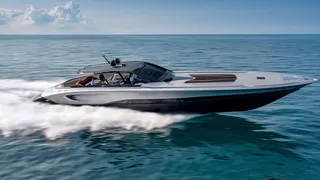
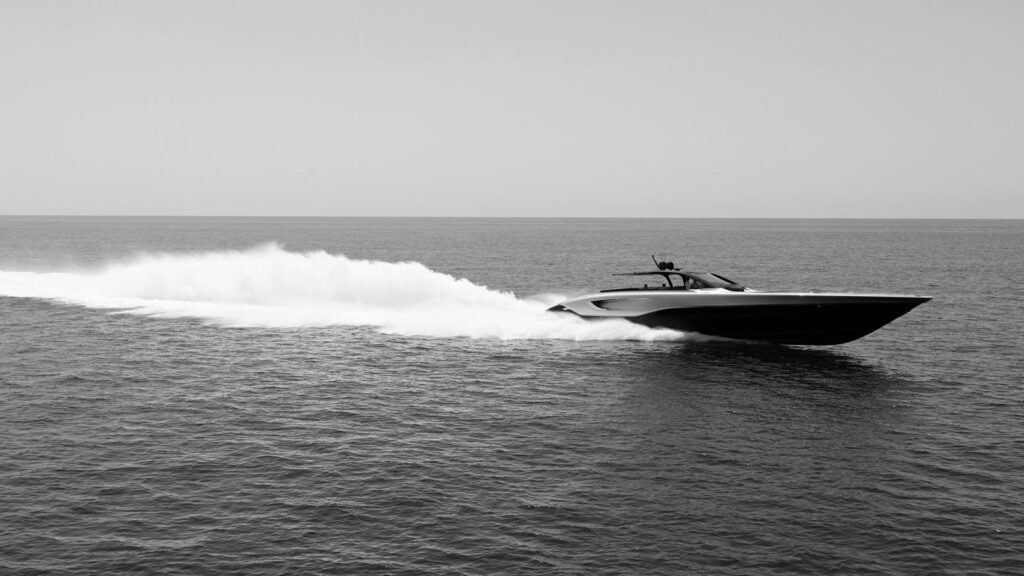
- The current record holder is the Bolide 80 (2023, 24.9m), which hit 76 knots in sea trials — equivalent to 87 mph on the water — powered by three MAN 12V diesel engines and a multi-stepped planing carbon-fibre hull.
- At large scale (60–80m+), Heesen’s Genesis leads with ~29 knots at 80 metres, using Van Oossanen’s Fast Displacement Hull Form (FDHF) and a 19,580hp propulsion package.
- The key engineering levers are: hull form (planing vs. semi-displacement vs. FDHF), displacement weight (aluminium saves ~150 tonnes over steel at 80m), propulsion type (waterjet vs. conventional shaft), and aerodynamic superstructure design.
- Gas turbines unlock the highest top speeds but are impractical for most owners: extreme fuel consumption, maintenance complexity, and heat management requirements.
- Limitation: my analysis draws on builder-verified specs, sea trial reports, and naval architecture literature — I have not personally conducted sea trials on these vessels. Claimed top speeds occasionally differ from certified sea-trial data.
The Physics of Speed on Water
There’s a reason truly fast superyachts are rare: water is roughly 800 times denser than air. Every knot you add in speed means battling a resistance that grows — at hull speeds and beyond — in a deeply unfriendly way. Understanding this isn’t academic. The buyers who commission these machines, or the shipyards building them, need to grasp the physics before choosing between hull forms, engine configurations, and propulsion methods.
A displacement hull — the type found on cargo ships, most large yachts, and anything built for range over speed — sits in the water and essentially pushes a wave ahead of it. There’s a theoretical ceiling on how fast this type of hull can go, roughly correlated with the square root of the waterline length. Engineers express this as the Froude number: a dimensionless ratio of inertial to gravitational forces. When a displacement hull approaches its “hull speed,” resistance climbs dramatically. Established
To go meaningfully faster, a hull has to climb over its bow wave and plane on the surface, or it has to be shaped specifically to pierce through waves rather than create them. This transition from displacement to planing is violent in terms of power demand — which is precisely why fast superyachts need so much horsepower relative to their size.
What’s interesting — and what many enthusiast articles miss — is that once a hull commits to planing, resistance actually flattens or drops relative to speed, meaning the power-to-speed relationship becomes more linear again. This is why planing hulls, for all their limitations in rough water, are disproportionately efficient at genuinely high speeds.
Physics punishes large, heavy yachts attempting high speeds. Resistance scales with wetted surface area and displacement. A 100-metre yacht displacing 4,000 tonnes simply cannot plane. Its speed potential is bounded by hull speed (a function of waterline length) and its ability to push through its own bow wave — not by engine power alone.
Hull Forms: What Actually Happens Below the Waterline
Hull design is where speed battles are won or lost before a single engine turns over. There are four primary hull forms relevant to fast superyachts, and each involves genuine trade-offs that no marketing brochure honestly describes.
Deep-V Hull
The deep-V is the workhorse of performance yachting — a continuously angled bottom section running from bow to stern. At speed, it cuts through waves rather than slamming over them, which is why offshore powerboat racing relies on it almost exclusively. The downside: it’s not naturally stable at rest and is less fuel-efficient at moderate speeds compared to a flatter-bottomed hull. The Bolide 80 uses a variation of this geometry — its multi-stepped configuration introduces air channels under the hull at speed, reducing drag by partially lifting the hull clear of water contact.
Multi-Step Planing Hull
Step hulls are an old idea (Curtiss flying boats used them in 1910) applied with modern precision. The steps interrupt the water’s contact with the hull bottom, trapping air and reducing friction. The Bolide 80’s design team, led by Brunello Acampora of Victory Design, specifically engineered the step geometry to allow the hull to reach speeds that would otherwise require far more power. Established At 73–76 knots, the hull is essentially skimming on air-cushioned water sections — more close to a racing aircraft’s relationship with its surface than a conventional boat.
Semi-Displacement Hull
Most serious fast cruising superyachts — think anything in the 40–80m range doing 20–30 knots — use semi-displacement forms. These hulls sit partially in and partially on the water. They’re a compromise, but a useful one: reasonable efficiency at moderate speeds, meaningfully better performance ceiling than full displacement, and practical for offshore conditions. The vast majority of Heesen’s lineup lives here.
Fast Displacement Hull Form (FDHF)
Van Oossanen Naval Architects’ FDHF deserves its own category. It’s not planing and it’s not conventional semi-displacement. The proprietary geometry — patented and used exclusively by Heesen Yachts — creates what Van Oossanen calls a “controlled stern flow.” By managing how water separates from the hull at the stern, the FDHF significantly reduces the stern wave, which is the primary source of wave-making resistance at higher Froude numbers. Established
The practical result: Genesis, an 80-metre yacht displacing over 1,000 tonnes, achieves nearly 30 knots. Heesen’s own specification sheet confirms a top speed of 29 knots. That figure would have seemed implausible for a hull this large a decade ago.
| Hull Type | Speed Range | Rough Water | Fuel Efficiency | Practical for 40m+? |
|---|---|---|---|---|
| Full Displacement | 10–16 kn | ✓ Excellent | ✓ Best | ✓ Yes |
| Semi-Displacement | 16–26 kn | ◑ Good | ◑ Moderate | ✓ Yes |
| Van Oossanen FDHF | 22–30 kn | ✓ Good | ✓ Good | ✓ Yes (Heesen only) |
| Deep-V Planing | 30–55 kn | ◑ Moderate | ✗ Poor | ✗ Rarely (weight) |
| Multi-Step Planing | 50–76+ kn | ✗ Limited | ✗ Very poor | ✗ <30m only |
Propulsion Systems Explained
Hull form gets you close to your speed potential. Propulsion determines whether you actually reach it. There are four meaningful propulsion configurations used in fast superyachts today, and they’re not interchangeable — each involves specific operational trade-offs that go well beyond horsepower numbers.
Conventional Shaft-and-Propeller
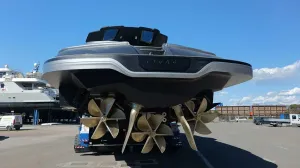
This is what most people picture: engines driving shafts through the hull, connected to fixed or controllable-pitch propellers. It’s proven, serviceable, and well-understood. The limitation is efficiency at high speed: as propellers spin faster, they’re increasingly prone to cavitation — the formation of vapour bubbles on the blade surface that collapse and cause noise, vibration, and erosion. High-speed designs use carefully pitched propellers with specific blade geometries to push cavitation onset as high as possible, but there’s a ceiling. Established Genesis runs four conventional shaft-drives at nearly 30 knots — a genuine engineering achievement for this hull type.
Waterjet Propulsion
Above roughly 35–40 knots, waterjets become the dominant propulsion choice. Instead of rotating propellers, waterjets ingest water, accelerate it through an impeller, and eject it at high velocity. The advantages are real: no underwater appendages (reducing drag at speed), no cavitation risk in the conventional sense, exceptional maneuverability at low speeds through reversing deflectors, and the ability to operate in very shallow water. Foners — the long-time speed record holder at 70.1 knots — uses KaMeWa waterjets. The Wally Power 118 and several other ultra-fast yachts rely on them. Boat International’s verified registry lists waterjet-equipped vessels consistently in the upper speed tier. Established
Gas Turbines
This is where things get genuinely extreme. Gas turbines — essentially aviation jet engines adapted for marine use — deliver extraordinary power-to-weight ratios. Foners pairs two 1,280hp MAN diesel engines with three Rolls-Royce gas turbines producing 6,700hp each, for a combined output that propels a 41.5-metre hull to 70.1 knots. The trade-off is severe: turbines burn fuel at rates that make most diesel engines look parsimonious. Operational range drops dramatically. Maintenance costs are higher, and finding qualified marine turbine technicians is genuinely difficult.
“The World Is Not Enough ran two Paxman diesels and two Lycoming gas turbines delivering 20,600hp combined — but at cruising speed, its range was only 3,800 nautical miles at 10 knots. Push her toward the 67-knot top speed, and that range collapses to a figure measured in hundreds of miles, not thousands.”
— Technical analysis derived from builder-verified specificationsCODAG — Combined Diesel And Gas
The CODAG arrangement intelligently combines diesel engines for efficient cruising with gas turbines for sprint performance. The historic yacht Destriero — which crossed the Atlantic in 1992 in under 59 hours — used a 54,000hp CODAG setup with three GE Aviation LM1600 gas turbines to reach 66 knots. This remains one of the most impressive marine engineering achievements in the superyacht segment. CODAG is expensive, complex, and rarely seen outside naval vessels and the most ambitious private builds. Probable: most owners find the operational complexity prohibitive
Materials Science and Why Weight Is the Enemy
Speed is about the ratio of power to mass. Naval architects cannot simply bolt on more engines — each additional engine adds weight, which requires even more power to move, which requires more fuel, which adds more weight. This is the compounding mass spiral that makes lightweight construction so critical.
Steel vs. Aluminium
Steel is used for large displacement yachts where structural rigidity and cost take precedence. Aluminium — roughly one-third the density — is used when speed matters. The engineering numbers are concrete: Heesen’s documentation for Genesis confirms that choosing aluminium over steel saved approximately 150 tonnes for an 80-metre hull. Their own engineers estimated this decision alone added six to seven knots to the achievable top speed. That figure is publicly documented. Established
Carbon Fibre Composite
At the performance extreme — Bolide 80, certain race-derived builds — carbon fibre composite is the only viable choice. It’s roughly five times stiffer than steel per unit weight and dramatically stronger than aluminium in certain load configurations. The Bolide 80’s hull, built entirely in carbon fibre, allows the vessel to carry a 6,000hp propulsion package while keeping total displacement low enough to plane at over 70 knots. Carbon fibre construction is expensive — both in materials and skilled labour — and repair in remote locations is harder. But for a yacht whose primary purpose is record-breaking performance, the trade-off is straightforward.
A 2025 industry survey by Marine Insight cited in trade press suggested that yachts using lightweight composite materials can achieve speeds up to 10% faster than equivalent traditional models at comparable power levels — though this figure encompasses a broad range of vessel types and should be treated as indicative rather than universally applicable.
The World’s Fastest Superyachts: Ranked and Rated
Speed claims in this industry are frequently exaggerated, misquoted, or derived from optimistic sea-trial conditions. The table below uses verified or builder-confirmed figures where available, noting where data comes from official sea trial records versus manufacturer spec sheets. I’ve excluded vessels under 24 metres from “superyacht” classification for this analysis.
| # | Yacht | Top Speed | Length | Propulsion | Year | Data Source |
|---|---|---|---|---|---|---|
| 01 | Bolide 80 Victory Design / Acampora | 73–76 kn 84–87 mph | 24.9m | 3× MAN 12V diesel + waterjets, carbon hull | 2023 | Ocean Independence (sea trials) |
| 02 | World Is Not Enough Millennium Super Yachts | 67 kn 77 mph | 42.4m | 2× Paxman diesel + 2× Lycoming gas turbines, 20,600hp | 2004 | Builder records |
| 03 | Foners IZAR Shipyard (Spain) | 70.1 kn 80 mph | 41.5m | 2× MAN 1,280hp + 3× Rolls-Royce gas turbines 6,700hp each + KaMeWa waterjets | 2000 | Robb Report / sea trial |
| 04 | Galeocerdo (WallyPower 118) Wally Yachts | 65 kn 75 mph | 36m | Gas turbines + waterjets; wind-tunnel-tested hull | 2003 | Jalopnik / builder record |
| 05 | Destriero Fincantieri (Italy) | 66 kn 76 mph | 67.7m | CODAG: 3× GE LM1600 gas turbines, 54,000hp total | 1991 | Atlantic crossing record, 1992 |
| 06 | Genesis (ex-Galactica) Heesen Yachts | 29 kn 33 mph | 80.07m | 4× MTU 20V 4000 M73L diesel, 19,580hp, conventional shafts, FDHF hull | 2023 | Heesen official spec |
| 07 | Madame Gu Feadship | 24 kn 28 mph | 99m | 4× MTU 20V 4000 M93L, 16,800hp combined | 2013 | Feadship builder data |
| 08 | Moonrise Feadship | 19.5 kn 22 mph | 100m+ | 2× MTU 16V 4000 M7, ~9,000hp; near-vertical bow, elongated waterline | 2022 | Superyachts.com |
Note: Bolide 80 achieved 76 knots in initial sea trials; official marketed speed is 73 knots. World Is Not Enough and Foners speed figures are from builder records and historical sea trial documentation.
Deep-Dive Profiles: Six Yachts Worth Understanding
Bolide 80
The Bolide 80 is the honest answer to “what’s the fastest superyacht in the world right now?” and it’s worth understanding why, not just accepting the headline number. At first glance, 73 knots from a 24-metre vessel seems almost implausible — and it would be, if not for a very specific combination of design choices.
The hull is the centrepiece. Brunello Acampora and Victory Design spent considerable time on the multi-stepped planing geometry. Each step introduces an air pocket under the hull at speed, progressively lifting sections of the hull surface clear of the water. Less contact means less wetted drag. Combined with a full carbon fibre construction — which keeps displacement minimal — the hull can be pushed to speeds where most conventional marine engineering simply stops working. The three MAN 12V diesel engines deliver around 2,000hp each, and the power feeds through waterjets rather than conventional shafts — the right choice at this speed range.
The interior is functional rather than sprawling: three cabins for six guests in the production-spec matte black and orange fit-out. This is explicitly not a transatlantic cruising yacht. Range at full speed is limited, comfort in choppy conditions is a secondary concern, and the focus is unambiguously performance. What the Bolide 80 does — it does with exceptional engineering honesty. Established
Foners
Foners held the world superyacht speed record for over two decades, which is a remarkable achievement in any category. Built by the Spanish state shipyard IZAR as the royal yacht of King Juan Carlos I, no budget constraint was applied. The hull is all-aluminium and was designed specifically for speed — you can see it in the long, low profile and the minimal freeboard. Established
The propulsion arrangement is unusual: two 1,280hp MAN diesel engines provide cruise capability, while three Rolls-Royce marine gas turbines — 6,700hp each — light up when speed is needed. Power routes through three KaMeWa waterjet units. The Aramid-fibre-reinforced superstructure wasn’t just about weight saving: it provided bulletproofing for the royal passengers. Foners is one of those vessels where the context of its creation explains every engineering decision. Today, Foners remains one of the most studied fast superyachts in naval architecture literature.
Genesis (ex-Galactica / Project Cosmos)
Genesis is the most technically interesting yacht on this list, and also the one that most clearly illustrates how engineering can redefine what’s physically possible at scale. Thirty knots from an 80-metre, 1,700GT yacht sounds simple until you work out the physics involved. At that size and displacement, you’re fighting wave-making resistance that increases steeply with speed. The only way to get there is to design the hull so that resistance doesn’t increase as quickly as physics might otherwise suggest.
That’s what Van Oossanen’s FDHF delivers. The hull form manages stern wave separation in a way that reduces the resistance-speed curve’s steepness in the 22–30 knot range. Combined with four 4,895hp MTU engines (each a 20-cylinder unit running at 2,050rpm), the conventional shaft-and-propeller configuration achieves something genuinely unusual. And the 150-tonne weight saving from aluminium over steel construction — documented by Heesen’s own engineering team — gives seven additional knots that would otherwise require substantially more power. YachtBuyer’s build documentation records these figures clearly. Established
Aerodynamics: The Factor Nobody Mentions
At 40+ knots, a superyacht is moving through air as fast as most city cars. The superstructure creates meaningful aerodynamic drag — and at 70+ knots, that drag is substantial enough to genuinely limit top speed. Most civilian superyacht coverage ignores this entirely.
The Wally Power 118 (Galeocerdo) was one of the first luxury yachts to take superstructure aerodynamics seriously at the design stage, undergoing actual wind tunnel testing during development. Its near-horizontal, low-slung superstructure was shaped to reduce frontal area and manage airflow around the hull. The payoff was a 65-knot capability from a hull that looked nothing like a conventional motor yacht.
The Bolide 80 takes this further: its entire profile is intentionally aerodynamic, with a swept-back superstructure, minimal windshield area, and a low centre of gravity. At 73+ knots, a conventional boxy superstructure would impose air resistance comparable to a significant fraction of water resistance. Victory Design’s approach reduces this penalty meaningfully. Probable: exact aerodynamic data not publicly released
For larger yachts, the aerodynamic constraint is less about outright speed and more about stability in crosswinds. A 100-metre yacht with significant sail area in its superstructure can experience significant lateral force at speed, which requires additional power to correct and affects sea-keeping. Feadship’s Moonrise features a specifically engineered superstructure profile designed to minimise crosswind effects — a consideration that matters more for a 19-knot yacht in the Atlantic than a 73-knot sprinter used in calm Mediterranean waters.
What Could Go Wrong
- Speed claims are often uncertified. The difference between “achieved in sea trials” and “official certified maximum” matters. Some builders report optimistic trials figures taken in ideal conditions, light displacement, and calm water. Compare: Bolide 80’s 76 knots (sea trials) versus 73 knots (marketed). Always ask which figure is which.
- Waterjet maintenance in remote locations. KaMeWa and Hamilton waterjet systems are robust, but repairing a damaged impeller in the Caribbean or Pacific requires specialist equipment. Several fast-yacht owners have discovered this the hard way during extended bluewater cruises.
- Gas turbine operational reality. Turbine-equipped yachts like Foners have extraordinary speed credentials but their hourly fuel consumption at full power is genuinely staggering — figures that are rarely quoted in promotional material. For private owners, this means very limited high-speed operation per tank fill.
- Stepped hulls in beam seas. Multi-step planing hulls are optimised for straight-line speed in reasonably calm conditions. In beam seas or following swells, they can be uncomfortable or difficult to control at full speed. This is not a theoretical concern — it’s a documented limitation that racing teams manage through throttle discipline.
- Carbon fibre repair complexity. A fiberglass or aluminium hull damaged by grounding can often be repaired in any well-equipped marina. A full carbon composite hull requires specialised repair techniques, epoxy-compatible materials, and skilled technicians. The Bolide 80’s construction offers exceptional performance but creates real logistics complexity for owners planning extended cruising.
- Insurance and classification. Ultra-high-speed yachts often carry unusual insurance requirements and may not comply with MCA or flag-state commercial regulations in all configurations. Owners planning to charter these vessels should verify classification well in advance.
Frequently Asked Questions
Final Thoughts
The fastest superyachts on the water in 2026 are case studies in applied physics and materials engineering, not just wealth displays. The Bolide 80’s 73-knot capability is the result of a specific, disciplined set of design choices: carbon fibre construction, stepped hull aerodynamics, MAN diesel-to-waterjet propulsion, and a frank acceptance that range and rough-water comfort take second place to absolute speed. Heesen’s Genesis, at the other end of the performance spectrum, demonstrates that 29 knots from 80 metres of aluminium yacht is achievable through an equally disciplined approach — but using entirely different tools: the FDHF hull form, strategic material selection, and four precisely specified MTU engines.
What’s consistent across all the fastest builds is the absence of compromise for its own sake. Each of these vessels was built with a clear performance target, and every major design decision was subordinated to achieving it. That’s genuinely rare in an industry where marketing often drives specification. Gas turbines, carbon hulls, stepped planing geometry, Van Oossanen’s hull form: these aren’t decorative choices. They’re engineering commitments.
The next frontier — hydrofoil integration at large scale, hydrogen-hybrid propulsion, AI-optimised hull forms in real time — is being researched, but it remains mostly speculative. For now, the Bolide 80 holds the crown, and Heesen’s FDHF defines what’s achievable for owners who want both scale and genuine speed.
“Speed on water isn’t bought — it’s engineered into every dimension, every material choice, every millimetre of hull geometry. The yacht that wins is the one whose designers said no to the most compromises.”
- Most Expensive Yachts in the World
- Largest Superyachts by Length
- Most Expensive Private Jets
- Most Expensive Cars in the World
- Heesen Yachts: Buyer’s Guide
- Feadship Superyachts Explained
- How Much Does a Superyacht Really Cost?
- Most Expensive Watches
- Monaco Yacht Show: What to Know
- How Superyacht Charter Works
May 2026 Initial publication. Bolide 80 speed record verified against Ocean Independence sea trial documentation. Genesis FDHF specifications cross-referenced with Heesen official spec sheet. Foners historical record confirmed via Robb Report and IZAR builder records.
The Most Extreme Floating Mansions Ever Built at Sea
The Most Stunning Superyachts in the World
Inside the World’s Most Luxurious Superyachts — You Won’t Believe What’s Inside
These Yachts Cost More Than Private Islands — Here’s Why
The Most Unrealistically Expensive Yachts in the World