

Why Most People Fail at Billionaire Travel — And How to Be the Exception
Hospitality experiences curated specifically for ultra-high-net-worth clientele — the insider gaps most wealthy travelers never close, and the ones who do.
There’s a peculiar illusion at the very top of the wealth ladder. Once someone crosses $30 million in net worth — the threshold Altrata uses to classify ultra-high-net-worth individuals — they generally assume their money has unlocked some secret door to the best of everything. Often, it has. But not in travel. Not automatically. Not without understanding a system that’s genuinely invisible to outsiders and frustratingly opaque even to many insiders.
The mistake most wealthy people make when they step into the world of billionaire-tier hospitality isn’t that they lack the money. It’s that they bring the wrong mental model. They think travel at this level is a transaction — that paying enough buys the best experience. It doesn’t. It buys access. What you do with that access, and who you trust to help you navigate it, is where the gap between a merely expensive trip and a genuinely extraordinary one opens up.
This piece is an attempt to close that gap. It draws on real data, practitioner insight, and a blunt look at the failure patterns that even intelligent, well-resourced people fall into. There’s no mythology here — the ultra-luxury travel world has plenty of that already.
First: The Market These People Are Actually Entering
Before getting into where things go wrong, it helps to understand the sheer scale of what’s been built around UHNW travelers. Fortune Business Insights puts the global luxury travel market at $2.51 trillion in 2024, projecting growth to $4.83 trillion by 2032 at a CAGR of around 8.56%. That’s an enormous ecosystem — but the segment truly relevant to UHNW clients, the genuinely bespoke, truly exclusive tier, is a small fraction of it.
Sources: Altrata Billionaire Census 2025; World Luxury Chamber of Commerce, World Ultra Wealth Report 2025
Within this population, the ultra-wealthy hold 32% of the global millionaire class’s total wealth despite comprising only 1% of it. These aren’t people who worry about the hotel rate. Their core demand is something more elusive: the absence of friction, combined with the presence of the genuinely rare. And those two things are much harder to deliver than they sound.
The affluent travel market overall — which includes HNWIs and aspirational travelers — was worth $219 billion in 2024 and is growing faster than any other luxury segment, according to WATG’s Affluent Travel Trends 2025 report. But the ultra-wealthy experience a market within that market. One that operates on relationships, on informal networks, on knowledge that doesn’t appear in any brochure.
“The ultra-high end has broken off from every traditional market indicator. It’s not a recession, not a slowdown. I’d call it a secession.”
— Colin Nagy, Strategy Consultant, writing in Skift, November 2025The Seven Failure Modes of Wealthy Travelers
These patterns show up consistently across advisors, hoteliers, and concierge professionals who work at the top tier. They’re not exotic — in fact, most of them are embarrassingly common. That’s what makes them worth naming directly.
The Ritz-Carlton, the Four Seasons, the Mandarin Oriental — all extraordinary hospitality companies. But for UHNW travelers, defaulting to brand-name properties without understanding which specific property, which specific room category, and which specific general manager is in residence at a given moment is how you end up at a technically excellent hotel that doesn’t know who you are and can’t do anything beyond the standard playbook. WATG’s research notes that very-high-net-worth individuals increasingly “prefer end-to-end experiences steeped in local ambiance and may focus less on hotel brand names.” The brand is a proxy for quality. It stops being useful exactly when you need nuance.
This one feels obvious in retrospect. OTAs account for around 40% of luxury travel bookings, even among affluent clients. But no OTA — not even the polished luxury-focused ones — can replicate what happens when a specialized advisor calls a general manager directly, or activates a relationship with a private villa owner who doesn’t advertise publicly at all. Deloitte research cited by AltexSoft found demand for travel advisors running at up to 85% among affluent clients, specifically “for expert advice, curation, and management of unique, complex, and multi-destination trips.” The failure isn’t using technology; it’s mistaking a booking interface for a relationship.
There are plenty of places that cost $5,000 a night that are neither exclusive nor particularly interesting. And there are experiences — a private gorilla-tracking expedition in Rwanda guided by one of Dian Fossey’s original researchers, a week at a bush villa in Tswalu with exclusive-use access — that feel genuinely irreplaceable and don’t necessarily cost what people expect. The confusion between price and rarity is almost universal among new entrants to UHNW travel. The people who get it right stop thinking in price terms and start thinking in access terms: can this be done by someone who doesn’t know the right person? If yes, it’s probably not rare enough.
For UHNW travelers, privacy isn’t a perk — it’s a status symbol, and in many cases it surpasses every other amenity consideration. The rise of social media, combined with the reputational and security exposure that comes with extreme wealth, has made discretion a structural requirement rather than a preference. Security incidents during travel are a real concern: many UHNW individuals traveling to less stable regions require private airports, secure transportation, and sometimes medical teams and armed escorts. Booking a recognizable, publicly accessible property without thinking through the security and privacy implications is a mistake that can turn a vacation into a vulnerability.
The standard hotel “personalization” — a fruit basket because you mentioned dietary preferences, a pillow menu — is not what UHNW clients mean when they talk about personalized service. What they mean, as one Ritz-Carlton senior executive put it plainly: “The answer is yes — now tell me the question.” The best ultra-luxury properties invest heavily in guest intelligence, maintaining detailed preference profiles that get activated weeks before arrival. They notice which side of the bed you slept on and adjust accordingly. They recall that your daughter mentioned a fondness for Moroccan food in a casual conversation and transform a pool deck into a themed dinner without being asked. When travelers don’t communicate their preferences clearly — or choose providers who don’t have the infrastructure to capture and act on them — they get a generic version of their own trip.
The $84 trillion intergenerational wealth transfer currently underway in the United States — documented by Cerulli Associates and referenced in WATG’s 2024 research — is reshaping what ultra-luxury travel looks like at a fundamental level. Younger UHNW travelers are not their parents. McKinsey’s 2024 data shows that curiosity, exploration, and engagement now top the priority list over pure indulgence for 77% of affluent travelers. They want expedition-grade adventure (snow leopard tracking in Ladakh, sandboarding in Kenya’s Suguta Valley) as readily as they want Michelin-starred dinner. As Globetrender reported in July 2025 citing industry expert Charles Robinson: “The new generation of UHNW travellers don’t see private jets as a status symbol — they see them as a necessity.” Treating private aviation as a luxury flex rather than a logistical tool reveals exactly the kind of outdated thinking that marks someone as new to this world.
The single most consistent finding across every serious analysis of UHNW travel behavior is this: the best experiences come from sustained, trust-based relationships with specialist advisors. Firms like The Fixer Lifestyle Group (London, with offices in Dubai, Spain, and New York), Scott Dunn Private (strictly members-only, with 24/7 advisory service), and the travel divisions of established family offices operate on a fundamentally different basis than transactional booking services. Advisors who deliver thoughtful, personalized experiences without compromising client confidentiality secure lifelong loyalty — and in return, they open doors that simply don’t exist without that relationship. Showing up without that context expecting the same access is like trying to buy your way into a club that genuinely doesn’t sell memberships.
What the Tier Actually Looks Like: The Hospitality Landscape for $30M+ Travelers
Understanding the failure modes is useful. But it’s equally worth being concrete about what successful ultra-luxury hospitality actually delivers — because the aspirational coverage of this world tends to be either vague (lots of “extraordinary” and “exclusive”) or implausibly glamorous. The reality is more specific and, frankly, more interesting.
The Private Island Tier
The clearest illustration of UHNW hospitality logic is the private island segment. The Four Seasons Maldives Private Island at Voavah, for example, requires a two-night minimum and runs at approximately $40,000 per night for full exclusive-island use — which includes a dedicated Island Chief, a full villa staff, and a kitchen team willing to produce anything from seven-course Maldivian tasting menus to casual wood-fired pizza on the beach. The experience documented by one reviewer in August 2025 captures the logic precisely: every meal tailored to the guests, a themed dinner conjured entirely because someone mentioned an offhand love of Moroccan cuisine in conversation. That $250-per-person per-day meal plan means guests never think about individual costs. The island is theirs. The staff exists entirely for them.
This is structurally different from an expensive hotel room. The island doesn’t have other guests to attend to. There’s no lobby. No shared pool. No chance encounter with anyone who isn’t part of your group. The privacy isn’t performed — it’s architectural.
The Residential Villa Model
Increasingly, UHNW clients are moving away from hotels entirely. As Global Base co-founder Cameron Biafore told Joyce Rey’s luxury real estate team in 2025, billionaires are “less interested in traditional resorts, favoring private villas where they can have complete control over their environment.” This isn’t anti-social — it’s a function of how these individuals actually live. They’re accustomed to environments configured entirely around their preferences: their kitchen team, their household staff, their security protocols, their daily schedule. Dropping into a hotel system — even a superb one — is a step down in comfort. The best private villa rentals come with in-house staff capable of providing a fully bespoke service, and the top concierge firms have access to properties that simply don’t appear on any public rental platform.
The Expedition Tier
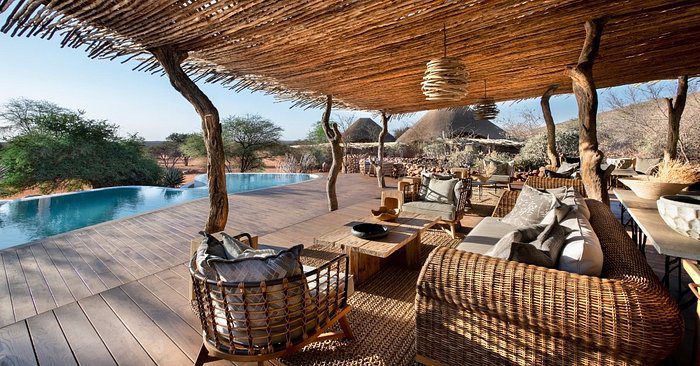
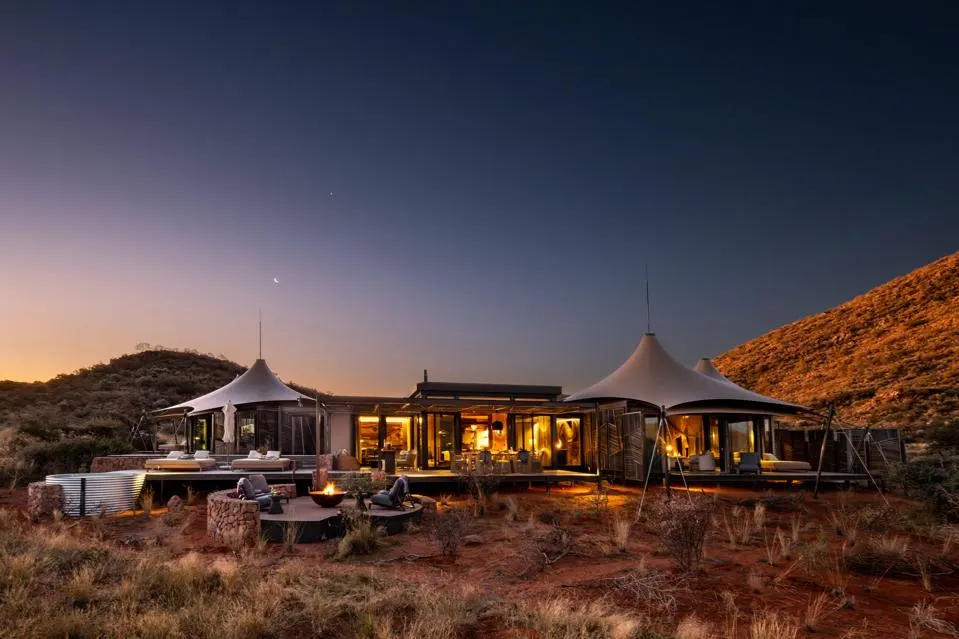
One of the most significant shifts in UHNW travel behavior is the move toward what the industry calls “purposeful” or “experiential” travel. This is not euphemism for mild adventure. As luxury specialist Jonny Dodge at GP Management described, clients are now chartering entire cruise ships, tracking elusive snow leopards in Ladakh with private guides, and riding in veterinary helicopter teams to dart rhinos in South Africa — all on an exclusive-use basis. The Tswalu Game Reserve in the Northern Cape is a good reference point: it operates as a private, single-owner reserve with a strict maximum of 30 guests at any time, meaning exclusivity is guaranteed by design rather than by pricing alone.
Aman Portfolio
Global — 30+ PropertiesThe reference brand for UHNW quiet luxury. Entry rates from ~$520/night (Beijing) to $40,000+/night for full island buy-outs. No loyalty program by design — the experience is the reward. Known for small-scale properties integrated with local culture and architecture.
From ~$700/night base; no loyalty programTswalu Game Reserve
Northern Cape, South AfricaSouth Africa’s largest private game reserve, owned by the Oppenheimer family. Maximum 30 guests at any time across the entire property. Conservation-led, with access to rare Kalahari species and behind-the-scenes wildlife management experiences unavailable anywhere else.
Full exclusive-use from ~$25,000/nightFour Seasons Private Island Voavah
MaldivesExclusive island with a dedicated Island Chief and full staffing for one group only. Entirely configurable menus, activities, and ambiance. Transfer by Four Seasons seaplane; CIP fast-track immigration included. 2-night minimum.
~$40,000/night (exclusive island)Scott Dunn Private
Global — Members-OnlyUHNW-specialist travel firm led by Jules Maury. Members receive 24/7 advisory service, private chauffeur from home to airport, and access to experiences and properties unavailable through standard booking channels. Strictly by referral.
Annual membership — enquiry onlyThe Wealth Tier Map: Who Gets What
One of the most useful frameworks for understanding ultra-luxury hospitality comes from WATG’s Affluent Travel Trends 2025 research, which segments the wealthy traveler market by net worth and maps behavior accordingly. The difference between what an HNWI expects and what a UHNWI demands is genuinely categorical — not just a matter of degree.
| Wealth Tier | Net Worth | Travel Profile | Key Hospitality Expectations | Typical Spend / Trip |
|---|---|---|---|---|
| HNWI | $1M–$5M liquid | Quality-focused; brand-name hotels and business class | Reliable service, club lounges, suite upgrades | $10,000–$25,000 |
| VHNWI | $5M–$30M liquid | Boutique properties, local immersion, avoids brand logos | Local ambiance, personalized service, privacy from public | $25,000–$75,000 |
| UHNWI | $30M+ liquid | Private villas, remote destinations, private aviation standard | Exclusive use, complete privacy, anticipatory service, discrete access | $75,000–$500,000+ |
| Billionaire | $1B+ | Entire resorts, private islands, chartered vessels, bespoke expeditions | Total environmental control, security integration, off-market properties | $500,000–$5M+ |
Framework adapted from WATG Affluent Travel Trends 2025 and Altrata Billionaire Census 2025
The Invisible Infrastructure: What Elite Concierge Actually Does
The word “concierge” has been so thoroughly diluted — every airport lounge has one, most credit cards offer one — that it’s nearly lost meaning. At the UHNW level, concierge services are something structurally different. They’re closer to what a high-powered chief of staff does for a head of state than to what a hotel front desk employee does for a guest with questions about the spa.
The Fixer Lifestyle Group, for example, operates with staff speaking eight languages across a network spanning 23 countries. They manage not just travel but the full personal and business lifestyle of their clients — household staffing, health and wellbeing, fine art services, educational consultants, private event access. Their explicit positioning is that they maintain “direct contacts with hotel general managers, private villa owners, and exclusive ground transportation services in every major city.” More critically: they can “secure private jet charters on short notice, reserve entire private islands, or book a yacht for an impromptu cruise.” The key word is on short notice. These are not things you can arrange by calling a 1-800 number two weeks ahead.
Discretion is a career-defining variable in this world. Confidentiality at the UHNW level isn’t just client-service good practice — as professionals in this sector are candid about: a breach of trust is an immediate and permanent career-ender. This creates a natural selection mechanism. The advisors who last are, by definition, the ones who can be trusted with the details of their clients’ lives. That matters enormously because meaningful personalization requires meaningful information-sharing, which only happens inside a trust structure that has been built over time.
Elite properties don’t rely on pre-arrival questionnaires. They cross-reference information from previous stays across sister properties, communicate with trusted advisors, and train staff in what one senior hospitality educator calls “emotional intelligence and guest observation skills.” As MPS Puri (a veteran of The Ritz-Carlton’s leadership) explains it: “You can learn a lot by assessing how guests use their rooms.” Which side of the bed shows wear. Which items in the minibar were moved. Which curtain was left open overnight.
The Globetrender roundtable in July 2025 captured the standard bluntly: “The best service is when a guest doesn’t have to ask for anything, yet everything is exactly as they want it.” That’s not poetry — it’s an operational description of what properties like Aman, Rosewood, and the top-tier independents are trying to build into every stay.
The implication is that first stays are always worse than subsequent ones. Which is why UHNW clients who spread their travel across different properties every year consistently report lower satisfaction than those who return to a smaller set of properties where their profile is deeply understood.
Aviation: The Misunderstood Variable
Private aviation sits at the center of every serious UHNW travel conversation, but it’s often misunderstood even by the people using it. A significant and growing segment of ultra-wealthy travelers use shared-ownership charter arrangements rather than owning jets outright — not because they can’t afford full ownership, but because ownership’s maintenance and operational burden makes it irrational for most usage patterns. “Jet cards” offering flexible access without full ownership costs have become standard tools rather than compromise solutions.
The aviation imperative at this level is worth being direct about. As Jonny Dodge of GP Management put it to Joyce Rey’s team: “Flying commercial isn’t just inconvenient for billionaires — it’s unthinkable. It’s about more than just avoiding the crowds; it’s about maintaining privacy, security, and control over their time.” The ability to customize the in-flight experience completely — from McDonald’s to caviar to Nobu, depending on mood — is treated as a non-negotiable baseline, not a feature.
The broader market reflects this: IATA’s 2024 World Air Transport Statistics Report showed international premium class travel (business and first class) grew 11.8%, outpacing economy growth of 11.5%. The private jet charter industry is forecast to grow at a CAGR of 13.92% between 2024 and 2029. These numbers reflect not just UHNW growth but the near-universal adoption of private aviation as infrastructure rather than indulgence among this segment.
The Sustainability Dimension: Not Optional Anymore
One pattern that has solidified into a genuine expectation rather than a trend is sustainability — specifically among the younger UHNW cohort inheriting wealth from the intergenerational transfer now underway. The numbers are clear: 38% of luxury travelers are willing to pay 30–50% more for environmentally conscious accommodations and services (Mastercard, 2023). At the UHNW tier, this shows up less as a booking preference and more as a values alignment test — who the travelers choose to associate their time with.
Tswalu Game Reserve is a useful case study: it’s run as a conservation operation first, a hospitality operation second. Guests contribute directly and visibly to rhino protection, biodiversity management, and ecological research. The exclusivity and the conservation mandate reinforce each other — both require limiting numbers, both resist commodification. The Ritz-Carlton’s marine conservation programs, Aman’s integration with UNESCO biosphere sites, Six Senses’ regenerative wellness model — these aren’t marketing overlays. At the UHNW level, travellers read through them quickly. What matters is structural commitment, not branding.
The Specific Regions Reshaping This Market Right Now
The geography of ultra-wealth — and therefore of ultra-luxury travel demand — is shifting faster than most of the established hospitality industry has adjusted to. North America remains the largest concentration of UHNW individuals, but the growth is happening elsewhere.
India’s affluent class is forecast to expand from 60 million to 100 million by 2027 (Altrata, 2024). Gulf nations are projected to see a 150% rise in centi-millionaires by 2028. Cities like Bengaluru, Riyadh, and Kuala Lumpur are attracting hotel development that would have been unimaginable a decade ago. For UHNW travelers from these regions, the hospitality expectations are often distinct: multi-generational trips are standard, requiring properties and itineraries that serve age ranges from grandchildren to grandparents simultaneously. Cultural sensitivity — real sensitivity, not performative gestures — is a baseline requirement.
| Region | UHNW Growth Driver | Emerging Hospitality Demand | Key Destination Trend |
|---|---|---|---|
| Gulf States (UAE, KSA, Qatar) | 150% forecast rise in centi-millionaires by 2028 | Desert retreats, private aviation hubs, exclusive events access | Riyadh, NEOM luxury zones, Alula heritage |
| India | 60M → 100M affluent class by 2027 | Multi-generational family experiences, wellness, heritage properties | Ladakh, Goa private villas, palace hotels |
| Southeast Asia | Rapid HNWI growth in Singapore, Indonesia, Vietnam | Private island access, exclusive marine experiences, spiritual wellness | Bali, Phuket private estates, Maldives |
| North America | $84T intergenerational wealth transfer (by 2045) | Expedition travel, conservation philanthropy, off-grid luxury | Patagonia, Alaska, Wyoming private ranches |
| Europe | Established UHNW concentration; growing tech wealth | Historic property access, cultural immersion, art-focused itineraries | Adriatic coast, Alpine privates, Tuscany estates |
Sources: WATG Luxury Travel Trends 2025; Altrata Billionaire Census 2025; World Luxury Chamber / WATG Research
How to Actually Be the Exception: A Practical Framework
All the analysis above converges on a fairly clear practical conclusion. It’s not complicated, though it does require some genuine patience and a willingness to approach this world on its own terms rather than on the terms of the luxury marketing machine.
- Build the relationship before you need it. The best UHNW travel specialists — whether independent firms like The Fixer or the travel divisions of family offices — have waitlists. Start the conversation 6–12 months before you intend to travel seriously. The relationship is the product.
- Think in access terms, not price terms. Ask your advisor: who else can do exactly this experience, in exactly this configuration, at this quality level? If the honest answer is “anyone with a credit card,” it’s not the right experience for your needs.
- Over-communicate your preferences to every property, every time. The best hotels are information-hungry. Your dietary idiosyncrasies, your sleep temperature, your children’s favorite snacks, your preference for rooms that don’t face a pool — all of it is useful. Don’t be precious about sharing it.
- Return to your best experiences rather than constantly chasing novelty. The first stay at any property is always the weakest one. Your profile isn’t built yet. The staff doesn’t know your rhythms. UHNW clients who concentrate their travel in a small number of deeply known properties consistently report higher satisfaction than those who optimize for variety.
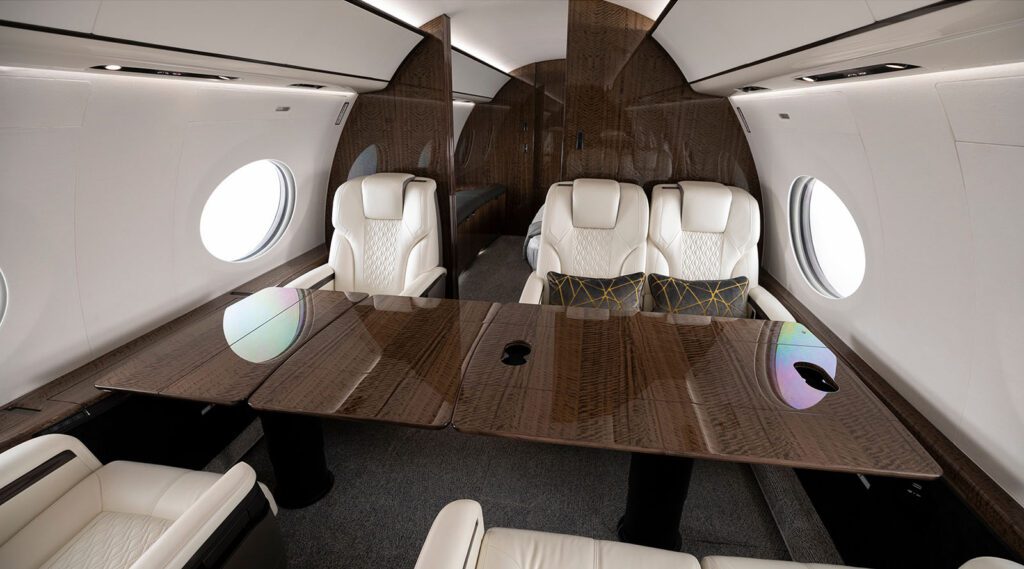
- Treat private aviation as infrastructure, not luxury. Route your aviation decisions through your travel advisor, who will know which charter relationships offer the most reliable short-notice access and which aircraft configurations suit your actual usage patterns. The Gulfstream G700 makes sense for transoceanic hops; it doesn’t make sense for a 90-minute regional flight.
- Distinguish between exclusive and secluded. Exclusivity means limited access — few people can be there. Seclusion means physical remoteness. Both matter, but for different reasons. An exclusive property in central Paris is still very public. A remote Patagonian lodge is secluded but may be bookable by anyone who finds it. The ideal for most UHNW travelers is both.
- Give sustainability requirements real structural weight. This means looking past eco-certification logos at actual operational commitments: how does the property manage water? What does its relationship with the local community actually look like? Conservation-led operations like Tswalu pass this test; many properties with sustainability branding do not.
- Align your travel with the actual values of your household, not an imagined status template. The generational shift in UHNW travel is real. If you’d genuinely rather spend a week tracking leopards in the Kalahari than at a Courchevel chalet, the infrastructure to do the former at the highest possible level exists and is improving rapidly. The image of what billionaire travel “looks like” is far narrower than what’s actually available.
The Honest Difficulty
There’s one thing worth saying that the luxury travel world tends to avoid saying: even with the best advisor, the best property, and the best intentions, not every trip works. That sounds obvious, but the marketing of UHNW hospitality creates an expectation of flawless perfection that’s genuinely counterproductive. Weather happens. Logistics break. Staff turn over. The GM who knew your preferences took a new position.
The UHNW travelers who consistently have the best experiences aren’t the ones who demand perfection — they’re the ones who have built relationships deep enough that when something goes wrong, it gets fixed fast, and it gets fixed in a way that produces a better outcome than the original plan would have. That requires trust, and trust requires time. The best hospitality professionals in this world are fond of the phrase “the answer is yes” — but the full version of that phrase is: “the answer is yes, and we’ll figure out how.” That’s a relationship. It’s not a transaction.
“For ultra-wealthy clients, consistency in service and complete discretion are the two most valued aspects of a travel provider relationship. Advisors who deliver these, without compromise, secure lifelong loyalty.”
— Travel and Tour World, April 2026, citing luxury travel advisor researchThe people who fail at billionaire travel are almost always people who approached it as a purchasing problem. Spend enough money, get enough access — that’s the assumption. But access is just the door. What’s on the other side requires understanding what you actually want, being honest about your preferences, and investing in relationships with people who can translate that into experiences that feel genuinely built around your life. That’s available. It just takes longer to build than most people expect, and it rewards patience in ways that are hard to convey until you’ve experienced it.
The market for this is growing — fast. UHNW individuals allocated $45 billion annually to luxury hospitality in 2025, and that number is on a trajectory that shows no sign of flattening. The infrastructure around this world is getting better, more global, and more sophisticated. The Gulf, India, and Southeast Asia are producing new concentrations of wealth that are reshaping demand in ways the traditional European-centric luxury model hasn’t fully processed yet. The next decade will look significantly different from the last one.
But the fundamentals won’t change. The best experiences will still go to the people who understand how this world actually works — not how it’s advertised to work.
Explore More on MostExpensives.com
Deep dives into the world’s most exclusive experiences, properties, and possessions
Privacy Policy
https://www.mostexpensives.com/hard-to-access-properties/
https://www.mostexpensives.com/ultra-luxury-hospitality/
https://www.mostexpensives.com/prestige-amenities/
Billionaire Superyachts —And Why They Cost So Much
Most Expensive Hotels in the World 2026: Jaw-Dropping Luxury