
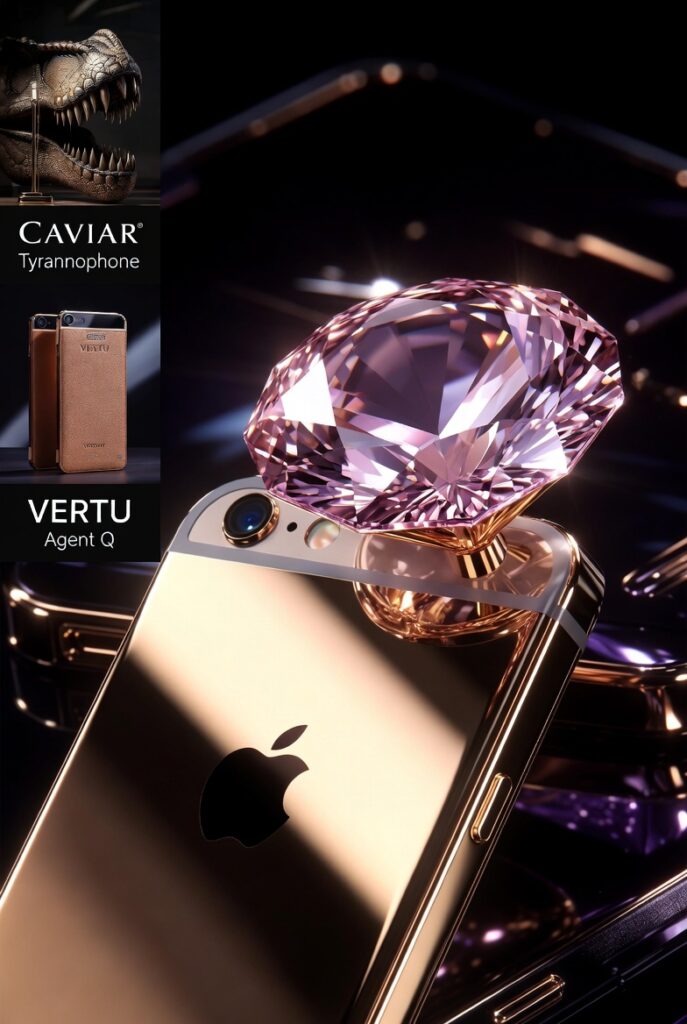


Your $1,500 iPhone feels perfectly premium — until you discover that somewhere in the world, a billionaire owns a phone worth more than a private island. The ultra-luxury smartphone market operates in a dimension most of us will never visit: one defined not by processing speed or camera megapixels, but by the carat weight of diamonds, the rarity of gemstones, and the prestige of hand-assembled craftsmanship.
These are not gadgets. They are wearable vaults — part jewellery, part status declaration, part collector’s investment. In 2026, the most expensive phones on earth blur the boundary between mobile technology and fine art. Unlike a flagship Samsung or Apple, which depreciates the moment you leave the store, the finest luxury handsets often appreciate over time — functioning closer to investment jewellery than consumer electronics.
This ranking draws on auction records, manufacturer pricing, verified press coverage, and luxury goods market analysis. Where a price reflects a private commission or auction result, that is noted. All prices are in USD.
Pricing methodology: Figures reflect the highest publicly verified sale or list price at time of research (April 2026). Private commission prices are estimates based on declared component costs and comparable auction results. Sources are linked at each entry. Where no independent auction record exists, the manufacturer’s stated price is used and noted as such.
The most expensive phones are not built for performance. They are built to impress, to symbolise status, and to exist as rare collectibles that outlive the technology inside them.
MostExpensives Analysis, 2026Price Comparison at a Glance
Logarithmic scale — each step represents a tenfold increase in price
The Definitive Ranking · 2026
Ten Phones That Redefine Luxury
Ranked by highest verified price. Sources linked at each entry.
The undisputed record-holder in luxury mobile devices. Coated in 24-karat gold with a rare, emerald-cut pink diamond as the centrepiece of its rear panel, this phone is effectively a priceless gemstone with a SIM card slot. Pink diamonds rank among the rarest gemstones on earth — fewer are mined annually than almost any other coloured stone — and the specimen here would command eight figures at auction on its own. The phone reportedly belongs to Nita Ambani, wife of Mukesh Ambani, Asia’s wealthiest individual. The underlying iPhone 6 hardware is now technologically obsolete; the Supernova’s value is entirely in its materials and provenance. The body features platinum coating alongside the gold, and the device reportedly includes proprietary anti-hacking hardware to protect its owner’s communications. As an investment-grade collectible, its value has appreciated as pink diamond prices have risen since its creation.
Sources: Business Insider · Guinness World Records
Handcrafted by British luxury designer Stuart Hughes in 2012, this $15 million masterpiece replaces the standard home button with a single, hand-selected 26-carat black diamond. The body is crafted from platinum and solid gold, assembled by hand over a period of months. What separates it from bejewelled novelties is the quality of the stone: black diamonds of that size and clarity are extraordinarily rare, occupying a niche even within the coloured-diamond market. Stuart Hughes has since created numerous bespoke devices for high-net-worth clients, but the Black Diamond iPhone remains the pinnacle of his portfolio. It is one of the most studied examples of fine-craft luxury goods crossing into consumer technology.
Sources: Stuart Hughes Official · Forbes
In 2006, the Goldvish Le Million entered the Guinness World Records as the most expensive mobile phone ever sold at that time — a title it held for years. Crafted from 18-carat white gold in Geneva, it features 120 carats of VVS-1 grade diamonds — the highest clarity rating in the diamond grading system — set across its surface. Two decades have not diminished its significance. The Le Million demonstrated that mobile devices could compete with haute horlogerie as a luxury category. Its Geneva provenance matters: the city’s watchmaking tradition gives its precision craftsmanship a pedigree that London or New York workshops cannot replicate by reputation alone. This is the phone that established the template for everything ranked below it.
Sources: Guinness World Records · Goldvish.com
Ten months in the making, with a manufacturing process that rivals the production timeline of haute couture. The casing uses 271 grams of 22-carat gold; the front bezel is set with 136 individually selected diamonds; the home button is a 7.1-carat diamond. But the packaging may be the most audacious element of all: the device arrives in a 7-kilogram chest carved from a single block of Kashmir gold granite, with a padded silk interior. The chest alone is an art object. No gift category at any price level competes with this as a statement of intent. The Supreme set the aesthetic template for bespoke mobile luxury and has not been surpassed in terms of packaging theatre.
Sources: The Telegraph · Wired
A masterclass in materials engineering applied to consumer electronics. The frame is constructed from a blend of 18-carat yellow, white, and rose gold — three alloys used simultaneously, requiring a level of precision more common in fine watchmaking than phone manufacturing. The white gold line is set with 138 brilliant-cut diamonds. The home button is replaced by a 6.6-carat diamond. The package includes a hand-finished Ostrich-foot leather wallet — one of the world’s rarer exotic leathers. Jeweller Peter Aloisson created the King’s Button to surpass his own prior creation, the Diamond Crypto Smartphone — and it did. What it teaches the market is that innovation in this category is as likely to come from the jewellery atelier as from the engineering lab.
Sources: Luxury Launches
Perhaps the most unexpected luxury material ever embedded in a smartphone: the backplate contains authentic fragments of Tyrannosaurus rex tooth, sourced and authenticated by Caviar. Paired with titanium inlays and the full photographic and processing capabilities of the iPhone 13 Pro, it offers the owner a direct tactile connection to the Cretaceous period — approximately 66 million years of provenance. The Tyrannophone represents a category pivot: not the rarest metal or the heaviest diamond, but the most irreproducible material. No other phone can replicate a specific T-rex tooth fragment. Caviar’s strategy — transforming Apple’s flagship into something deeply personal and biologically unique — is the most creative in this ranking. Price makes it relatively accessible at this tier; uniqueness makes it priceless to the right buyer.
Sources: Caviar Official · Dezeen
Where most luxury phones treat their materials as decoration, Gresso chose materials that improve with age. The body is carved from African blackwood that is more than 200 years old — one of the rarest and hardest timbers on earth, typically reserved for high-end musical instruments and fine furniture. It is combined with 24-karat gold accents and sapphire crystal buttons. The result is a device that functions as a genuine heirloom: the wood will darken and develop patina over decades; the gold will not tarnish; the sapphire will not scratch. The “Las Vegas Jackpot” name is a marketing conceit, but the underlying product philosophy is more serious: luxury through material permanence, not novelty. In a category dominated by diamonds and gold, the Jackpot remains the only phone that gets more beautiful as it ages.
Sources: Gresso Official · Bloomberg
A platinum frame set with 50 diamonds — including 10 rare blue diamonds — surrounds military-grade encryption hardware, making this the only entry on this list where the price is at least partially justified by functional security performance rather than materials alone. The rose gold navigation key and logo add warmth to an otherwise intensely technical aesthetic. The device targets a precise buyer: the privacy-obsessed ultra-high-net-worth individual who will not compromise on aesthetics. Blue diamonds carry a price-per-carat premium over white diamonds even at the same clarity grade; the 10 in this frame represent a meaningful portion of the $1.3M total. The Diamond Crypto predates the modern smartphone era — it ran on a proprietary OS — but its security architecture influenced subsequent luxury-security phone hybrids.
Sources: Reuters
The only entry on this list defined as much by intelligence as aesthetics — and the most analytically significant device in the 2026 market. Where every other phone here derives its price from material rarity, the VERTU Agent Q derives a meaningful portion of its value from software sophistication. The Falcon-Wing SIM chamber and Swiss-engineered hinge — assembled from 320+ hand-finished components — satisfy the hardware credentials the market expects. But the real differentiator is VAOS, VERTU’s AI operating system, which powers over 200 autonomous agents capable of booking flights, drafting documents, and learning the owner’s behavioural patterns over time. In a market historically resistant to technological disruption, the Agent Q signals a new competitive axis: the question is no longer only what the phone is made of, but what it can think. At $12,880–$18,800, it is the most accessible phone on this list by a large margin — and possibly the most forward-looking. See also: most expensive gadgets of 2026.
Sources: VERTU Official · Financial Times
A solid 18-karat gold backplate with intricate hand-engravings transforms Apple’s iPhone 12 Pro into a statement of old-world craft. Caviar’s bespoke engraving patterns ensure no two devices are identical — a meaningful distinction in a market where limited-run production usually means batches of dozens, not truly unique objects. At $122,000, it sits at what passes for the accessible end of this ranking. That number tells you everything about the tier of buyer the ultra-luxury phone category actually addresses. For context: a standard Apple iPhone 12 Pro at launch cost $999. The Pure Gold edition represents a 120x premium — paid for the gold, the engraving, the exclusivity, and the Caviar name. The return on that premium is entirely non-functional. That is precisely the point. Explore more ultra-expensive Apple products on MostExpensives.
Sources: Caviar Official
What Drives the Price
The Anatomy of a Million-Dollar Phone
Strip away the brand name, the gold leaf, and the diamonds, and you would find a smartphone not necessarily more capable than a flagship Samsung or Apple. So what exactly justifies price tags that could buy a London townhouse? The answer lies across six intersecting drivers — and understanding them explains why this market is structurally immune to disruption from Silicon Valley.
At the highest tier, it is less about what the phone can do — and more about what it says about the person holding it.
MostExpensives Analysis, 2026Market Geography
Where the World’s Rarest Phones Are Bought
The geography of desire is not evenly distributed. The most concentrated demand for ultra-luxury smartphones comes from four urban centres where the display of wealth functions as a cultural signal of achievement — not a provocation. In these markets, arriving at a business dinner with a $15,000 VERTU is the mobile equivalent of pulling up in a Rolls-Royce.
| City / Region | Demand Driver | Preferred Category | Cultural Signal |
|---|---|---|---|
| Dubai & Gulf | Old money + sovereign wealth, gifting culture | Gold & diamond commissions; private bespoke | Generational wealth display at social gatherings |
| London | International UHNW community; private banking | Security-enhanced + prestige brand (VERTU heritage) | Understated craftsmanship; anti-flashiness norms |
| Hong Kong & Singapore | Chinese tech entrepreneurs; family office wealth | Limited edition collaborations; auction acquisitions | Collector status in business peer networks |
| Moscow / CIS | Resource sector wealth (pre-sanctions era peaks) | Bespoke gold & gemstone commissions | Overt display; scale of gem more important than design |
| Mumbai & Delhi | Industrialist families; Bollywood; tech unicorn founders | Pink & coloured diamond editions; heritage crafts | Marriage and celebration gifting at the highest tier |
The Future of Luxury Tech
Where Luxury Meets Artificial Intelligence
The 2026 ultra-luxury phone landscape is beginning to evolve beyond pure materials. The VERTU Agent Q signals a new competitive axis: devices where the premium is not only in what they are made of, but what they can think. AI agents that learn your preferences, manage your schedule, protect your privacy, and adapt to your habits are becoming the new sapphire button — the differentiator that justifies the price in a market now crowded with gold and diamonds.
The pattern that emerges when you read the VERTU Agent Q launch alongside the rising cost of coloured diamonds and the growing appetite for biological uniqueness (fossils, exotic timbers) is this: the ultra-luxury phone market is bifurcating. One branch will remain anchored in material rarity — the $48.5M category, where the phone is a gemstone vehicle. The other branch is heading toward intelligence rarity: the $20,000–$50,000 device whose premium comes from what it knows about you and what it can do autonomously on your behalf. By 2028, those two categories will likely require entirely different value propositions to compete.
Meanwhile, Huawei’s Mate XT tri-fold — with its revolutionary 10.2-inch expandable display — hints at how hardware innovation can itself become a luxury proposition. When a form factor is genuinely unique and patented, scarcity is structurally built in, and early ownership becomes its own status signal. The organisations — and the buyers — best positioned in 2028 will be those who recognised that AI capability and material rarity are not competing luxury propositions. They are converging ones. The $50,000 phone of 2028 will very likely feature both.
The ultra-luxury smartphone market has never competed with Apple or Samsung. It competes with Patek Philippe, Bugatti, and Tiffany & Co. — with objects that outlast their owners and carry stories in their materials. As AI sophistication deepens and rare materials become scarcer, the ceiling on what a smartphone can cost may not yet have been reached.
The world’s most expensive smartphones are not products. They are declarations — of taste, success, and the belief that the finest things in life should never be ordinary. The phone you carry either says something, or it says nothing. At this tier, silence is not an option.
Explore More Extreme Luxury
Discover the world’s most expensive objects across every category — watches, cars, jewellery, and beyond.
World’s Most Expensive Gold Smartphones in 2025: The Pinnacle of Luxury
The World’s Most Expensive TVs Moves
Leave a Reply