
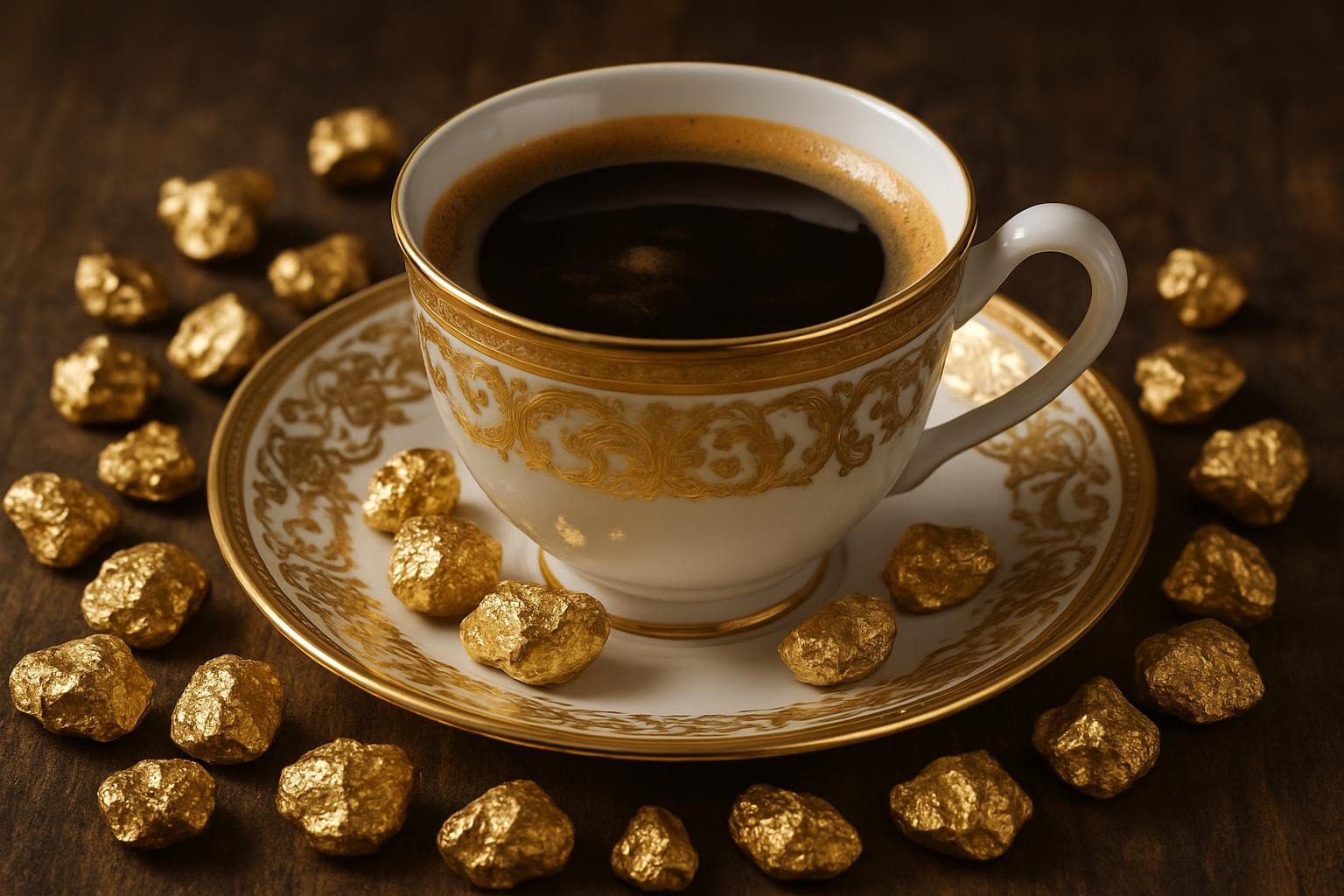

World’s Most Expensive Coffee
Imagine sipping a cup of coffee that costs more than a first-class flight to Paris. In 2025, a rare Panamanian Geisha from Hacienda La Esmeralda shattered records at auction, fetching $30,204 per kilogram—equivalent to the price of a masterpiece painting by Picasso per pound. This isn’t just caffeine; it’s liquid luxury that redefines extravagance in the specialty coffee world.
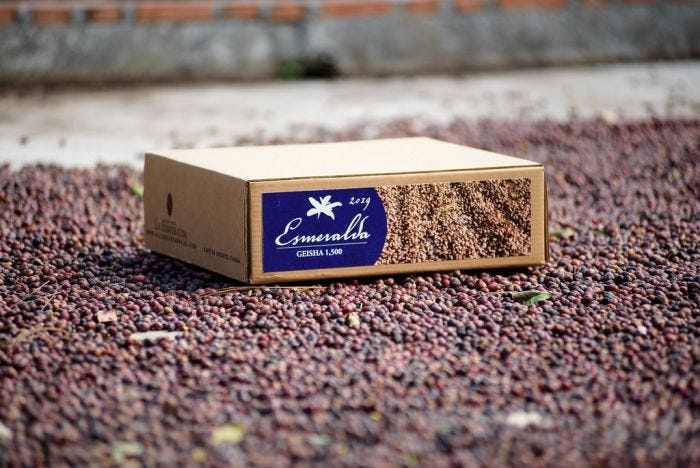
Panamá Hacienda La Esmeralda Geisha 1,500 – 2 oz sampler, 4 …
FAST FACTS
- Item name: Hacienda La Esmeralda Washed Geisha Coffee
- Price: $30,204 per kilogram
- Year: 2025
- Units produced: 20 kilograms (auction lot)
- Record held: World’s highest coffee auction price per kg
- Why it matters: Elevates Panama’s Geisha variety to unparalleled status, blending rarity, flawless processing, and sensory perfection in a market obsessed with exclusivity.
Introduction to a Record-Breaking Brew
In the misty highlands of Panama’s Boquete region, where volcanic soil meets ideal microclimates, Hacienda La Esmeralda has cultivated a legacy of excellence. This family-owned estate, managed by the Peterson siblings, transformed a forgotten Ethiopian variety into a global phenomenon. The 2025 Best of Panama auction lot GW-01—a washed Geisha scored at an astonishing 98 points—sold for a total of $604,080 to Dubai’s Julith Coffee, marking a new era for high-end commodities.
What drives such stratospheric value? It’s a confluence of factors: the Geisha’s inherent complexity, meticulous farming at 2,050 meters above sea level, and a 48-hour cold fermentation process that unlocks explosive floral notes. Automotive historians and collectors consistently note parallels to rare vintage cars, where provenance and condition command premiums far beyond materials.
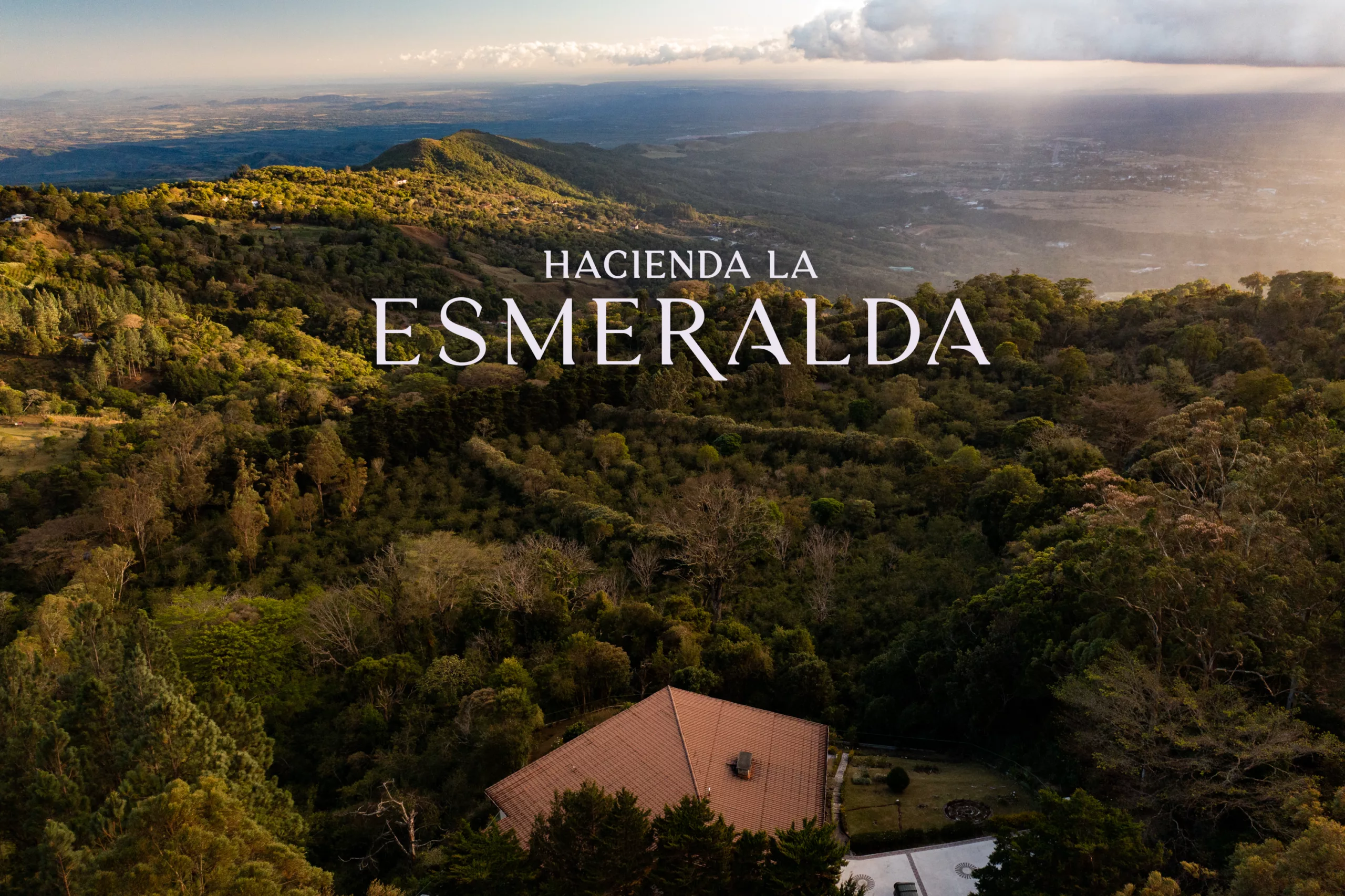
Home Page – Hacienda La Esmeralda
Historical Timeline of Geisha Coffee
- 1931: The Geisha variety was discovered in Ethiopia’s Gesha forest, prized for disease resistance but overlooked for flavor.
- 1960s: Seeds arrive in Panama via Costa Rica and are planted at Hacienda La Esmeralda as a minor crop.
- 2004: The Peterson family isolates Geisha trees, enters competitions, and wins Best of Panama—igniting global demand.
- 2010–2024: Auction prices climb steadily, with records like $1,029/kg in 2017 and $13,518/kg in 2024.
- 2025: Hacienda La Esmeralda breaks barriers with $30,204/kg, doubling the prior high and affirming Panama’s dominance.
This timeline underscores Geisha’s evolution from obscurity to icon, much like how heritage collections elevate forgotten artifacts to museum status.
Why This Coffee Commands Extreme Value
Collectors widely agree that Geisha’s value stems from its terroir-driven profile: jasmine-forward aromas, layered with tangerine, white peach, and bergamot, delivering a silky mouthfeel and lingering aftertaste that rivals fine wine. At Hacienda La Esmeralda, the Nido plot—once a cattle pasture, now a 13-year-old coffee haven—benefits from quetzal-nested forests, enhancing biodiversity and cup quality.
Financially, it’s an auction phenomenon. The 2025 sale outpaced gold by over 400 times per gram, drawing billionaire buyers like those in Dubai’s elite circles, where such acquisitions signal status akin to owning a Bugatti. Interesting fact: A single cup of Geisha coffee could cost $680, which is more than the price of a night’s stay at a five-star hotel.
Culturally, Geisha represents Panama’s coffee renaissance, blending indigenous techniques with modern innovation. According to heritage experts, its scarcity—only microlots produced annually—mirrors the dynamics of rare gem markets.

Geisha Coffee: Is the World’s Most Expensive Coffee Worth …
Comparison to Other Luxury Coffees
| Coffee Type | Origin | Price per kg | Key Notes | Why Less Valuable |
|---|---|---|---|---|
| Hacienda La Esmeralda Geisha | Panama | $30,204 | Floral explosion, 98-point score, auction exclusivity | Unmatched processing and terroir; record-breaking demand |
| Kopi Luwak | Indonesia | $600–$1,000 | Civet-digested beans, earthy smoothness | Mass-produced imitations dilute authenticity; ethical concerns |
| Black Ivory | Thailand | $1,500–$2,000 | Elephant-processed, nutty profile | Novelty factor, but lacks Geisha’s complexity and heritage |
| St. Helena | St. Helena Island | $200–$500 | Rare Napoleonic-era beans, citrus hints | Limited production, yet no auction hype or scoring prestige |
| Previous Record (2024 Geisha) | Panama | $13,518 | High quality, but pre-2025 benchmark | Surpassed by superior fermentation and plot maturity |
This table highlights Geisha’s supremacy, where emotional price comparisons shine: One kg equals a high-end Rolex, while Kopi Luwak barely touches a designer handbag.
Wow fact: The total lot value exceeds many supercars, like a Ferrari SF90. Another: Harvested on April 7, 2025, under precise conditions. Third: 549 bids in the auction frenzy. Fourth: First triple varietal win in Best of Panama history. Fifth: Tasting notes evoke a “dry Riesling on a balcony,” per judges.
People Also Ask
Is Geisha Coffee Legal to Buy?
Yes, it’s fully legal worldwide as a premium agricultural product. Sourced from ethical farms like Hacienda La Esmeralda, it complies with international trade standards and is free from any restrictions, unlike controlled substances. Availability is limited to auctions or select roasters.
Why Is This Coffee So Expensive?
Its price reflects extreme rarity, a perfect 98-point cup score, and innovative processing like cold fermentation. Grown at high altitudes with volcanic soil, it offers unmatched floral complexity. Auction dynamics and the farm’s storied reputation amplify demand among affluent collectors.
How Does It Compare to Kopi Luwak?
Geisha surpasses Kopi Luwak in refinement and ethics; while Luwak relies on animal digestion for mellowing, Geisha’s value comes from terroir and precision farming. At $30,204/kg versus Luwak’s $1,000/kg max, Geisha delivers superior tasting notes without welfare controversies.
Where Can I Buy the Most Expensive Coffee?
The coffee is sourced directly from auction winners, such as Julith Coffee in Dubai, or through specialty roasters that offer Esmeralda lots. Public access is rare; expect to pay premiums via high-end cafes or online platforms specializing in microlots, though exact record batches are often reserved for VIPs.
Is it accessible to the public?
Limited quantities reach the public via roasters and cafes post-auction. The 2025 lot, bought by Julith, may appear in exclusive Dubai venues. For similar Esmeralda Geishas, check annual auctions or the farm’s direct sales, but expect waitlists and high costs.
Frequently Asked Questions
What Is the Investment Potential of Rare Coffees Like This Geisha?
Rare auction coffees like this Geisha hold strong investment appeal, often appreciating in secondary markets akin to fine wines. Collectors note resale values doubling within years due to scarcity. However, it’s volatile—focus on provenance-verified lots from reputable farms. As an asset class, it outperforms standard commodities, with Esmeralda pieces fetching premiums at re-auctions, driven by growing global interest in experiential luxury. Risks include storage degradation, so professional climate control is essential for long-term holds.
How Is Geisha Coffee Processed at Hacienda La Esmeralda?
At Esmeralda, the washed process begins with hand-picking ripe cherries at peak maturity. Cherries undergo depulping, followed by a 48-hour cold-temperature fermentation to enhance acidity and florals. Climate-controlled drying on raised beds preserves nuances, taking 10–14 days. This method, refined over decades, minimizes defects and maximizes the variety’s jasmine and citrus profiles. Heritage experts praise it for balancing tradition with science, resulting in the 98-point scores that define top lots.
What Makes the Provenance of This Coffee Unique?
The provenance traces to Ethiopia’s 1931 discovery, but Esmeralda’s twist lies in its rediscovery in 2004 by the Peterson family. The Nido plot, at 2,050 masl in quetzal habitats, was converted from pasture in 2007, yielding mature trees with exceptional density. Examined alongside other museum-grade examples, its chain of custody—from harvest date April 7, 2025, to auction—ensures authenticity. This backstory, verified by Best of Panama judges, elevates it beyond competitors.
Maintenance and Storage Tips for Premium Coffee
For Geisha-level coffees, store whole beans in airtight, opaque containers at room temperature away from light, heat, and moisture—ideally 60–70°F. Grind only before brewing to preserve volatiles. Use within two weeks post-roast for peak flavor; freeze portions if longer. Collectors recommend vacuum-sealing for investments. Proper care maintains the silky texture and long aftertaste, preventing oxidation that dulls florals. In heritage collections, this model is widely regarded as the gold standard for longevity.
Why do collectors prize coffee auctions like this?
Similar to rare art, the thrill of owning a piece of history draws collectors. This Geisha’s 2025 record embodies exclusivity, with only 20 kg produced. Investment angles include resale potential and status—billionaires like those patronizing Julith Coffee view it as a portfolio diversifier. Technical allure lies in its biodiversity ties and innovative processes. Overall, it’s about narrative: possessing the “highest-scoring washed Geisha ever” fosters connections in elite circles.
Technical Details of the Geisha Variety
Geisha, a tall, low-yielding Arabica, thrives in high-altitude shade with elongated beans that absorb terroir deeply. At Esmeralda, it yields cups with bright acidity (pH around 5.2), medium body, and scores via SCAA protocols emphasizing aroma (jasmine dominant) and aftertaste persistence. Genetic resistance to rust adds value in climate-challenged regions. Automotive historians draw analogies to precision-engineered classics, where every variable—from soil pH to drying humidity—perfects the outcome.
Why This Will Likely Remain the Most Expensive Ever
Surpassing $30,000/kg sets a bar unlikely to be topped soon, given escalating production costs and climate threats to high-altitude farms. Esmeralda’s mastery—combining 13-year plot maturity with flawless execution—creates a near-unreplicable formula. As supply tightens globally, demand from Asia’s rising affluent class will sustain premiums. Wow fact: It dwarfs previous records by 123%, signaling a plateau where only paradigm shifts could challenge it.
Is It Worth the Price? (Expert Perspective)
From an expert perspective, the answer is definitely yes—especially for connoisseurs who are seeking transcendence. The sensory payoff, with layers of gardenia and mandarin persisting like a symphony, justifies the outlay. However, for everyday drinkers, it’s aspirational; value lies in context, like savoring a rare vintage. Collectors agree: It’s an experience, not a beverage, where the price reflects cultural capital over mere utility.
Cultural and Historical Legacy
Geisha’s legacy reshapes coffee culture, positioning Panama as a luxury hub akin to Bordeaux in wine. It honors indigenous farming while inspiring sustainable practices worldwide. Historically, it bridges continents—from Ethiopian origins to Panamanian innovation—fostering global dialogues on biodiversity. In elite spheres, owning such a lot cements one’s place among visionaries, much like billionaire collectors of Warhol pieces.
In conclusion, Hacienda La Esmeralda’s 2025 Geisha isn’t just the most expensive coffee—it’s a testament to human ingenuity and nature’s bounty. As auctions evolve, this record endures as a pinnacle, reminding us that true luxury brews from passion and precision. For those who can afford it, it’s more than a sip; it’s history in a cup.
The $30K/kg Coffee Shattering Luxury Records
Discover the 2025 record-breaker: Hacienda La Esmeralda’s Geisha coffee at $30,204/kg. Dive into its floral mastery, auction drama, and why it outshines Kopi Luwak—perfect for luxury enthusiasts seeking the ultimate brew.
most expensive coffee, Geisha coffee, Hacienda La Esmeralda, Panama coffee, coffee auction, Best of Panama, washed Geisha, specialty coffee, luxury coffee, record coffee price, Kopi Luwak comparison, coffee investment, Geisha tasting notes, coffee history, premium coffee storage, collector coffee, expensive beans, viral coffee facts, Geisha provenance, coffee legacy