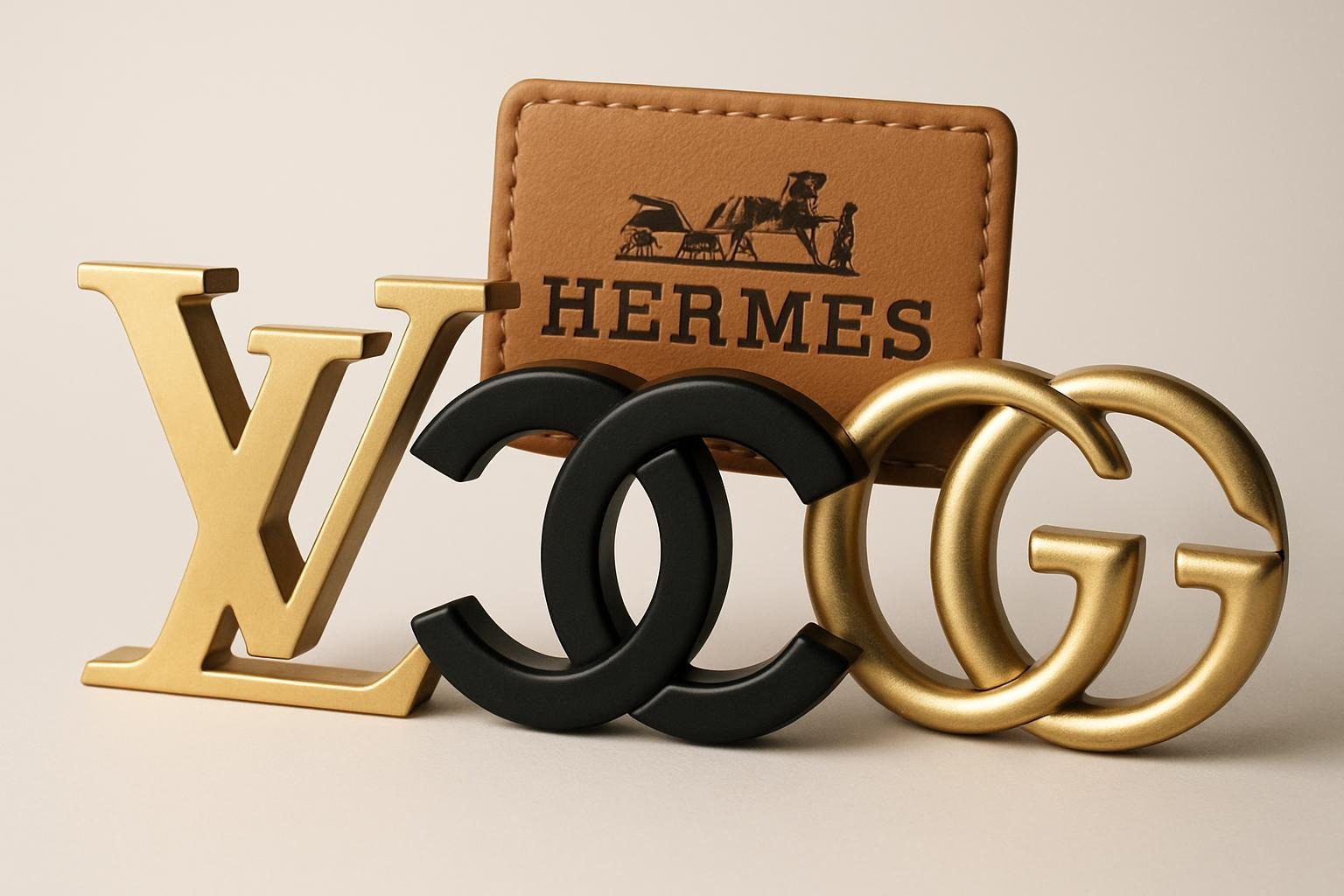


Most Expensive Designer Brands
in the World 2025–2026
Brand values, real prices, auction records, and the investment mechanics behind the names that command more than luxury — they command markets.
A Birkin sold for $10.1 million in Paris last July. Not a diamond-encrusted special edition — Jane Birkin’s actual prototype, the original bag, the one that started it all. The bidding war lasted ten minutes and involved nine collectors calling from four continents. That number tells you everything about where luxury has gone.
The most expensive designer brands in the world are no longer simply selling fashion. They are managing scarcity like central banks manage currency — with precision, restraint, and an acute awareness that the moment supply meets demand, the mystique evaporates. Understanding which brands genuinely lead this hierarchy in 2025–2026, and why, requires looking past logo recognition and into the mechanics: brand valuation methodology, price architecture, secondary market retention, and the conglomerate structures that make these houses so durable.
This is not a ranking of who is most famous. Fame is cheap. This is a ranking of who commands the highest prices, retains the most value, and has built structures so robust that even a global luxury slowdown — and 2025 was one — barely dented them.
The Three Empires Behind Almost Everything
Before the individual brands, the structure matters. Almost every name on this list is owned by one of three holding groups, and understanding their financial position in 2025 explains the competitive dynamics between the brands themselves.
75 houses. 1% organic decline in 2025 — a reality check after years of hyper-growth, but H2 showed stabilization. Free cash flow of €11.3B.
Jewelry Maisons generated €15.33B in 2025 alone. The strongest performer among the big three — double-digit growth in Europe and Americas while LVMH and Kering declined.
The hardest year among the three. Gucci’s creative reset under new leadership cost meaningful revenue. Bottega Veneta was the only portfolio brand that grew — up 4% despite losing its celebrated director Matthieu Blazy to Chanel.
Hermès sits outside all three — independently listed in Paris, still controlled by the Hermès family — and that independence is precisely why it outperforms. No group pressures. No cross-subsidization. No quarterly investor calls forcing growth projections into a brand that was built on patience.
The Most Expensive Designer Brands: Full 2025–2026 Ranking
Brand value figures draw on the Kantar BrandZ 2025 luxury data, Brand Finance Luxury & Premium 50 (2025 edition), and Interbrand’s 2025 Best Global Brands. Where methodologies differ — and they do differ, sometimes dramatically — I’ve noted the range. A single figure would be false precision.
The Birkin Problem: Why Hermès Operates by Different Rules
Every expensive brand on this list raises prices annually. Hermès raises prices while simultaneously making its bags harder to acquire. Those are two different strategies that only look the same from the outside.
The Birkin 30 in Togo leather cost $7,700 in 2008. By 2015 it had reached $10,900 — a $3,200 increase over seven years. Then Hermès paused. Five years of relative price stability, building demand without extracting it. In January 2026, the same bag crossed $14,900 in U.S. boutiques. In Europe, €10,600. The price gap between the two regions has widened specifically because U.S. pricing has accelerated faster than European — a structural arbitrage that fuels tourism buying and grey-market flows.
On the secondary market, the real signal is the auction record set in July 2025 in Paris. Jane Birkin’s original prototype — her personal prototype, not a rare special order — reached $10.1 million after a ten-minute bidding war involving nine collectors. That same December, a second bag personally owned by Jane Birkin sold in Abu Dhabi for $2.9 million. Two bags in one year, nearly $13 million combined. Sotheby’s Birkin sales grew more than 70% in 2025 alone, and the house has sold nearly $100 million in Hermès Birkins since 2021.
Scarcity at Hermès is not accidental. It is policy. One person can buy a maximum of two bags per year from boutiques. Production cannot scale quickly even if demand rises. And demand has not stopped rising.
— Operational reality, Hermès supply structure, 2026What the Birkin 25 shows over the decade from 2016 to 2026 is a 44% retail price increase — from $9,400 to $13,500. That number sounds large. The real story is in what the secondary market did in parallel. Pristine Birkins in sought-after colors regularly clear $30,000 on authenticated platforms, and a Himalaya Birkin in crocodile with diamond hardware can reach six figures. The retail price is almost beside the point — it is the entry ticket to a game played on an entirely different board.
Chanel’s Decade of Deliberate Ascent
There is a specific statistic that Chanel’s pricing strategy makes vivid: the Classic Flap Medium cost approximately $1,000 in the 1980s. By 2016, it was $4,900. As of August 2025, it reached $11,300, and by April 2026 — after Matthieu Blazy’s arrival generated fresh commercial momentum — the same bag is $11,700. That is a 130% increase in under a decade, and a roughly 1,000%+ increase over four decades of ownership.
For context on velocity: The Chanel Classic Flap Medium increased by roughly $900 between mid-2025 and April 2026 alone — across two separate price adjustments. The trajectory toward a $12,000 bag is now, as one trade publication put it, “no longer speculative.” Historically, Chanel bag retail values have increased 10–15% annually, though resale values in used condition typically run 15–40% below retail.
Chanel’s 2026 pricing adjustment was 3–5% across most lines — measured, consistent, and strategically timed. The Boy Bag absorbed $200 across all sizes. The Chanel 19 rose $300 (4%). The Chanel 22 took $200 across the board. One notable signal: the Spring 2026 styles under Blazy were specifically excluded from the increase. This protects the new direction during its market establishment phase — a tactically intelligent move that acknowledges pricing power is not unlimited even for Chanel.
The logic Chanel is running: behave more like Hermès than like Louis Vuitton. Keep prices moving faster than inflation, limit availability in certain colorways and materials, and position the brand definitively above the mid-tier luxury houses now scrambling to reclaim relevance.
For the most expensive items across all categories — from cars to watches to private islands — explore the complete rankings at MostExpensives.com, where we track record prices across every luxury vertical.
The Watch Tier: Where Price Becomes Philosophical
Fashion and jewelry operate in different economies. The most expensive handbag ever sold is the Jane Birkin prototype at $10.1 million. The most expensive watch ever created — not sold at auction, but commissioned and valued — is the Graff Diamonds Hallucination at $55 million. These numbers exist in different universes, and understanding why requires understanding that at the extreme of watchmaking, price is no longer a function of materials or labor. It is a function of the question: how much would someone pay to own something no other living person owns?
The watch brands that command these prices — Patek Philippe, Rolex, Audemars Piguet, Richard Mille — each occupy a distinct psychological position. Patek makes the case that its watches outlive their owners (“you never actually own a Patek Philippe”). Rolex is the sports luxury standard, the benchmark against which every other sector-leader watch is measured. Audemars Piguet’s Royal Oak, designed by Gérald Genta in 1972, invented the concept of luxury sports watch as we now understand it. Richard Mille makes watches that look like they belong on a racing car’s dashboard and price them accordingly — starting around $80,000, with limited editions reaching well past $1 million.
Price Architecture Compared: What You Actually Pay
Brand value figures are useful for understanding market position. What they obscure is the entry price — the minimum spend to be considered a customer of a given house. The gap between entry and ceiling tells you as much about a brand’s strategy as any valuation number.
| Brand | Entry Price | Iconic Product (2026) | Ceiling | Market Trend |
|---|---|---|---|---|
| Hermès | ~$300 (scarf) | Birkin 30: $14,900 | $10.1M (auction, 2025) | ↑ Strong |
| Chanel | ~$400 (lipstick) | Classic Flap M: $11,700 | Haute couture: $100,000+ | ↑ Rising |
| Louis Vuitton | ~$450 (wallet) | Speedy B30: $2,040 | Special orders: $50,000+ | → Stable |
| Patek Philippe | $16,260 (Twenty~4) | Nautilus 5711: ~$35,000 | $33.6M (Grandmaster, auction) | ↑ +7.7% resale 2025 |
| Cartier | ~$500 (silver ring) | Love Bracelet: $6,900 (18k YG) | High jewellery: $500,000+ | ↑ Strong (Richemont) |
| Gucci | ~$300 (belt) | Jackie 1961: $2,800 | Exclusive orders: $50,000+ | ↓ Creative reset |
| Dior | ~$450 (cosmetics) | Lady Dior M: $6,000–$7,500 | Haute couture: $100,000+ | → Stable (tariff pressure) |
| Prada | ~$450 (nylon bag) | Galleria M: $3,950 | Fur & exotic: $30,000+ | ↑ Cultural peak |
| Graff Diamonds | ~$5,000 (entry ring) | Hallucination watch: $55M | $55M (Hallucination) | Watch / jewel tier |
| Rolex | ~$5,700 (Oyster Perpetual) | Submariner: ~$10,600 | $17.75M (Paul Newman Daytona) | ↑ Recovering |
These Are Not Just Brands. They Are Asset Classes.
The global luxury resale market reached approximately €50 billion in 2025, according to Bain & Company data. One in three luxury buyers now participates in resale. Among buyers under 35, that figure is even higher. This has changed what the most expensive designer brands are — they are no longer just cultural statements, they are portfolios.
Three categories stand out as the most robust value stores heading into 2026: pre-hike iconic styles (Chanel Classic Flap, Hermès Birkin) that carry embedded upside the moment the next price increase is announced; discontinued Louis Vuitton and Dior pieces now benchmarked against much higher current MSRPs; and Patek Philippe watches, where even non-rare references have demonstrated consistent long-term appreciation.
I’d add one caveat that investment-minded buyers should hear plainly: creative director transitions create short-term secondary market volatility that can be painful. Items from departing designers often spike immediately after the announcement — the moment the scarcity is confirmed — and then the market reassesses as the new direction takes hold. Heritage brands like Hermès and Chanel weather these transitions better than trend-dependent houses like Balenciaga. Demna Gvasalia’s departure from Balenciaga in early 2025 was exactly this kind of event.
The 2025–2026 Headwind Nobody Wanted to Talk About
The 2025 luxury market decline wasn’t only about Chinese consumer softness, though that was real. A 15% tariff on European luxury imports into the U.S. market — avoiding the more severe 30% initially threatened — added measurable pressure to brands like Chanel, Louis Vuitton, and Dior, which manufacture primarily in France and Italy. On paper, increasing prices into a softening demand environment with added import duties seems counterproductive. In practice, the top houses did it anyway, and largely got away with it.
The reason is structural: at the ultra-luxury tier, price increases are often self-fulfilling. They signal exclusivity. They make the object more desirable by making it less attainable. This is not irrational buyer psychology — it is the only rational response to a system where scarcity, not utility, is the core value proposition. Hermès understood this first. Chanel learned it. Louis Vuitton applies it more carefully, given its higher volume and broader customer base.
LVMH’s 2025 number to remember: €80.8 billion in revenue with a 1% organic decline. Operating free cash flow rose 8% to €11.3 billion. The luxury business was softer, but the cash machine was still running.
Names That Were Not on This List Five Years Ago — and Now Should Be
Loewe
Jonathan Anderson has spent a decade doing something genuinely rare: building a brand that collectors, critics, and customers all agree on simultaneously. The Puzzle bag has become a design object. The leather craft is exceptional. The annual Loewe Foundation Craft Prize (€50,000 award) anchors the brand’s credibility in a way that no advertising campaign could. Loewe is where Bottega Veneta was ten years ago — about to move from “insider favourite” to “primary investment target.”
Loro Piana
LVMH-owned, aggressively quiet. A $7,000 cashmere sweater with no visible logo. That’s the product. That’s also the strategy. Among ultra-high-net-worth buyers tired of ostentatious signaling, Loro Piana’s invisibility is its most valuable feature. Prices are not recovering — they never declined.
Brunello Cucinelli
The philosopher’s luxury brand. Founded in 1978, publicly listed in Milan, still run by its founder. Cashmere jackets start at $3,500. The brand has grown revenue consistently at 10%+ for years while most luxury houses reported declines. Cucinelli himself describes the brand as “humanistic capitalism.” His investors appear to agree.
The Watch Brands That Actually Hold Value
| Brand | Entry (2025 retail) | Signature Reference | Secondary Market | Why It Holds |
|---|---|---|---|---|
| Patek Philippe | $16,260 | Nautilus 5711 (~$35K retail) | Strong. Best index performance 2025. | Complications, heritage, controlled supply |
| Rolex | ~$5,700 | Submariner (~$10,600) | Recovering after 2023–24 correction | Strongest brand recognition globally |
| Audemars Piguet | ~$25,000 | Royal Oak Jumbo: ~$60,000 | Stable to strong | Invented the luxury sport watch genre |
| Richard Mille | ~$80,000 | RM 11-03: ~$200,000 | High volatility, high ceiling | Athlete partnerships, engineering theatre |
| Graff Diamonds | ~$5,000 (jewelry) | Hallucination: $55M | One-of-a-kind (no secondary market) | Absolute gemstone ceiling |
Questions That Come Up Repeatedly
By brand value in 2026, Louis Vuitton holds the top position — with valuations ranging from $48.4 billion (Interbrand) to $129.9 billion (Kantar BrandZ 2024) depending on the methodology. Hermès, at $93.7 billion by BrandZ, is the strongest climber. By exclusivity and price-per-item, Hermès outranks Louis Vuitton — a Birkin starts at $13,500 and can exceed $500,000 for exotic leathers. By absolute ceiling price, the Graff Diamonds Hallucination watch at $55 million is unmatched in any wearable category.
Retail prices have increased 44% over the past decade for the Birkin 25. Secondary market premiums for pristine, common-color examples run 1.25–1.8× retail. For sought-after colors and exotic leathers, multiples are significantly higher. Sotheby’s Birkin sales grew over 70% in 2025, and the house has sold nearly $100 million in Birkins since 2021. The structural constraint — two bags per customer per year, no scaling of production — is policy, not coincidence. The main risk is provenance: a fake Hermès receipt or unverifiable purchase history eliminates most of the premium. Buy through authorized channels or deeply reputable authenticated resellers only.
Several overlapping factors. Chinese consumer spending softened meaningfully after the post-COVID rebound peaked. U.S. tariffs of 15% on European luxury imports added pressure. The broader global luxury market that had been growing at unusual rates post-pandemic normalized. LVMH reported €80.8 billion in revenue — a 1% organic decline — but operating free cash flow still rose 8% to €11.3 billion. H2 2025 showed 1% organic growth, suggesting the floor has been reached. The structural businesses (fashion leather goods, selective retailing) proved more resilient than wines and spirits.
In the case of the Graff Diamonds Hallucination — nothing about timekeeping. The watch contains 110 carats of multi-colored diamonds including Fancy Pink, Yellow, Green, and Blue stones in emerald, heart, pear, marquise, and round cuts. The movement is quartz; it is secondary. The price is the price of the stones, the craftsmanship of setting them into a wearable object, and the fact that it is singular. One exists. That singularity, combined with Laurence Graff’s reputation as the most significant diamond dealer of his generation, is the entire rationale. For watches where price correlates with mechanical complexity — the Patek Grandmaster Chime at $33.6 million at auction — the answer is 20 complications, 932 components, and 100,000 hours of development. You are paying for the physics of time, not just its measurement.
By retail price appreciation, Chanel’s Classic Flap has increased approximately 130% over the decade 2016–2026 — from $4,900 to $11,700. By brand value, Chanel surged 45% to $37.9 billion in the most recent Brand Finance ranking cycle. By secondary market performance, Patek Philippe posted the strongest 2025 recovery per the Bloomberg Subdial Index (+7.7%). The honest answer is that no single brand leads across all metrics simultaneously — Hermès leads in exclusivity and secondary market ceiling, Chanel leads in retail price velocity, Patek leads in watch market recovery.
Where This Goes from Here
The luxury slowdown of 2024–2025 did not kill the market. It revealed which brands had real foundations and which had been carried by the post-pandemic splurge. Hermès revenue barely flinched. Richemont’s jewelry houses posted double-digit growth while LVMH and Kering declined. The brands that treated customers as an exclusive constituency — not a market to be maximized — held value. The ones that chased volume discovered that volume is fragile.
Three forces will define the next phase. First, the continued rise of authenticated resale — €50 billion in 2025, growing — which is changing what “buying new” means for a generation that thinks in terms of retention and liquidity, not just possession. Second, tariff friction between the U.S. and European production bases, which has already compressed margins and will likely accelerate the quiet expansion of some production to third markets. Third, the creative director carousel — Matthieu Blazy to Chanel, Louise Trotter to Bottega, Demna’s exit from Balenciaga — which will shuffle brand momentum in ways that won’t be clear for two to three years.
One thing will not change: the Birkin waitlist. The Love Bracelet’s place on wrists that want to signal without shouting. The Classic Flap as the centrepiece of someone’s investment thesis. The most expensive designer brands have become something different from what their founders imagined — they are stores of value that also happen to be beautiful. That combination is extraordinarily durable, and it is what separates the names on this list from every other name in fashion.
Categories
The Most Expensive Patek Philippe Watches Ever Sold: Records, Record Holders, and the Forces Behind the Prices
The Most Expensive Patek Philippe Watches: 2026 Collector’s Guide
Most Expensive Handbags 2026: Investment-Grade Luxury Assets & Market Infrastructure Analysis
The Most Expensive Handbags in 2026: What the Auction Data Actually Shows
Most Expensive Nike Sneakers Ever Sold
https://www.mostexpensives.com/blog/
Leave a Reply