
Most Expensive Handbags 2026: The Investment Reality No One Talks About
A $10.1M auction record. A 90-day tokenization lockup. An authentication system covering less than 10% of the market. Here’s what the luxury handbag world actually looks like — data, warts, and all.
Let me tell you something that most luxury content won’t. The handbag market has genuinely become an alternative asset class — not just a lifestyle flex dressed up in investment language. But the infrastructure to support that claim? Still deeply uneven. Think about it: there’s a $10.1 million auction record, and the authentication system covering secondary market transactions handles less than 10% of what’s out there. That gap is where money is lost.
I’ve spent time in this data, and the findings are more interesting — and more complicated — than any “Birkins outperform the S&P 500” headline will tell you. So let’s go through it properly.
“The authentication bottleneck isn’t a tech problem. It’s a market structure problem. And it’s suppressing price discovery across the entire secondary market.”
— Analysis based on Entrupy 2024 Annual ReportThe $10.1M Record — And Why It Doesn’t Mean What You Think
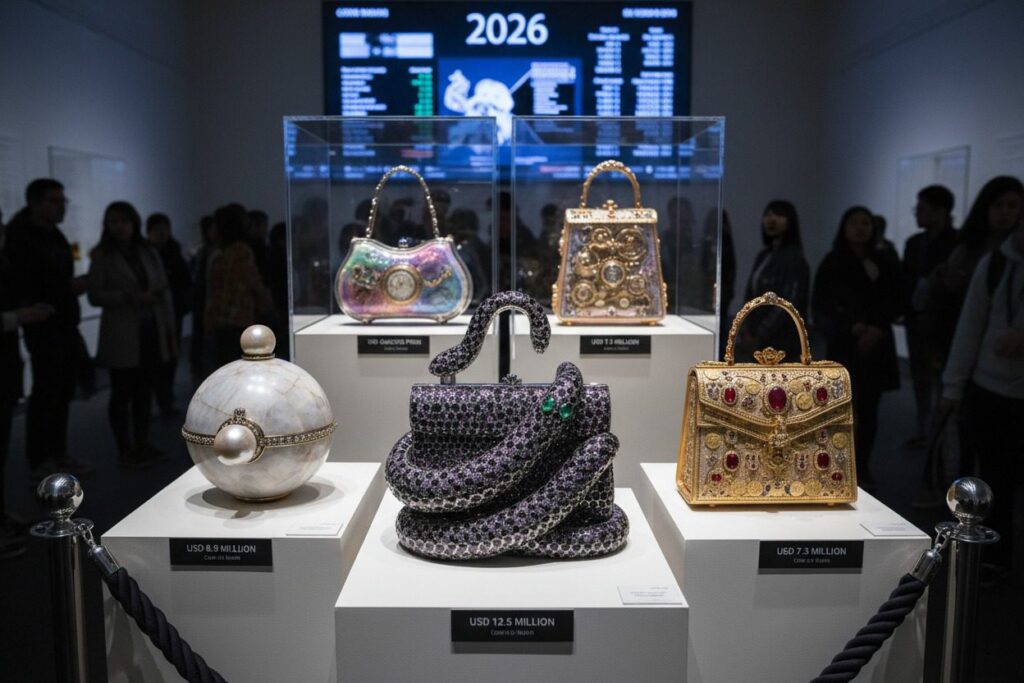
In July 2025, Sotheby’s Paris sold Jane Birkin’s original 1984 Hermès Birkin for $10.1 million. Highest ever. A genuine record. And almost entirely irrelevant as an investment benchmark.
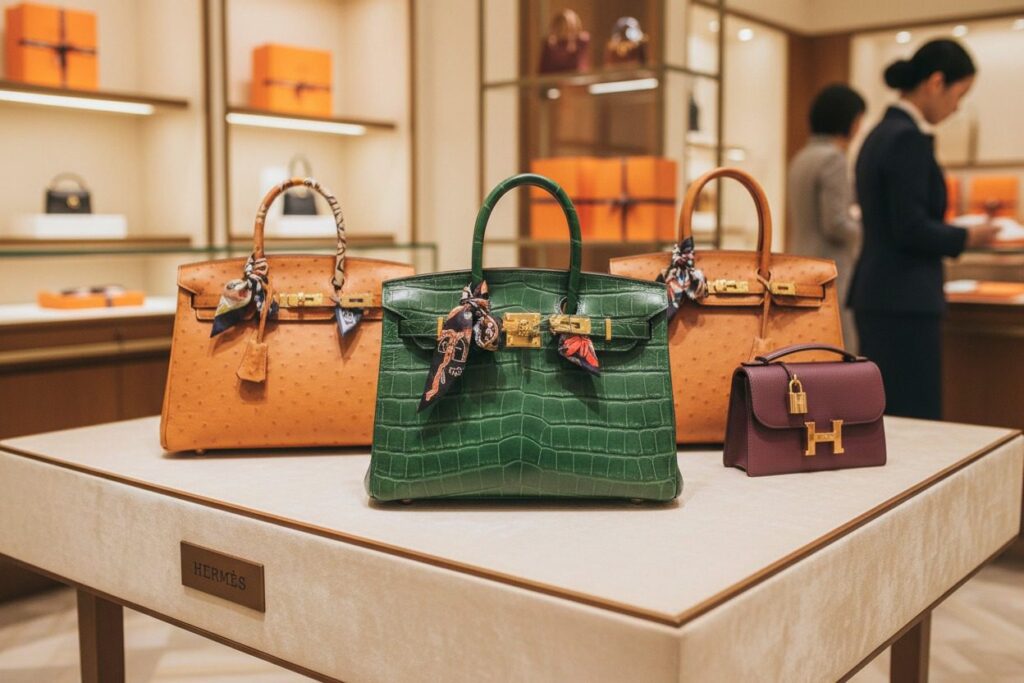
Here’s the thing: that bag is a personal artifact of cultural significance. It belonged to Jane Birkin. That’s a provenance unicorn — something unreplicable by definition. The second-highest verified sale, Le Birkin Voyageur at $2.9 million (Abu Dhabi, December 2025), is a much better ceiling for what the ultra-luxury market actually looks like. And even that was exceptional.
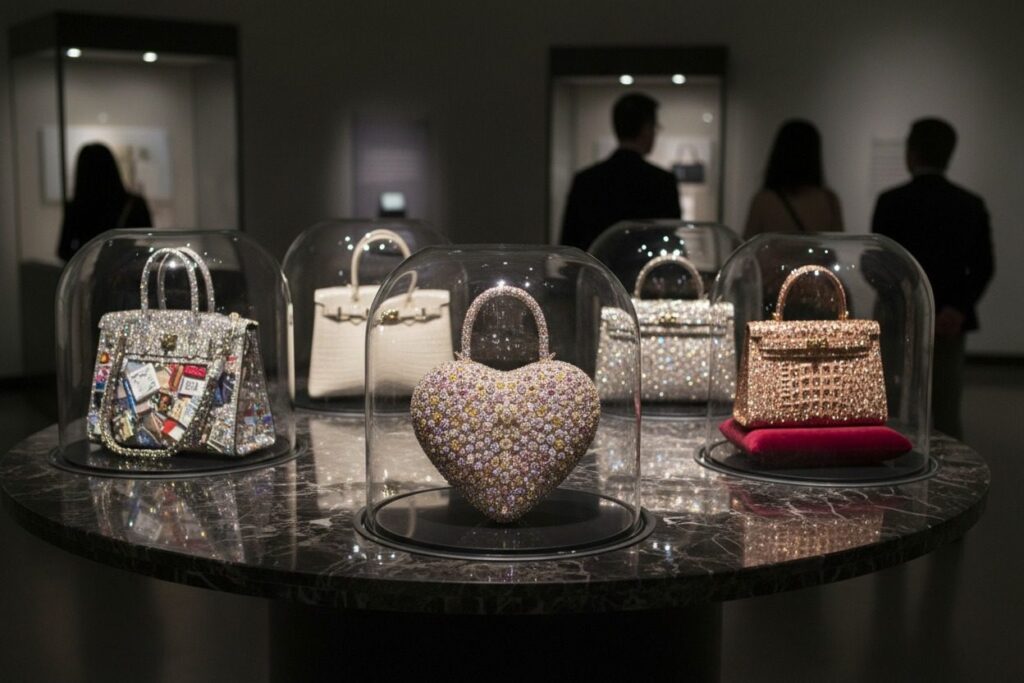
Most “diamond Himalaya” Birkins — the ones you see described as “ultra-rare” in every lifestyle article — trade at $300,000–$500,000. That’s still extraordinary, but it’s not $10M. The distinction matters enormously for anyone thinking about this as a portfolio asset.
| Bag | Sale Date | Auction House | Price | Buyer Region | Authentication |
|---|---|---|---|---|---|
| Jane Birkin’s Original Birkin | Jul 2025 | Sotheby’s Paris | $10.1M | Middle East | Physical + Provenance |
| Le Birkin Voyageur | Dec 2025 | Abu Dhabi | $2.9M | GCC | Physical |
| Hermès Faubourg Birkin (World Record) | Nov 2025 | Christie’s HK | ~$491K | Asia | Physical |
| Quelle Idole (World Record) | Nov 2025 | Christie’s HK | ~$360K | Asia | Physical |
| Himalaya Birkin 30 (Diamond) | 2022 | Hong Kong | ~$450K | Asia | Physical |
| Note: 2026 Q2 auction results pending. Q1 data incomplete. | |||||
The Numbers That Actually Matter
The global handbags market hit $74.33 billion in 2025. The secondary/resale slice? Estimated 15–25% of that — so somewhere between $11B and $19B. And authenticated volume? Entrupy verified $1.66B in 2024. Do the math: that’s under 10% coverage of the addressable secondary market. The implication isn’t subtle.
The Mini Kelly II is a perfect illustration of what genuine investment returns look like at the accessible end. Retail price in 2026: roughly €6,000 (~$6,500). Resale: €20,000–€25,000 (~$22,000–$27,000). That’s a 250–300% premium, driven almost entirely by quota scarcity. Not magic. Not hype. Just supply and demand with an artificial constraint baked in.
Why Authentication Is the Real Market Infrastructure
I keep coming back to this: the bottleneck isn’t accuracy. Entrupy’s AI system achieves 99.86% accuracy analyzing 2,000+ characteristics per item. The constraint is throughput coverage. Most secondary transactions never get professional verification. That creates information asymmetry — and information asymmetry suppresses fair price discovery.
The practical consequence: if you’re trying to sell a $500K bag and verification takes 72 hours, a buyer can withdraw or renegotiate during that window. This is not a theoretical risk. It happens.
Geographic Counterfeit Distribution (2024)
Source: WWD / Entrupy Annual Report 2024
A bag qualifies as “investment-grade” when verifiable authenticity can be established within 72 hours at reasonable cost. Without that, liquidity is theoretical. Standard protocol: Entrupy AI pre-screening (2 minutes, ~99.1% accuracy) + human expert review (30–60 min). Total cost: $150–$300. Currently, no verified sub-4-hour protocol exists at scale — that’s aspirational infrastructure, not current reality.
Multi-Polar Dynamics: Dubai, Hong Kong, Singapore — and China
Forget the US-EU binary. The luxury handbag market is genuinely multi-polar now, with distinct regulatory, tax, and infrastructure architectures in each hub. Let me break down what’s actually happening.
Dubai / UAE — The Zero-Tax Emergence
Dubai’s luxury real estate recorded $146.5 billion in transactions in 2025 — up 26.9% year-on-year, with roughly 9,800 millionaire migrations to the UAE. That’s wealth concentration producing handbag auction growth as a side effect. The Abu Dhabi $2.9M Le Voyageur sale in December 2025 wasn’t a fluke. It was a statement of intent from a jurisdiction with zero capital gains tax, zero income tax, and 100% foreign ownership in freehold zones. Dubai is genuinely becoming the Switzerland of luxury assets.
Hong Kong / Asia — Resilience Despite China Slowdown
Christie’s Hong Kong achieved HK$60.65M (~$7.83M) in handbag sales in November 2025 — the highest seasonal total ever in Asia, up 25% year-on-year. Two world records set in a single sale. The demographic shift here is notable: 75% of new buyers are Millennials or Gen Z, and more than half purchased online.
Bonhams Hong Kong reported 26% YoY auction growth in H1 2025, with Southeast Asian spending up 67%. That number is almost absurdly good. Hong Kong still functions as Asia’s authentication hub — physical proximity to manufacturing, regulatory separation from mainland China restrictions, and deep collector liquidity.
China’s luxury market declined roughly 20% in 2024. The term “luxury shame” — government crackdown on conspicuous wealth display — was everywhere. But the story is bifurcated: aspirational middle-class consumers are exiting; ultra-high-net-worth collectors remain active. Hermès’ Asia ex-Japan grew 0.8% in 2025 despite the broader market, with CEO Axel Dumas noting “positive elements” even while acknowledging the aspirational segment decline. By 2025, the market had improved to a -3–5% decline (from -17–19% in 2024). Recovery trajectory, not freefall.
Singapore — The Stable Jurisdiction
No capital gains tax, strict rule of law, 1,100+ single-family offices as of 2025. Singapore doesn’t have Hong Kong’s auction volumes, but it serves as a custody and storage hub for Southeast Asian collectors. Indonesian, Malaysian, Thai wealth flows through Singapore infrastructure. If you’re thinking about long-term holding, this matters.
Hermès Production: What the Data Actually Shows
The mythology around Hermès production scarcity is real — but the numbers are more nuanced than the “they only make a few thousand Birkins” narrative. Let me give you what’s verified.
Hermès employed 25,700 people globally at end of June 2025, with roughly 500 new hires in H1 2025. If ~60% are France-based and leather artisans represent 30–40% of the workforce, we’re talking 5,000–6,000 artisans — but Hermès doesn’t disclose exact counts. Anyone giving you a precise figure is guessing.
| Period | Leather Goods Growth | Overall Revenue | Region Highlights |
|---|---|---|---|
| Q1 2025 | +10% YoY | — | All regions positive |
| H1 2025 | +12% YoY | — | Europe, Americas strong |
| Full Year 2025 | +13% YoY | €16B+ | All regions double-digit |
| Q4 2025 | +9.8% | — | Europe +11%, Americas +12%, Japan +14%, Middle East +15% |
New workshops announced: L’Isle-d’Espagnac (2025), Loupes (2026), Charleville-Mézières (2027), Colombelles (2028). Production grows 10–13% annually. It’s not “capped at 12%” as some sources claim — demand growth consistently exceeds supply expansion, which is the entire mechanism behind resale premiums.
The Quota System — What’s Actually Confirmed
Two quota bags per year across all boutiques (Birkin, Kelly, Constance). Household consolidation means the old spouse workaround is gone. The pre-spend requirement is real — but PurseBlog and others have confirmed that the specific algorithm is proprietary. Any “mathematical model” for offer probability is speculative. Don’t let someone sell you a precise formula.
The 7-Layer Luxury Asset Infrastructure Stack
Here’s a framework I find genuinely useful for thinking about this market — not as a collection of pretty accessories but as an asset class with real infrastructure dependencies and bottlenecks.
Provenance & Documentation
Blockchain adoption remains below 15% of the secondary market. LVMH Aura and Arianee protocols exist but penetration is limited. Documented chain of custody adds 8–12% to resale value. The EU Digital Product Passport (DPP) — mandatory 2026–2027 — will force compliance but create transition costs for pre-2026 inventory. 88% of the market currently relies on paper certificates.
Bottleneck: Pre-DPP inventory may face EU market exclusion.
Authentication Compute
Entrupy AI (99.86% accuracy) + human expert overlay. But $1.66B annual authentication against a $15–30B estimated secondary market equals under 10% coverage. The 72-hour verification delay destroys arbitrage opportunities.
Trajectory: Federated AI models may reduce verification to 4–6 hours by 2027 — projected, not confirmed.
Market Liquidity & Price Discovery
Sotheby’s/Christie’s charge 25–30% buyer premium with public price discovery. Private sales run 5–10% fees with opaque pricing. January 2026 pricing gap: EU Kelly 25 at €9,600 vs. US $13,700 (~30% premium) — arbitrage that exists but is expensive to exploit.
Emerging: Abu Dhabi zero-premium auction experiment (Dec 2025). Watch this space.
Fractionalization & Tokenization
Rally Rd offers $10+ minimum investments in Birkins with 90-day lockups. Bid-ask spreads run 15–25%. McKinsey projects $30B for art AND luxury combined by 2026. Handbag-specific tokenization is under 1% of that — early stage, not mature.
Regulatory divergence: EU MiCA enables compliant tokenization; US Howey Test creates uncertainty. Tax risk: tokenized gains may face 37% ordinary income vs. 28% collectibles rate.
Insurance & Risk Transfer
Average UK handbag claim: £1,633 in 2025, up 34% from 2021 (£1,217). 49% of claims are theft away from home; 38% accidental damage. Standard home insurance covers £1,500–£2,500. A $50K+ bag needs specialized collectibles insurance with agreed value — not actual cash value — and worldwide coverage. Providers: Chubb Masterpiece, AIG Private Client Group, Pure Insurance. Annual premiums: 0.3–0.8%.
Tax & Regulatory Optimization
US collectibles rate: 28% maximum federal. Short-term holdings: ordinary income regardless of asset class. UAE/Dubai: 0% capital gains, 0% income, 10-year Golden Visa for $545K+ investment. Singapore: no capital gains, strong custody. Portugal NHR: 10% flat for new residents. EU: MiCA regulatory clarity for tokenization.
Materials Science & Sustainability
Hermès’ MycoWorks partnership produced Sylvania — a mycelium-based material developed over 3 years, commercially debuted in the Victoria bag. Waterproof, fire-resistant, CO2-neutral, biodegradable. The EU DPP will require material composition disclosure, making supply chain transparency a competitive advantage.
Investment caveat: Biomaterials lack 20-year durability data. Traditional leather maintains a longevity premium. Keep experimental materials under 10% of any portfolio allocation.
The Critical Mistakes — Evidence-Based
Most investment mistake lists are vague. Here are four specific, evidence-backed failure modes.
Scenario: $500K sale pending; 72-hour verification delay causes buyer withdrawal or price renegotiation.
Mitigation: Maintain pre-authenticated inventory; establish relationships with at least two verification providers before you need them urgently.
Reality: Rally Rd and similar platforms run 90-day lockups and 15–25% bid-ask spreads. “Instant liquidity” in tokenized Birkins is marketing language. Exits require market makers that don’t consistently exist in this infrastructure yet.
Average UK handbag claim is £1,633. Standard home policies cover £1,500–£2,500. A $50,000 Birkin with $20,000 in associated items (watch, jewelry) would be underinsured by 90%+ on standard home insurance. This is not theoretical — it happens every time a theft claim is filed.
Mycelium alternatives (Sylvania, Mylo) have no 20-year durability track record. Early adoption of experimental materials for investment-grade holdings is speculative. Maintain at least 90% traditional leather allocation and treat biomaterial exposure as venture-stage, not store of value.
2026–2028: Three Probabilistic Scenarios
I’m not going to give you predictions dressed up as certainties. Here are three scenario frameworks with assigned probabilities based on infrastructure trajectory and regulatory trends.
Bull Case
- Abu Dhabi permanent auction hub with zero-premium events
- Authentication AI achieves <4-hour verification at scale
- EU MiCA enables compliant tokenization >5% penetration
- Himalayan Birkins: $600K–$800K by 2027
- Standard Birkins: 20–25% annual appreciation
- Tokenized luxury: $50B+ market (art + luxury) by 2028
Base Case
- EU/US regulatory divergence persists
- Authentication growth at current 10–15% trajectory
- Tokenization stays under 2% of luxury market
- Steady 12–15% annual appreciation for investment-grade
- DPP implementation delayed to 2028
- Traditional leather maintains 95%+ market share
Bear Case
- Superfake AI achieves >99% authentication evasion
- Major platform suffers $100M+ counterfeit scandal
- 20–30% price correction for unprovenanced bags
- 6–12 month average sale cycles (liquidity freeze)
- Insurance withdrawals from unverified inventory
- DPP enforcement excludes pre-2026 EU inventory
70% physical allocation, 20% authentication infrastructure exposure, 10% experimental tokenization. Focus on provenance documentation over blockchain speculation. Acquire DPP-compliant inventory now, before compliance costs make it expensive.
FAQ: The Questions That Actually Matter
References
- Sotheby’s — Jane Birkin’s Original Birkin $10.1M; Le Voyageur $2.9M (2025)
- Future Market Insights — Luxury Handbag Market $27.25B (2025)
- Entrupy — AI Authentication: 99.86% Accuracy (2025)
- PurseBlog — Hermès Global Quota System (2025–2026)
- Chubb Masterpiece — Collectibles Insurance 0.3–0.8% Annual Premiums
- Deloitte — Blockchain Provenance: 8–12% Resale Premium (2025)
- McKinsey — Tokenized Assets: $0.03T Art & Luxury by 2026
- Hermès — Q1 2025 Results: +10% Growth
- Mordor Intelligence — Handbags Market: $74.33B (2025)
- World Footwear — Hermès Exceeds €16B Revenue; Leather Goods +13%
- PurseBop — Hermès Breaks €16B Barrier; Leather Division +13%
- Bolsino — Complete Guide to Luxury Handbag Investing (2025)
- International Leather Maker — Hermès H1 2025: Leather +12%
- Hermès — 2025 Half-Year Results Presentation
- The Hustle — Rally Rd: Fractional Birkin Shares
- WWD — Entrupy Report: $1.66B Authenticated, $654M Unidentified
- Fashion Network — Hermès €16B Revenue; China +0.8%
- Real Estate Market — Dubai: $146.5B Transactions (2025)
- Luxury Tribune — Hermès €16B Revenue; All Regions Double-Digit
- Kantar — Hermès China; Market -20% (2024)
- Aviva — Average Handbag Claim £1,633 (2025), Up 34%
- Vogue Business — Luxury Shame in China (2024)
- Bonhams — Hong Kong H1 2025: +26% YoY
- Christie’s — Hong Kong HK$60.65M/US$7.83M; Highest Ever Asia Total
- Caixin Global — China Luxury Market -3–5% (2025)
- Lexology — EU Digital Product Passport: Regulatory Shift 2026–2027
- Positive Luxury — Digital Product Passport Mandatory EU 2026
- Elexyfy — Mushroom Leather Sustainable in 2026?
- Highsnobiety — Hermès Sylvania Mycelium Leather
- Designboom — Hermès + MycoWorks: Mushroom Leather
- Green Queen — Hermès X MycoWorks Travel Bag
The Most Expensive Handbags in 2026: What the Auction Data Actually Shows
Most Expensive Designer Brands in the World 2025-2026
The 15 Most Expensive Necklaces in the World: Verified Records & 2025 Market Reality
Inside a $500 Million Superyacht: What Pure Luxury Actually Looks Like
Lucid Burns $176,000 Per Vehicle Producing Ultra-Luxury EVs. Nobody Buys
The 25 Most Expensive Earrings in the World: Auction Records, Market Dynamics, and Valuation Challenges
The Most Expensive Seafood Dishes in the World
Leave a Reply