
The World’s Most Expensive Castles — Ranked, Verified, and Honestly Explained
Some are museum property worth tens of billions that will never sell. Others are sitting on the market right now. This guide tells you which is which — and what the prices actually mean.
- The highest verified private castle sale is Château Louis XIV at $301 million (2015). The highest current private listing is Château d’Armainvilliers at ~$458 million.
- Buckingham Palace, Versailles, and the Forbidden City appear on most lists — but they’re government museums. The values cited are academic estimates. Not for sale. Never were.
- France dominates private château transactions because of legal transparency in listings and a relatively liquid luxury property market — not because other countries lack comparable estates.
- Annual maintenance on a large private château runs $1–3 million. That figure is not a footnote. It defines whether ownership makes sense for most buyers.
I’ve spent a lot of time in the luxury property space, and the “most expensive castles” category is one of the most editorially confused niches I’ve encountered. The same ten properties get recirculated endlessly — and roughly half of them are national monuments that no government will ever sell. Mixing them with buyable estates makes the list feel impressive. It’s also misleading. So let’s separate the two.
Private Castles & Châteaux: Verified Prices
These are properties with documented listing prices or confirmed sale figures. Where the original transaction was in EUR, I’ve converted at approximately 1.08 unless a specific conversion was published at the time of sale.
Château d’Armainvilliers
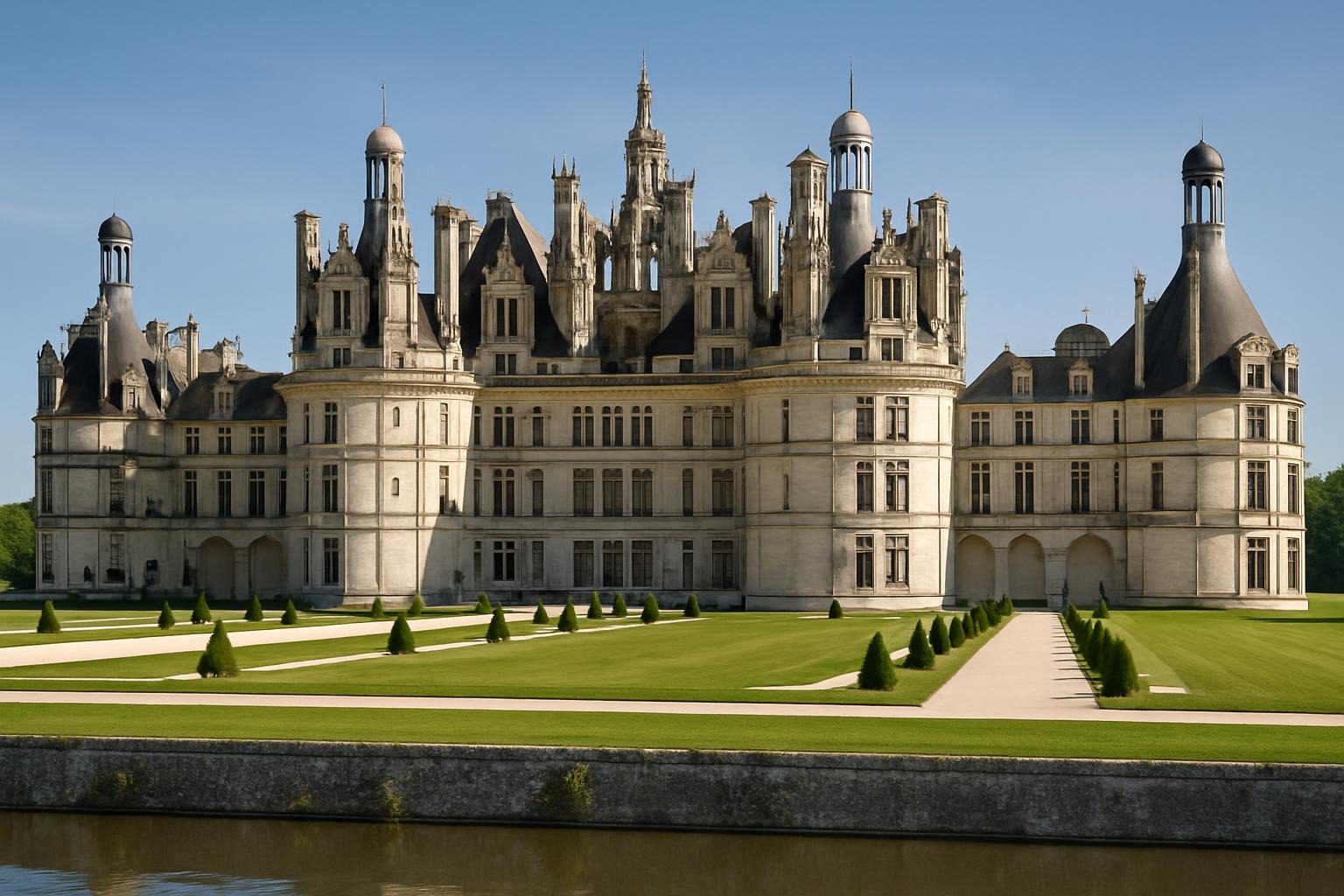
The most expensive private château currently on the market by listed price. Originally owned by the Edmond de Rothschild Group and listed since approximately 2019 across multiple luxury brokers. The estate includes the main residence, a working equestrian facility, a lake, forests, and — critically — significant developable land.
Location is the real driver. Being within 45 minutes of Paris transforms what would otherwise be a large rural property into something with genuine investment logic. The development land alone has valuation merit independent of the château itself. ESTABLISHED
Villa Les Cèdres
Originally built as a summer residence for King Leopold II of Belgium in the early 1900s. Sits on 35 acres of documented botanical gardens — over 15,000 plant species — on one of the most expensive coastlines in Europe. The asking price was reportedly around $450M; the eventual sale to an undisclosed buyer was reported at various figures between $200M–$410M depending on the source.
Honestly, this one is hard to pin down. Cap Ferrat transactions at this level are notoriously opaque. The figures I’ve seen cited range by over $200 million depending on which outlet was reporting. Treat the $410M figure as directional rather than precise. PROBABLE
Château Louis XIV
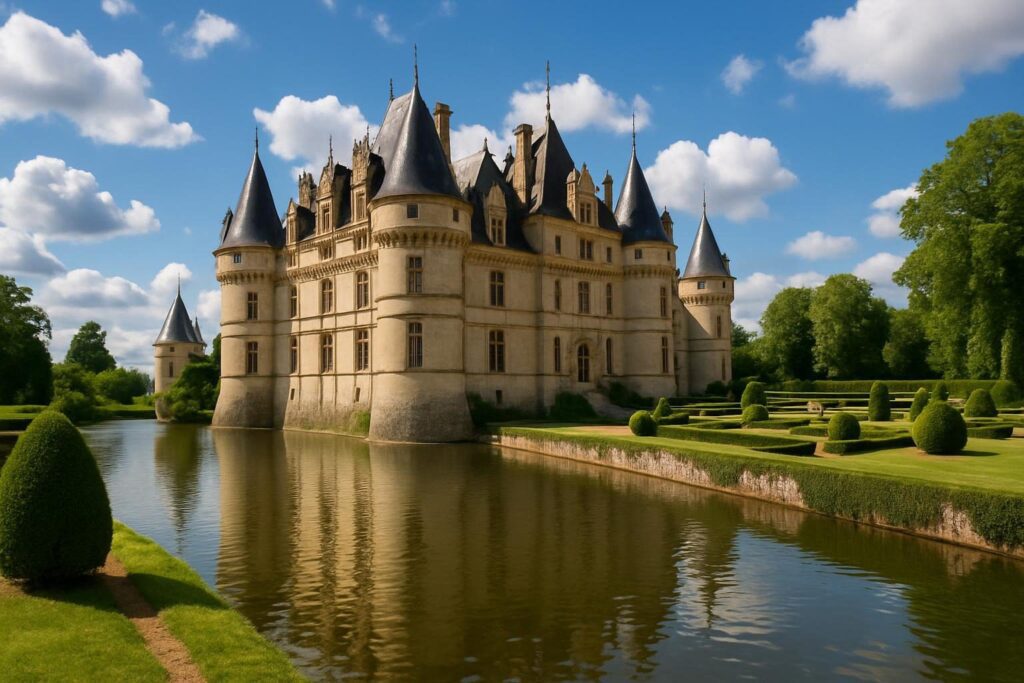
The most documented private château transaction on record. Sold in December 2015 to Saudi Crown Prince Mohammed bin Salman — at the time, the highest price ever paid for a private property. Built from 2008 on a historical site to resemble a 17th-century palace: ornate stonework, formal gardens, a moat, fountains, and fully integrated modern technology. Some critics called it theme-park Versailles. The buyer’s identity only became public years later.
This is the gold standard benchmark. Everything else in this category gets measured against it. ESTABLISHED
Villa Leopolda
Built in 1902 for King Leopold II, later owned by Gianni Agnelli (Fiat). The 50-acre estate includes 11 villas, an olive grove, a pool complex, and sea views that are genuinely difficult to overstate. A 2008 sale to Russian billionaire Mikhail Prokhorov collapsed when his financing fell through — the resulting deposit dispute became one of the more dramatic luxury real estate stories of that decade.
The $270M figure is the most commonly cited reliable listing value, though the estate has reportedly been offered at higher prices at different times. PROBABLE
Palais Bulles (Bubble Palace)
Pierre Cardin’s extraordinary avant-garde residence — interconnected spherical rooms cascading down a hillside above the Mediterranean, designed in the 1970s by architect Antti Lovag. Functionally a sculpture as much as a house. Cardin listed it for approximately €350 million before his death in 2020; the estate has been offered to buyers at negotiated prices since.
Genuinely unique. Nothing comparable architecturally at this scale exists. Whether that uniqueness commands a premium or a discount depends on how many buyers exist for a 10,000-square-foot collection of spheres with no conventional rooms. Fewer than you’d think. PROBABLE
Bran Castle
Commonly called “Dracula’s Castle” — though Bram Stoker never visited Romania and the connection is almost entirely a marketing construct. That doesn’t matter commercially. The association draws over 800,000 visitors annually, making it one of Romania’s most-visited sites, and tourism income is real and substantial.
Ownership is genuinely complicated: the Habsburg royal family reclaimed it in 2006 after communist confiscation, then transferred operational control to local authorities under a 2009 public-private arrangement. Transaction figures around $80M appear in several reports but the current structure is not a straightforward private sale. PROBABLE
The Palaces That Will Never Be Listed
These are the entries that inflate every “most expensive castles” list. Extraordinary buildings — but state property, UNESCO sites, or national cultural assets. The values cited are cultural economist estimates based on land value, art collections, revenue generation, and infrastructure replacement cost. Not appraisals. Not market prices.
Forbidden City (Palace Museum)
The largest palace complex in the world. 980 buildings, roughly 1.86 million artifacts spanning five centuries of imperial China, 17–19 million visitors annually. The $70B figure appears in cultural economics literature. It’s a calculation, not a quote. The People’s Republic of China is not considering a sale. SPECULATIVE
Palace of Versailles
UNESCO World Heritage Site. Generates roughly €80 million annually in admission revenue. French law classifies it under a category that effectively prohibits transfer. A more useful real number: the French government spends €50–70 million annually on maintenance. That figure is real and verifiable. The €50B estimate is not. SPECULATIVE
Buckingham Palace
Crown Estate property — legally distinct from personal Royal Family property, not transferable. The ~$4.9B figure traces to property analysts estimating central London land value plus building replacement cost. The Royal Family spent £369 million refurbishing it between 2016 and 2027, funded by UK taxpayers. That’s the real economic figure worth knowing. PROBABLE
What Actually Drives Private Castle Prices?
After working through enough luxury property content to develop genuine opinions: here’s what actually moves the needle.
Location first, always. Armainvilliers commands $458M partly because 2,500 acres within 45 minutes of Paris is a genuinely rare land assembly. The same acreage in rural Burgundy would list for a fraction. This sounds obvious but most castle journalism ignores it in favor of talking about moats and towers.
Revenue potential. Castles that can operate as hotels, event venues, vineyards, or tourism attractions have defensible valuations. Those that can only function as someone’s house — however grand — are priced on pure buyer psychology. There’s a ceiling to that.
Development land. A significant portion of Armainvilliers’ value lies in developable acreage near Paris. Buyers who understand this are buying land with a château attached — not the other way around. That’s a completely different investment thesis.
Restoration liability — the one that kills deals. I’ve seen prospective buyers walk away from apparently attractive château purchases after structural surveys revealed eight-figure restoration requirements that weren’t in the listing. UNESCO or national heritage designation makes this worse: you’re often required to restore to historical specification using approved craftspeople, which costs multiples of a conventional renovation. Always. Get. The. Survey.
The $500K–$1M figure that appears across most coverage is a floor for properties of this scale, not a ceiling. A realistic budget for a 100-room private château with grounds, stables, and a lake is $1–3 million annually: permanent staff, utilities, insurance, structural maintenance, heritage compliance. Add 20–40% if you’re under preservation designation. And if you’re running it as an event venue, add a full hospitality operation on top of that.
The purchase price is often the easiest part of the equation. The carrying cost is what separates genuine buyers from curious ones. ESTABLISHED
Full Comparison Table
| Property | Price / Value | Status | Location | Key Price Driver |
|---|---|---|---|---|
| Forbidden City | ~$70B | Not for sale | Beijing, China | National monument, 1.86M artifacts |
| Palace of Versailles | ~$50B | Not for sale | Versailles, France | 2,014 acres, UNESCO, €80M/yr revenue |
| Buckingham Palace | ~$4.9B | Not for sale | London, UK | Crown Estate, central London land value |
| Château d’Armainvilliers | $458M | Listed | Seine-et-Marne, France | Paris proximity, 2,500 acres, Rothschild heritage |
| Villa Les Cèdres | ~$410M | Sold ~2020 | Cap Ferrat, France | Riviera waterfront, rare botanical gardens |
| Château Louis XIV | $301M | Sold 2015 | Louveciennes, France | Record private château sale; near Versailles |
| Villa Leopolda | ~$270M | Listed | Villefranche, France | Cap Ferrat estate, Agnelli provenance |
| Palais Bulles | ~$210M | Listed | Théoule-sur-Mer, France | Pierre Cardin estate, unique sphere architecture |
| Bran Castle | ~$80M | Complex | Transylvania, Romania | Tourism income, 14th-century fortress |
The table makes the core point visually: the buyable private properties max out around $458M. The public landmarks start at $4.9B. These are not the same league. They’re not even the same sport.
⚠ What Could Be Wrong Here
The private château market in France is relatively transparent by luxury property standards — but “relatively” is doing a lot of work. Many transactions I’ve described, particularly Villa Les Cèdres and Villa Leopolda, have disputed or unclear final sale prices. I’ve used the most commonly sourced figures; treat them as estimates with ±30% uncertainty.
My geographic coverage skews heavily French and European. There are certainly private castle-scale properties in the Gulf, India, and Japan that have transacted at comparable or higher prices without generating Western media coverage. I can’t verify what isn’t documented in accessible sources.
The “Dracula’s Castle” framing for Bran is commercially useful but historically dubious — noted in the card above, worth repeating here.
No affiliation, no commission relationships, no sponsorship from any property, brokerage, or agency mentioned in this article.
The Practical Reality of Buying a Castle in 2026
The fantasy: wire $300M, receive massive stone keys, live like a king. The actual version is considerably more bureaucratic.
French heritage law (loi Malraux) provides significant tax incentives for certified restoration work — up to 30% deduction on qualifying renovation costs. That’s real and genuinely attractive. The catch: you’re restricted on what you can change, required to work with approved craftspeople, and subject to government inspection. You own the property but not unconditionally. ESTABLISHED
Legal structure matters enormously. Most sophisticated buyers acquire through a Société Civile Immobilière (SCI) or an international holding structure for privacy, estate planning, and liability management. The Louis XIV transaction reportedly used a trust structure. This is standard practice at this price point — get French tax counsel before you make an offer. Not during. Before.
Event and hospitality income offsets carrying costs — when it works. It requires treating the property as a business: full hospitality licensing, staff, liability insurance, event infrastructure, and the operational complexity of hosting 150 people in a 17th-century structure. Some owners find this more satisfying than expected. Others find they’ve accidentally become hotel managers who happen to live on site.
Frequently Asked Questions
Château Louis XIV near Versailles, sold December 2015 for $301 million to Saudi Crown Prince Mohammed bin Salman. The most documented, most widely verified private château transaction on record. The Château d’Armainvilliers is listed higher at ~$458M but has not confirmed a closed sale.
No. Buckingham Palace is Crown Estate property under UK law — not privately owned, not transferable. Versailles is French state property classified under heritage law that prohibits sale. The Forbidden City is property of the People’s Republic of China. The values cited for these are academic estimates, not market prices. They appear on castle lists because they drive traffic, not because they’re relevant to any real estate decision.
For a large private château — 50–100 rooms, significant grounds — expect $1–3 million annually as a realistic baseline. This covers permanent staff, utilities, insurance, ongoing structural maintenance, and heritage compliance. Add 20–40% if you’re under preservation designation with restricted restoration requirements. Event operations add an entirely separate layer. Budget for unexpected structural discoveries — old stone buildings reveal problems.
Partly genuine market concentration — France has a high density of historical private châteaux and a well-developed luxury property market. But a significant part is documentation bias: French luxury transactions are relatively transparent and well-covered. High-value castle transactions in the Gulf, India, and Japan often don’t surface in Western English-language reporting. The list reflects what’s visible, not necessarily what’s most expensive globally.
Yes — many. French countryside châteaux in non-prime regions frequently list for €1–5 million. Scotland has defensible stone castles under £2 million. Portugal has quintas at similar levels. The tradeoff: the cheaper the château, the higher the likely restoration liability, and the thinner the buyer market when you try to sell. Entry-level château ownership is not cheap ownership once you factor in what the building actually needs.
No. Bram Stoker’s Dracula was set in Transylvania, but Stoker never specified Bran Castle and never visited Romania. The connection is a 20th-century tourism marketing construct. It works commercially — over 800,000 visitors annually — but it has no historical basis. Worth knowing if you’re evaluating this as a heritage property rather than a tourism asset.
Almost always through a holding entity rather than direct personal ownership. In France, an SCI (Société Civile Immobilière) is standard. International buyers often use offshore structures — Channel Islands, Luxembourg — for privacy and estate planning. The reasons are legitimate: privacy, liability management, succession planning, tax efficiency. Get specialist French property tax advice before you make an offer. Not after.
Sources & References
- JamesEdition — Most Expensive Castles (listings database)
- Knight Frank Wealth Report 2025 — Luxury Real Estate & Ultra-High-Net-Worth Trends
- New York Times — Château Louis XIV Sale to Saudi Crown Prince (2017)
- Bloomberg — $301M Château Louis XIV Transaction (2015)
- PwC — Emerging Trends in Real Estate 2026
- UNESCO — Palace and Park of Versailles World Heritage listing
- French Ministry of Culture — Loi Malraux Heritage Tax Incentives
- Royal Collection Trust — Buckingham Palace facts and figures
- Forbes — Luxury Property & Côte d’Azur coverage
How Ultra-Luxury Real Estate Marketing Sells Myths About Wealth Preservation: The $238 Million Illusion
12 Most Expensive Sculptures in the World — Verified Prices, Market Drivers & What Comes Next
Prestige Amenities — Private Pools, Michelin-Starred Dining, and Bespoke Offerings That Define Top-Tier Stays
Most Expensive Parties Ever (2026): Verified Billion-Dollar Celebrations Ranked by Real Cost
The World’s Most Expensive Private Islands
Leave a Reply