

The World’s Most Expensive
Private Islands
From a $300M Hawaiian kingdom to a $150M Palm Beach fortress — the real prices, the brutal hidden costs, and what billionaires actually buy when they buy an island.
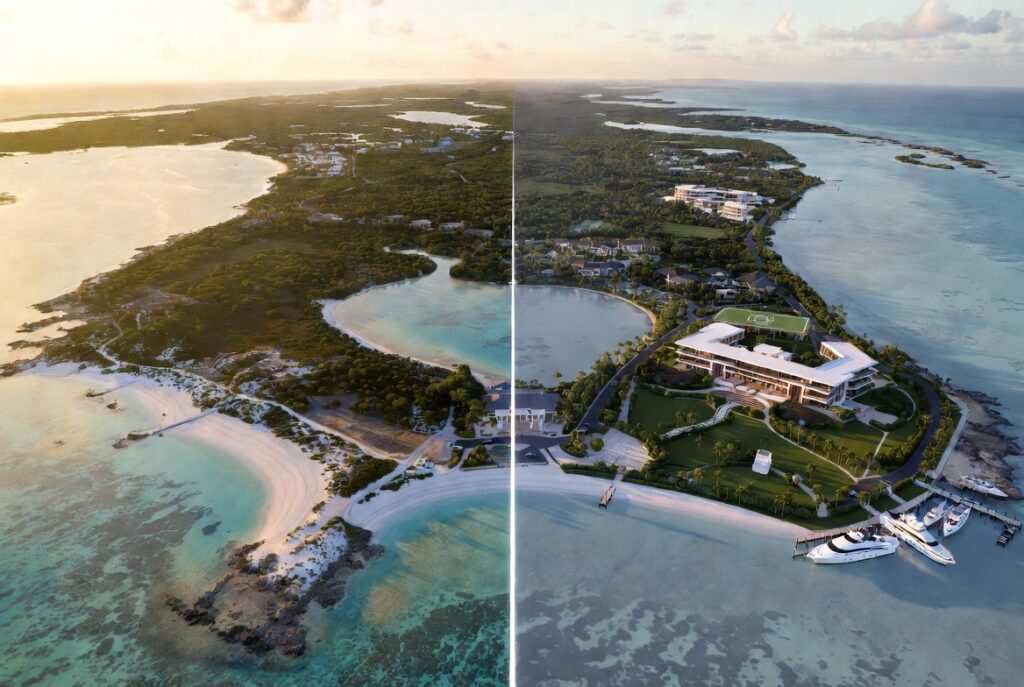
In May 2024, a 2.3-acre rectangle of dredged sand in the Palm Beach Intracoastal Waterway sold for $150 million. The buyer used a Delaware LLC. Their identity stayed secret for days. The seller had paid $85 million for the same patch of land just three years prior. That’s not appreciation — that’s a different conversation entirely. Welcome to the private island market, where you’re not buying real estate. You’re buying sovereignty.
I’ve been tracking ultra-luxury real estate for years, and the private island market still surprises me. The price ranges are staggering — from €680,000 for a Finnish island to $300 million for an entire Hawaiian community — and the gap between those numbers tells you almost everything about what’s really being sold. It’s not land. It’s finitude. The fact that there will never, ever be another one.
So let’s get into it properly. Not a glossy list. The real deals, the real numbers, and the things the brokers will absolutely not mention in their brochures.
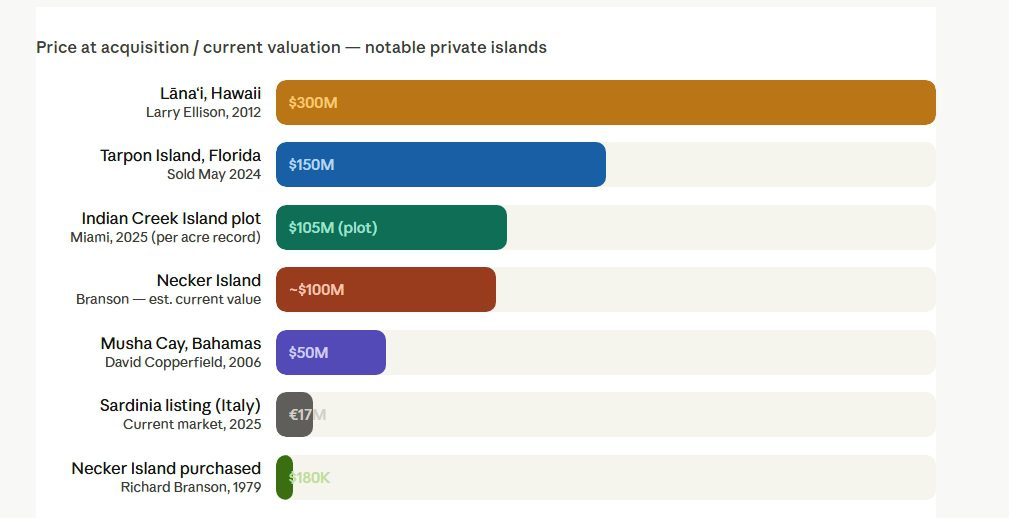
Price at a Glance: The Biggest Deals
Sources: Palm Beach County Clerk’s Office (Tarpon Island); multiple published reports (Lānaʻi, Skorpios, Musha Cay, Necker). Some figures are reported/estimated where deeds were not publicly filed. All figures USD.
The Undisputed King: Lānaʻi, Hawaii
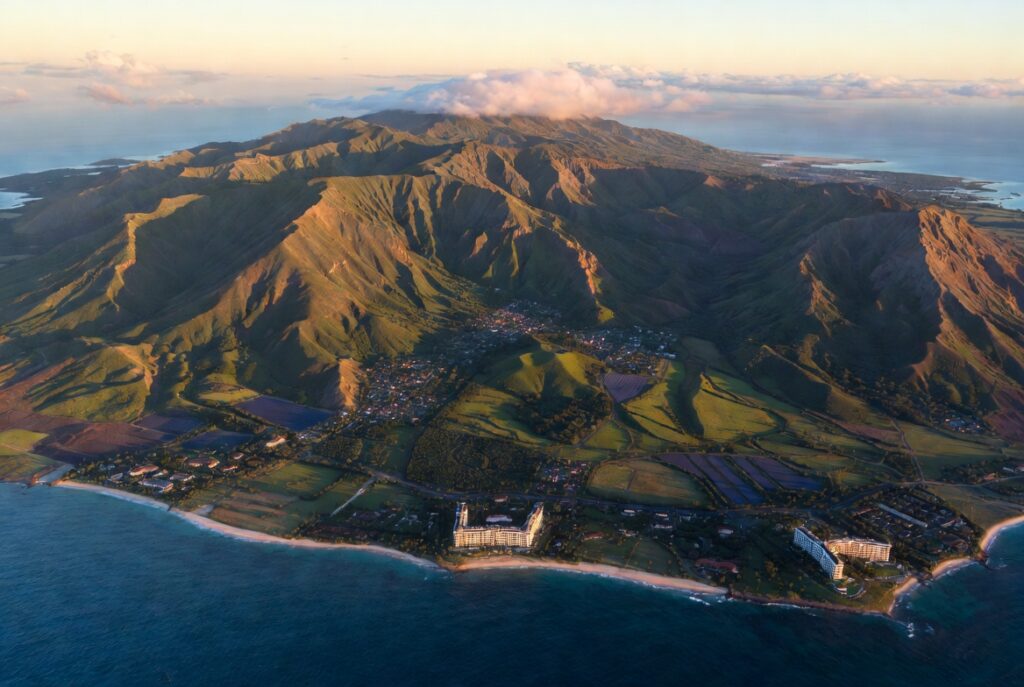
Nothing else comes close. When Larry Ellison bought 98% of Lānaʻi in 2012 for a reported $300 million, he didn’t acquire a vacation home. He acquired a functioning Hawaiian community — the sixth-largest island in the state, complete with two Four Seasons resorts, a small town, championship golf, and solar-powered infrastructure. At roughly $3,300 per acre, analysts called it “wholesale.” Which, for an entire island with existing utilities and 3,200 residents, is frankly absurd. In the best possible way.
Here’s the thing that most coverage misses: this wasn’t a trophy purchase. Ellison has since poured an additional $450 million or more into the island — renewable energy systems, organic farms, desalination, resort renovations. He’s running a sustainability experiment at island scale. Whether it’s ego, vision, or both, Lānaʻi has become the most expensive private residence-slash-living laboratory in human history. Current estimated value: around $600 million-plus.
Honestly? Still undervalued — given what he’s built there.
The Palm Beach Fortress: Tarpon Island
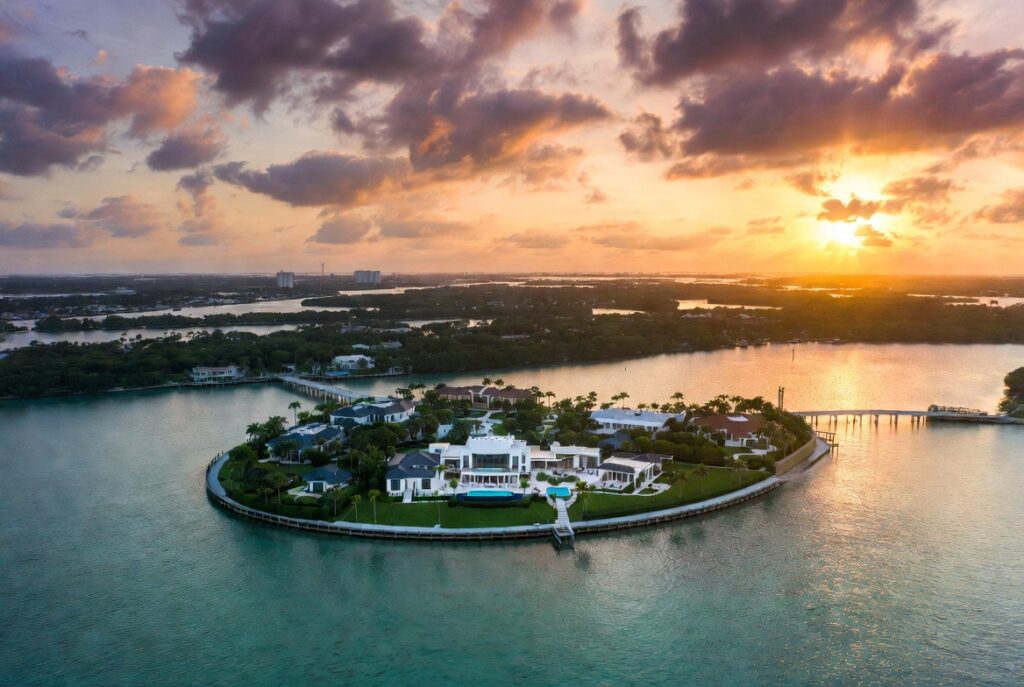
On May 17, 2024, Tarpon Island sold for $150 million — recorded by the Palm Beach County Clerk’s Office. Australian infrastructure investor Michael Dorrell, identified by the Wall Street Journal, bought the only private island in Palm Beach. Two point three acres. One bridge. One owner at a time.
Developer Todd Michael Glaser bought it in 2021 for $85 million when it still had a modest 1940s house. He razed the outbuildings, built a 28,618-square-foot mega-mansion, and listed it initially at $210 million. The final close at $150 million felt like a discount. It wasn’t — Glaser’s three-year return on the land alone was 76%, in a rising-rate environment that punished nearly everything else.
Tarpon wasn’t expensive because it was beautiful. It was expensive because it was the only one in a zip code where Jeff Bezos, and the densest cluster of ultra-wealth in America, already live. Geographic monopoly is worth more than any mansion you could build on top of it.
Skorpios: Jackie Kennedy’s Island and a $153M Lesson
In 1963, Aristotle Onassis bought a barren rock off the western coast of Greece for roughly 3.5 million drachmas — the equivalent of about $12,500 in today’s money, according to the Wall Street Journal. He imported sand from Salamis Island to create a beach. He planted over 200 varieties of trees. He built three family residences, a helicopter pad, harbor facilities for his yacht, and hosted a generation of global royalty, politicians, and artists. In 1968, he married Jacqueline Kennedy there — one of the most photographed events of the 20th century.
In 2013, Ekaterina Rybolovleva purchased Skorpios for $153 million from Athina Onassis Roussel, Aristotle’s granddaughter. Her father, Russian billionaire Dmitry Rybolovlev, then committed an estimated additional $200 million to transform it into Europe’s first luxury island resort — with plans for a hotel, spa, vineyards, amphitheater, and a harbor capable of docking superyachts. Weekly rental rates, once open to guests, are expected to exceed €1 million.
The arithmetic is jaw-dropping: $12,500 in 1963 → $153 million in 2013 → $353 million+ committed by 2026. That’s what a story — Jackie Kennedy, Onassis’s excess, Greek mythology, a wedding on the water — does to an island’s price. The land appreciates. The legend appreciates faster.
Necker Island: The $180K Trade of the Century
This one still makes me stop and just stare at the numbers. Richard Branson paid approximately $180,000 for Necker Island in 1979. Its estimated current value: roughly $100 million. That is, depending on how you count, somewhere north of a 55,000% return over 45 years.
But here’s what the return figure obscures: Branson didn’t just buy an island. He built a brand — barefoot luxury, kite-surfing with world champions, a Balinese-style villa, and a guest list that has included heads of state, Hollywood royalty, and billionaires on working holidays. The island is now a resort that generates six-figure-per-night rates for exclusive use bookings. The land is the stage. The brand is the yield machine.
The lesson, if there is one: Branson saw that 74 acres in the British Virgin Islands, with nothing on them, could become something irreplaceable — if he was patient enough to build the story. Most buyers never have that patience. That’s why his deal is still, in the 2020s, one of the best real estate trades in history.
Musha Cay: David Copperfield’s 700-Acre Illusion
David Copperfield paid a reported $50 million for Musha Cay and ten surrounding islets in the Exumas in 2006. Current valuations of the assembled complex — now branded “The Islands of Copperfield Bay” — put the figure considerably higher, though the island isn’t listed so comparables are thin.
What Copperfield actually built is something harder to appraise than land: a 700-acre theatrical experience. Secret passageways. Custom treasure hunts designed by his production team. Fireworks on the beach. A 2-mile sandbar. A full-time staff of 30. The island hosts a maximum of 24 guests at a time, with rates starting at $50,000 per day for a group of 12, with a mandatory five-night minimum. You do the math: that’s at least $250,000 for the minimum stay. For 24 people.
The illusion isn’t the magic shows. It’s the pricing model. He turned raw Caribbean real estate into a monetized mythology — and charged accordingly.
Indian Creek Island: Where Silence Costs $105 Million Per Acre
Indian Creek Island, Miami — also called “Billionaire’s Bunker” — has 41 waterfront estates and its own dedicated police force. In 2025, a single vacant plot sold for a record $105 million. No mansion. Bare land. $105 million. Residents have included Jeff Bezos and Tom Brady. The luxury product isn’t the view. It’s the fact that you will never have an unwanted neighbor — because there literally isn’t room for one.
What Actually Makes a Private Island Expensive?
The spread between the cheapest and most expensive private islands is roughly 1,500x. A Finnish island listed in 2025 for €680,000. Lānaʻi: $300 million. Same category; utterly different assets. Understanding where in that range a specific island lands requires separating four compounding value layers.
Geographic monopoly is the rarest and most powerful. Tarpon Island costs what it costs because it’s the only private island in Palm Beach — full stop. No amount of development on a different piece of land recreates that. Indian Creek’s $105M plot is the same dynamic, more extreme: silence in a specific zip code, surrounded by specific neighbors, is the product. The land is just the container.
Jurisdictional scale removes the ceiling entirely. Once an island is large enough to constitute a community — with utilities, residents, existing hospitality infrastructure — it stops being a real estate asset and becomes something closer to a city-state acquisition. Lānaʻi, at 140 square miles, isn’t priced like a resort. It’s priced like a franchise.
Brand narrative is the most transferable and the most misunderstood. Necker isn’t worth $100 million because the land is valuable. It’s worth that because Branson built something — 45 years of story, celebrity, and repeat bookings — that generates yield. Musha Cay works the same way: Copperfield’s brand makes the island’s revenue model plausible in a way that raw land never would. You’re buying the narrative along with the real estate.
Privacy as infrastructure is the newest and fastest-growing driver. Indian Creek Island’s numbers demonstrate it most clearly: what ultra-wealthy buyers will pay for genuine, enforced, physical isolation from the world has no real ceiling, especially in an era of paparazzi drones, social media, and erosion of traditional privacy.
The Part Brokers Don’t Tell You: True Cost of Ownership
This is the section that separates the dreamers from the buyers. Every private island is, at its core, an infrastructure project wearing a real estate costume. You’re not buying a home with a beach. You’re buying a disconnected node that has to manufacture every utility from scratch.
| Cost Category | What It Covers | Typical Annual Range |
|---|---|---|
| Water systems | Desalination plant, well drilling, rainwater collection, maintenance | £80K–£300K/yr + £1–3M upfront |
| Power generation | Generators, solar, battery storage, fuel delivery | £50K–£400K/yr |
| Transport infrastructure | Dock, helipad, vehicles, boat maintenance | 20–30% of development budget |
| Internet & comms | Satellite backup, undersea cable (premium), equipment | £30K–£1M+ upfront |
| Staff | Security, caretakers, housekeeping, grounds | £150K–£900K/yr |
| Insurance | Hurricane, flood, liability — where available | Highly variable; sometimes unavailable |
| Environmental permitting | Construction approvals, environmental compliance | £50K–£150K per project |
| Legal/title due diligence | Historical title chains, colonial-era grants | £30K–£200K+ (critical, not optional) |
Electricity alone tells a stark story. In Hawaii, the grid rate runs around $0.396 per kWh — more than double the mainland average. A large luxury home on the island can carry a monthly electricity bill of $1,700 before solar installation. Scale that to a resort, and you’re looking at a six-figure annual power bill before any guests arrive.
I’ve spoken to people close to island transactions who describe a pattern that never makes the headlines: a buyer pays $8–12 million for a Caribbean island, budgets $4–5 million for initial infrastructure, and then discovers — post-purchase — that the fresh-water table is inadequate for desalination siting, environmental permitting will take 3+ years, or the title chain has a clouded link from a colonial-era grant. The result: a deteriorating asset, mounting carrying costs, and a forced sale at a loss. The asymmetry between the romance of the purchase and the grind of the operation is the most important thing the brochures never show. For many islands in the $5–20 million range, the all-in cost to make them genuinely livable exceeds the purchase price. Factor that in before you fall in love with the listing photos.
A Brief History of Island Ownership: Prices Through Time
Lānaʻi, Hawaii — $1.00
William G. Irwin acquires the island for one dollar, according to records reported by the New York Times in 1914. The island later changes hands multiple times before David Murdock acquires it.
Skorpios, Greece — ~$12,500
Aristotle Onassis buys a barren rock in the Ionian Sea for 3.5 million drachmas. He imports sand, plants 200+ tree varieties, builds a family compound, and hosts the most glamorous guest list in Europe for the next 15 years.
Necker Island, BVI — $180,000
Richard Branson, at 28 years old, purchases 74 acres in the British Virgin Islands. He spends decades building it into the world’s most recognized private island resort. Current estimated value: ~$100 million.
Musha Cay, Bahamas — ~$50M
David Copperfield acquires 11 islets in the Exumas and begins transforming them into a theatrical luxury experience. Nightly rates eventually reach $50,000+ for exclusive use.
Lānaʻi, Hawaii — $300M
Larry Ellison buys 98% of the island from David Murdock. The most expensive private island transaction in recorded history. He subsequently invests $450M+ in sustainable infrastructure.
Skorpios, Greece — $153M
Ekaterina Rybolovleva acquires the Onassis family island. Her father commits ~$200M to transform it into Europe’s first luxury island resort. From $12,500 to $353M+ in 50 years.
Tarpon Island, Palm Beach — $150M
Australian investor Michael Dorrell pays $150M for 2.3 acres — Palm Beach’s only private island. Sets the Florida residential record for 2024 and ranks among the largest US residential transactions since 2019.
Indian Creek Island plot — $105M
A single vacant lot on Miami’s “Billionaire’s Bunker” sells for $105 million — establishing one of the highest per-acre residential land prices in American history.
Is Buying a Private Island Actually a Good Investment?
Short answer: sometimes, under very specific conditions, with a strategy attached from day one. The long answer is more uncomfortable.
The case for is real and genuinely extraordinary. Branson’s Necker return — $180K to ~$100M — is the headline number, but the mechanism matters more than the multiple: he built a brand that generates yield, which made the asset liquid in a way that raw island land almost never is. Glaser’s Tarpon flip returned 76% on the land in three years. The Aga Khan’s 349-acre Mediterranean island, acquired for roughly $100M in 2009 at approximately $286,500 per acre, sits in a category where supply has only tightened since. In each case, the investment worked because it was attached to a use case — hospitality, development, or prestige enclave appreciation — rather than passive land holding.
The case against is dramatically underreported. Holding costs — infrastructure, staff, insurance, maintenance — can run $500,000 to $2M+ annually for a mid-sized island without a single guest arriving or a single night enjoyed. Caribbean islands in hurricane zones face insurance costs that are either prohibitive or flatly unavailable post-major-storm season. Climate risk is real and accelerating: many private islands sit just a few meters above sea level, making them genuinely vulnerable to the storm-surge intensification that comes with ocean warming. Several Caribbean islands at the $10–30 million range have sat unsold for years because the gap between purchase price and all-in viability cost exceeds what buyers will absorb even at significant net worth.
The buyers who will pay the most for private islands in 2028 won’t be chasing the largest footprint or the bluest water. They’ll be the ones who identified — before everyone else did — which island in which enclave had already become the only one left.
Analysis — MostExpensives.comWhere the Market Is Heading (And Who Gets Left Behind)
Three data points, read together, point toward a structural shift that standard island market coverage misses entirely.
First: the Henley Private Wealth Migration Report documented a record 128,000 millionaire migrations in 2024 — the highest annual total ever recorded. A meaningful share of those migrants are seeking jurisdictional diversification through real estate anchors in politically stable island enclaves. Second: Vladi Private Islands reported a 25% year-over-year surge in buyer inquiries in September 2025 — demand that has not been met by new supply, because, definitionally, no new private islands are appearing in the Caribbean, Mediterranean, or Pacific. Third: Indian Creek’s $105M per-acre 2025 plot sale establishes a new reference point for what anonymity and security command at the absolute ceiling.
Put those three together and they point to one conclusion: by 2028, the most dramatic price appreciation won’t be in the largest or most lavishly developed islands. It will be in islands that combine two things — proximity to an established billionaire enclave, and genuinely non-replicable supply. The smallest defensible footprint in the highest-density wealth corridor, not the biggest tropical paradise you can find.
For buyers who can’t reach nine figures, fractional ownership is emerging as an alternative — several Caribbean and Scandinavian islands are being co-marketed to two-to-four family groups. The economics are more accessible. The governance challenges, particularly around capital expenditure decisions when one party wants to invest and another doesn’t, are not. That model works until a major repair hits and the ownership group fractures. Understand the operating agreement before you sign — it matters more than the purchase price.
What to Know Before You Buy: A Practical Framework
Look, the brochures are gorgeous. The aerial photos are stunning. And then you actually start the due diligence and discover there are about eight layers of risk that nobody mentioned over the champagne.
Title clarity first, always. Many islands in the Caribbean and Pacific carry contested historical title chains — colonial-era grants, government transfers, multiple generations of unrecorded private sales. A clouded title on a $10 million island can generate litigation costs that match the purchase price. Commission a specialist title review before any offer. This is non-negotiable, and general real estate attorneys are not equipped to do it.
Environmental permitting takes longer than you think. Construction on private islands in most jurisdictions requires approvals that take 18–36 months in the best case — and in protected zones across the Bahamas, French Polynesia, and the Great Barrier Reef corridor, may not be granted at all regardless of ownership. Buyers who budget for immediate construction on an undeveloped island are frequently the ones who walk away from closing with nothing built and mounting carrying costs.
Commission an engineering resource profile before you offer. Fresh water availability, soil composition, hurricane exposure rating, and grid-connection feasibility should be assessed pre-offer, not post-close. That assessment typically costs $50,000–$150,000. It is the most important $150,000 in any island transaction.
Use specialist brokers, and match them to the geography. Relevant specialists include Vladi Private Islands (Hamburg, the market’s longest-operating specialist), Sotheby’s International Realty’s island division, and Private Islands Inc. No single broker has equivalent depth across all regions. Match the broker to the geography, not the one who answers your email fastest.
And one more thing — the one that took me the longest to understand: the most expensive private islands in the world didn’t become expensive because they’re beautiful. They became expensive because every practical obstacle had already been solved. Lānaʻi has solar power, desalination, two operating resorts, and 3,200 residents. Tarpon Island had a private bridge, finished infrastructure, and a completed mega-mansion on the day of closing. The buyer paid for the privilege of inheriting solutions rather than creating them. At $150 million, that privilege looked expensive. At $85 million plus $65 million in carrying costs, construction risk, and permitting delays — it looks like a deal.
Sources & References
Sources & References
- Yahoo Finance / Palm Beach Daily News — “Sold for $150 million! 10 must-know facts about Palm Beach’s only private island” — deed recorded May 20, 2024, Palm Beach County Clerk’s Office
- Yahoo Finance — “Here’s who bought that record-breaking $150M private island in Palm Beach” — Michael Dorrell identified via Wall Street Journal
- Hawaii Public Radio — “How Lānaʻi came under private ownership for the first time” (July 2023)
- Greek Reporter — “Onassis’ Island of Skorpios Turns into European Resort for Billionaires” — $153M sale confirmed (2022)
- Greek Reporter — “Onassis Brought Life to the Greek Island of Skorpios” — original 1963 purchase history
- CEOWORLD Magazine — “Inside the Private Island Empire of the World’s Richest Billionaires” (March 2026)
- SUPREMARINE — “Billionaire Islands: Who Owns Them and How Much They Paid”
- TrueParity — Indian Creek Island $105M per-acre plot sale (2025)
- DataIntelo — Global Private Island Market Research Report 2033 — $7.8B market size estimate, 2024
- HTF Market Intelligence — Private Island Real Estate Market — Vladi Private Islands 25% inquiry surge, September 2025
- Anna Sherrill Real Estate — Henley Private Wealth Migration Report: 128,000 millionaire migrations in 2024
- Kepr Estates — “What Are the Purchasing Costs When Buying a Private Island” — annual maintenance ranges, permitting costs (December 2025)
- BiyaPay Blog — “What Does It Really Cost to Own a Private Island in 2025” — Hawaii electricity costs, infrastructure ranges
- JamesEdition — Buyer demographics: Americans = 1 in 5 inquiries globally (2025)
Most Expensive Castles: Best Guide 2026