
The 12 Most Expensive Sculptures Ever Sold
Inside the $141 Million World of Three-Dimensional Art
That Giacometti sale didn’t just break records. It broke psychology. Before 2015, nobody believed bronze could crack nine figures. Then Steven A. Cohen raised his paddle, and suddenly sculpture wasn’t just “important”—it was valuable. Capital-V valuable. The kind of valuable that makes hedge fund managers nervous and museum curators weep.
Here’s what most people miss: sculpture demands things painting never will. Engineering teams. Foundry masters. Shipping companies that specialize in “unusual cargo.” When you buy a Jeff Koons Rabbit, you’re not just buying an idea—you’re buying the fabrication expertise of a California aerospace shop. You’re buying the fact that someone managed to make stainless steel look like a sagging balloon. That costs money. Serious money.
The Definitive Rankings: Actual Hammer Prices
Let’s get one thing straight. These aren’t estimates or whispered private sales. These are hammer prices plus buyer’s premium, verified by Christie’s, Sotheby’s, and Phillips. When a lot hits the block and the gavel falls, this is what happened.
| Rank | Sculpture | Artist | Price | Year |
|---|---|---|---|---|
| 1 | L’Homme au doigt (Pointing Man) | Alberto Giacometti | $141.3M | 2015 |
| 2 | L’Homme qui marche I (Walking Man I) | Alberto Giacometti | $104.3M | 2010 |
| 3 | Chariot | Alberto Giacometti | $101.0M | 2014 |
| 4 | Le Nez (The Nose) | Alberto Giacometti | $78.4M | 2021 |
| 5 | La Jeune Fille Sophistiquée (Portrait of Nancy Cunard) | Constantin Brâncuși | $71.0M | 2018 |
| 6 | Tête (Head) | Amedeo Modigliani | $70.7M | 2014 |
| 7 | Rabbit | Jeff Koons | $91.1M | 2019 |
| 8 | Balloon Dog (Orange) | Jeff Koons | $58.4M | 2013 |
| 9 | La Muse Endormie (Sleeping Muse) | Constantin Brâncuși | $57.4M | 2017 |
| 10 | Guennol Lioness | Ancient Mesopotamian | $57.2M | 2007 |
| 11 | King and Queen MARCH 2026 | Henry Moore | $35.2M | 2026 |
| 12 | Spider (Maman) | Louise Bourgeois | $32.1M | 2019 |
Wait. Did you catch that? Four of the top five are by the same guy. A Swiss existentialist who died in 1966. That’s not a market—that’s a monopoly.
#1: The $141.3 Million Finger That Rewrote the Rules
L’Homme au doigt (Pointing Man) — Alberto Giacometti, 1947
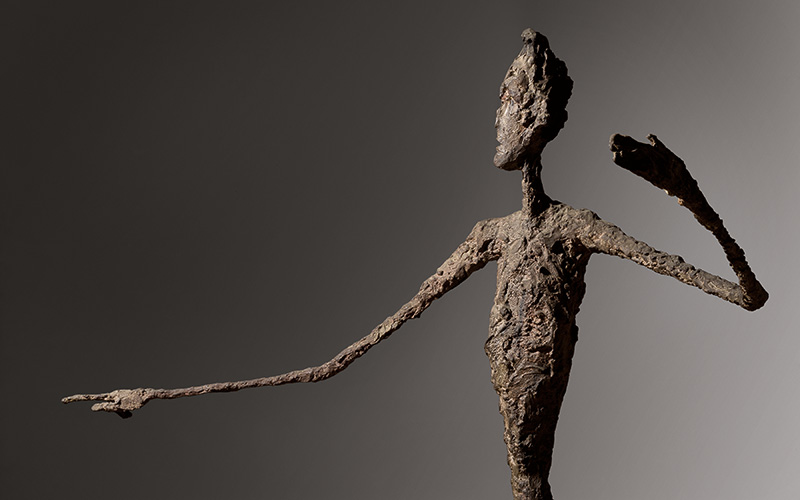
Giacometti’s L’Homme au doigt (1947) — The bronze that broke $100M [^13^]
May 11, 2015. Christie’s New York. I wasn’t in the room—I was watching the livestream, refreshing the page like a maniac. The estimates were whispering $130 million. When the hammer fell at $141.3 million, my coffee went cold. Just like that.
Steven A. Cohen bought it. The hedge fund guy. He already had the Walking Man. Now he had the Pointing Man too. That’s like owning both the Mona Lisa and The Last Supper, except in bronze and existential dread.
- Height: 5 feet 7 inches—roughly life-size, but stretched thin as grief
- Material: Bronze with hand-painted patina by Giacometti himself
- Edition: 6 casts + 1 artist’s proof. Most are locked in museums now.
- Previous owner: Fred Olsen’s estate—the same guy who owned Jackson Pollock’s Blue Poles
- Creation story: Made overnight. Literally.
Here’s the part that kills me. Giacometti made this thing in nine hours. Midnight to nine in the morning. The foundry guys were coming to collect the plaster, and he demolished the first version and started over. When they knocked on his door, the plaster was still wet. He told his biographer: “I did that piece between midnight and nine the next morning. I’d already done it, but I demolished it and did it all over again because the men from the foundry were coming to take it away.” [^13^]
That urgency—that desperation to get it right before the deadline—it’s frozen in the bronze. The arm extends. The finger points. Not at anything specific. Just… up. Toward whatever comes next. Or whatever doesn’t.
The sale crushed Giacometti’s previous record by $37.87 million. A 36% jump in five years. Name another asset class that appreciates 36% in half a decade. I’ll wait.
#2: The Walking Man That Broke the Hundred-Million Barrier
L’Homme qui marche I (Walking Man I) — Alberto Giacometti, 1960
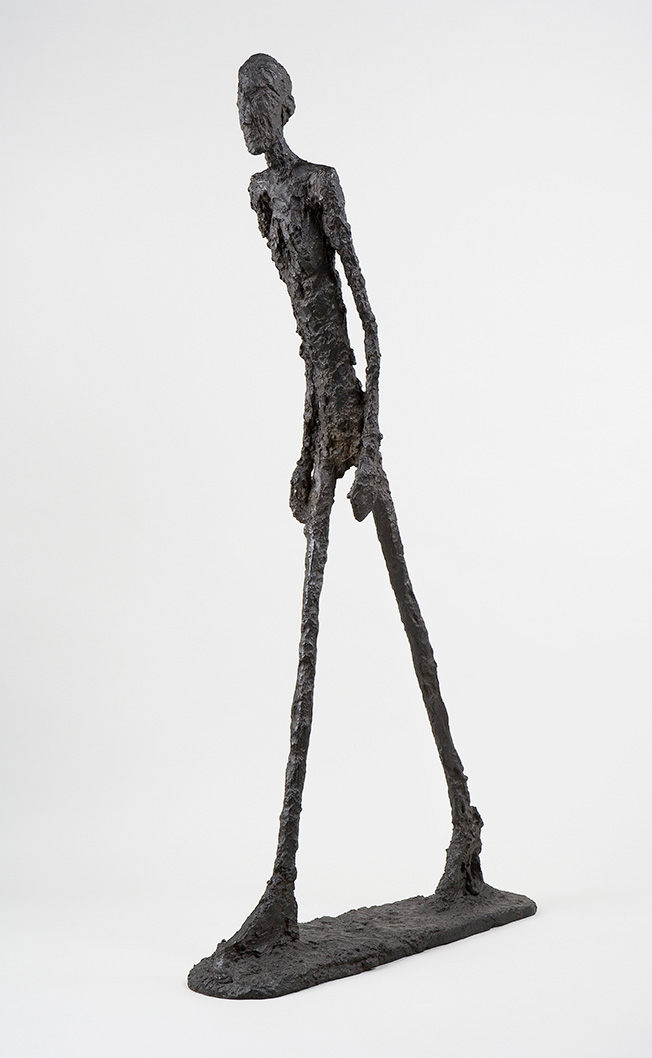
Walking Man I at Guggenheim Bilbao—the figure that walks forever [^4^]
February 3, 2010. Sotheby’s London. The estimate was £12-18 million. Conservative. Safe. The kind of estimate that says “we have no idea what this market is capable of.”
It sold for £65 million. $104.3 million. First sculpture ever to crack nine figures.
The figure stands six feet tall, all elongated limbs and rough, pitted bronze. Giacometti was obsessed with walking. Not walking to somewhere—just walking. The movement itself. Post-war Europe was full of people walking. Refugees. Survivors. People with nowhere to go but forward.
Quick aside: this sculpture is on the Swiss 100 franc note. When your art becomes actual currency, you’ve won.
#3: The Chariot From a Fever Dream
Chariot — Alberto Giacometti, 1950
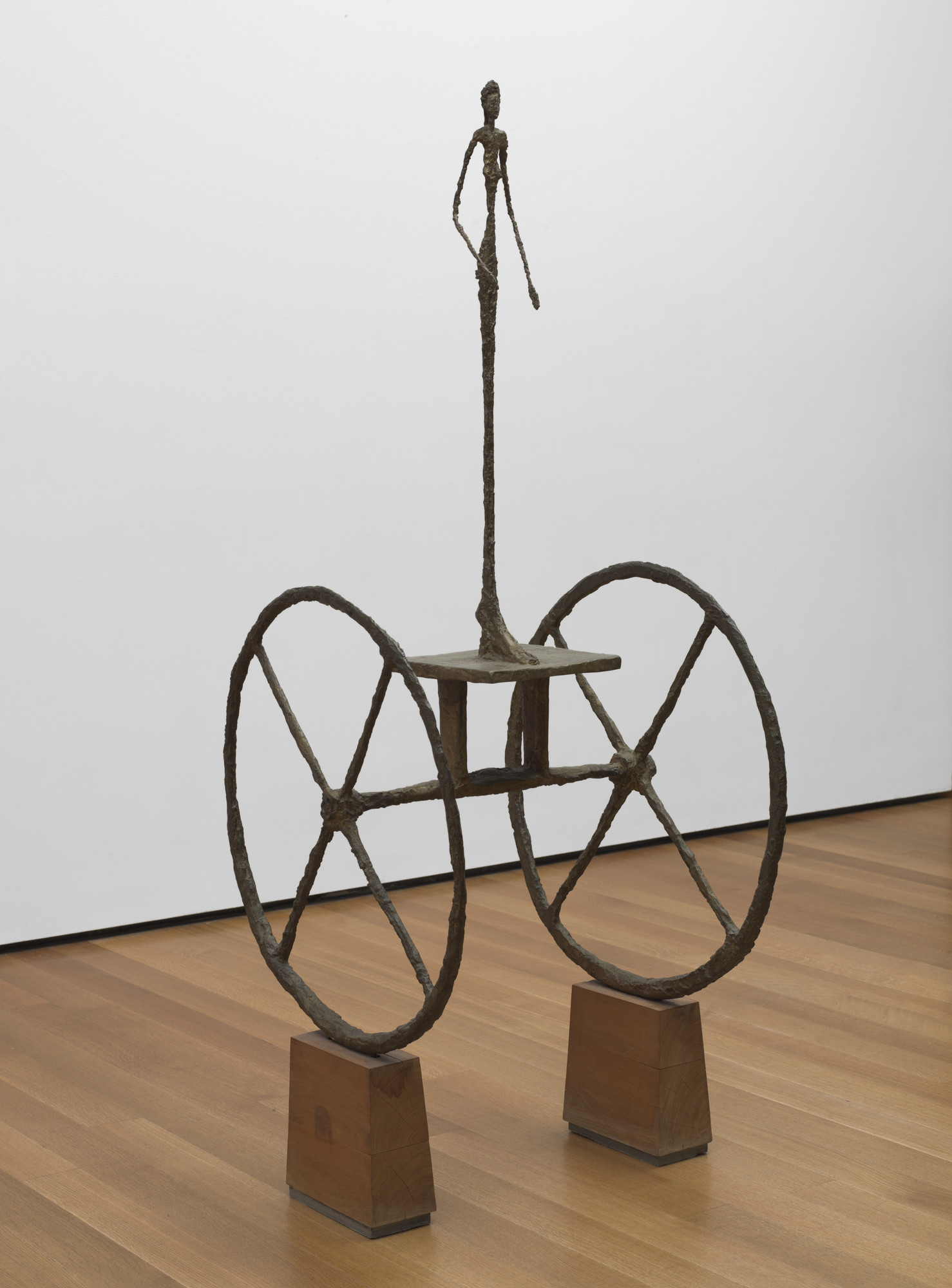
The Chariot (1950) at MoMA—mythology cast in bronze [^4^]
November 4, 2014. Sotheby’s New York. Cohen again. The man has a type.
The origin story here is pure Giacometti. 1938. He’s in a hospital, feverish, watching nurses push pharmacy carts down corridors. The image sticks—wheels, movement, that strange combination of mobility and confinement. Over a decade later, he casts it.
A spindly female figure stands on a wheeled platform. She’s simultaneously moving and frozen. Powerful and about to fall. At 145 cm, it’s smaller than the Walking Man, but it feels bigger. Maybe it’s the mythology. Maybe it’s those enormous wheels. Or maybe it’s just that incredible, precarious balance—like she could roll away at any moment, but never does.
#4: The Nose That Cost $78.4 Million
Le Nez (The Nose) — Alberto Giacometti, 1947
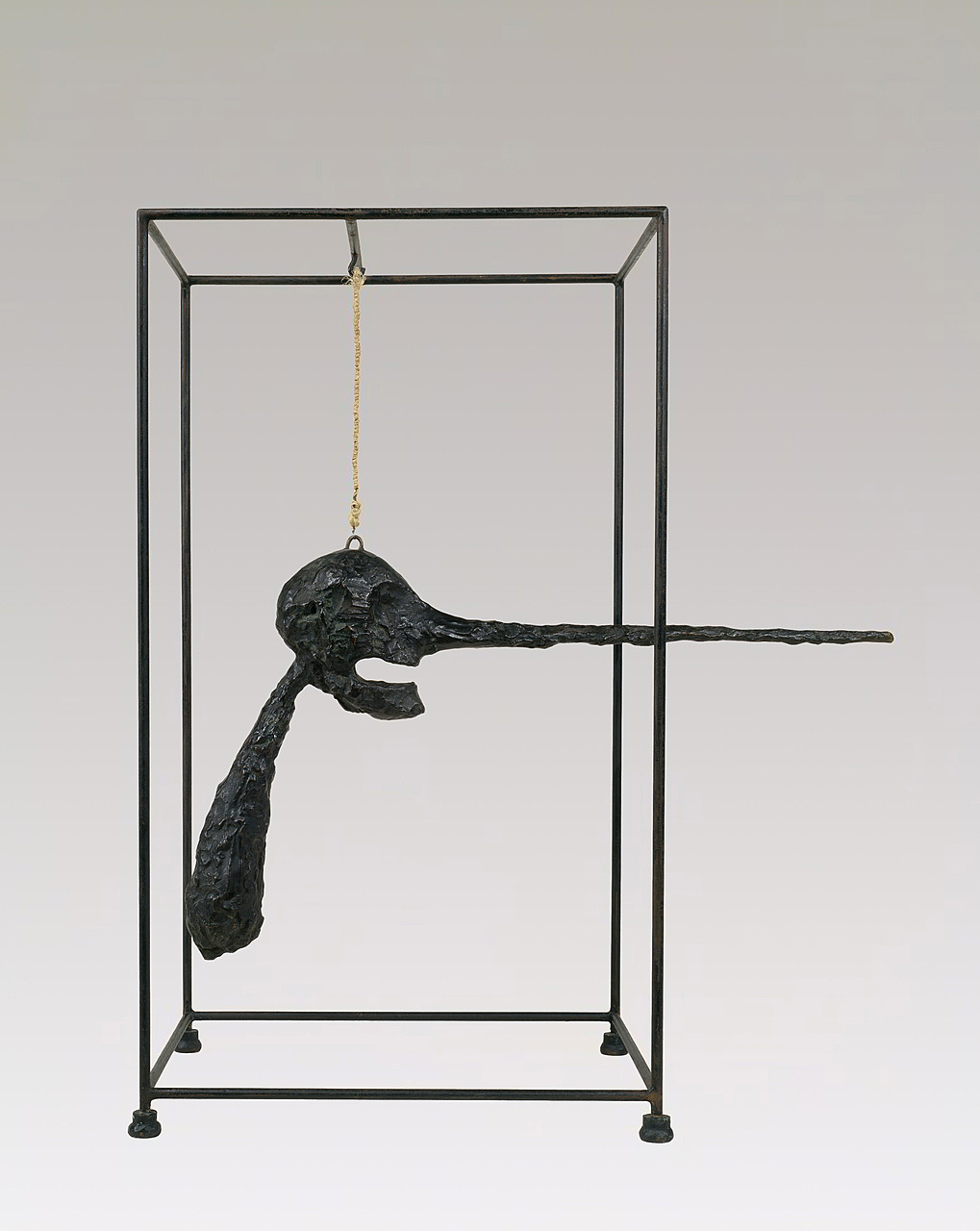
Le Nez (1947)—a suspended head that defies gravity and logic [^3^]
November 2021. Sotheby’s New York. The Macklowe Collection sale—$676.1 million total, and this bizarre, haunting sculpture led the charge.
Justin Sun bought it. Chinese crypto billionaire. He also bought a $6 million banana duct-taped to a wall a few years later, so maybe he’s just got a thing for weird art. But Le Nez is genuinely weird even by Giacometti standards.
A head with an enormous nose, suspended by a wire inside a cage-like steel structure. Eight casts exist. Three are privately owned. The rest are in museums, staring at visitors who don’t know whether to be fascinated or disturbed.
This is Giacometti’s Surrealist period speaking—he ran with the Surrealists in the 1930s before breaking away. You can see their influence: dream logic, unexpected scale, that psychological intensity that makes you want to look away and keep looking at the same time.
#5: Brâncuși’s $71 Million Muse
La Jeune Fille Sophistiquée (Portrait of Nancy Cunard) — Constantin Brâncuși, 1932
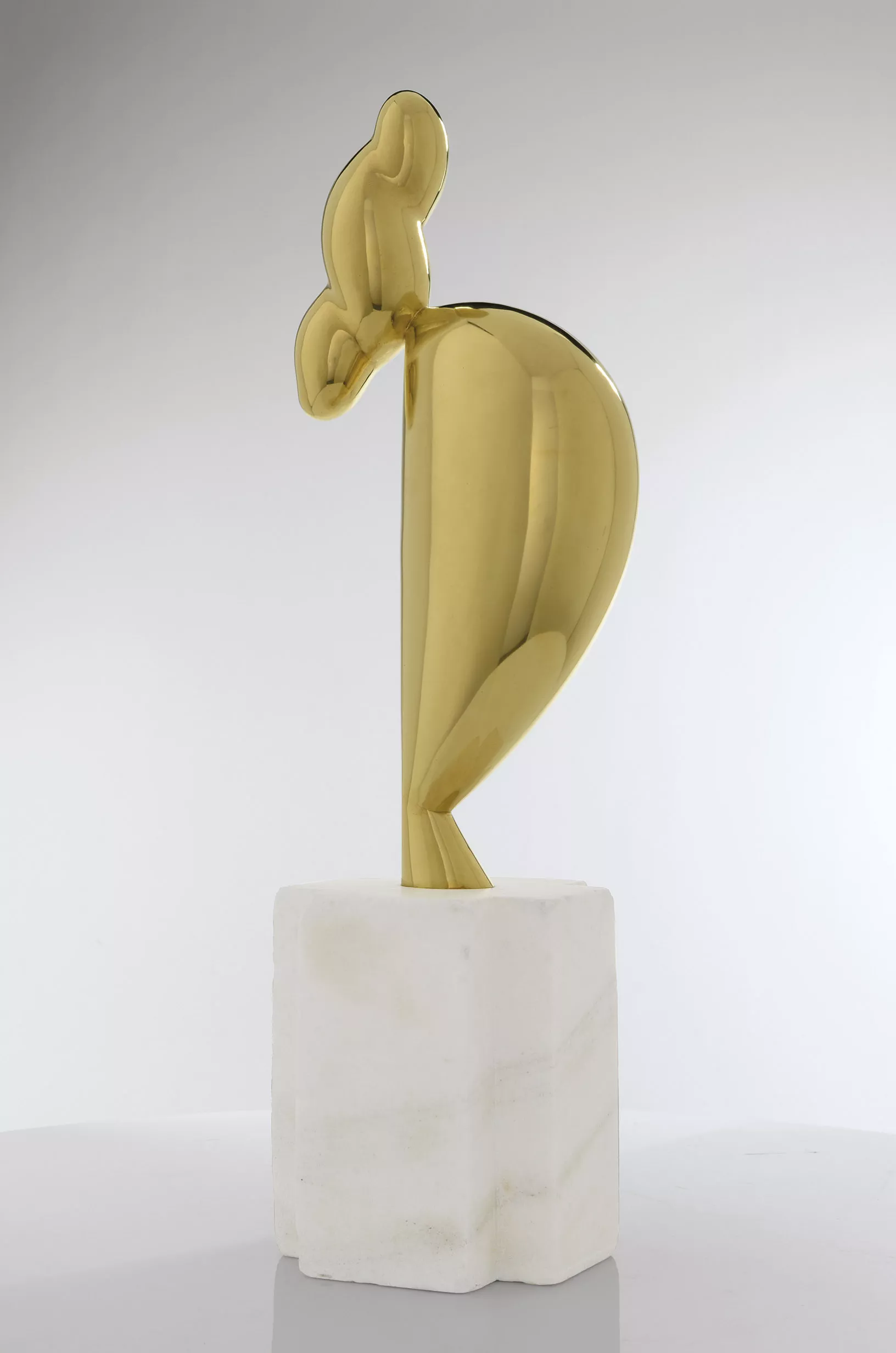
Brâncuși’s polished bronze portrait of the legendary socialite [^8^]
May 2018. Christie’s New York. This piece hadn’t seen the market in 60 years. Sixty years! When something that rare surfaces, collectors don’t just bid—they compete.
Nancy Cunard was the real deal. 1920s bohemian glamour personified. Lover of jazz, collector of African art, publisher of radical poetry. Brâncuși didn’t try to capture her likeness—he captured her essence. All curves and smooth surfaces, polished bronze gleaming like liquid gold.
Brâncuși believed in “truth to materials.” Let the bronze be bronze. Let the stone be stone. This sculpture is pure bronze being utterly, unapologetically itself.
#6: Modigliani’s $70.7 Million Head
Tête (Head) — Amedeo Modigliani, 1911-1912
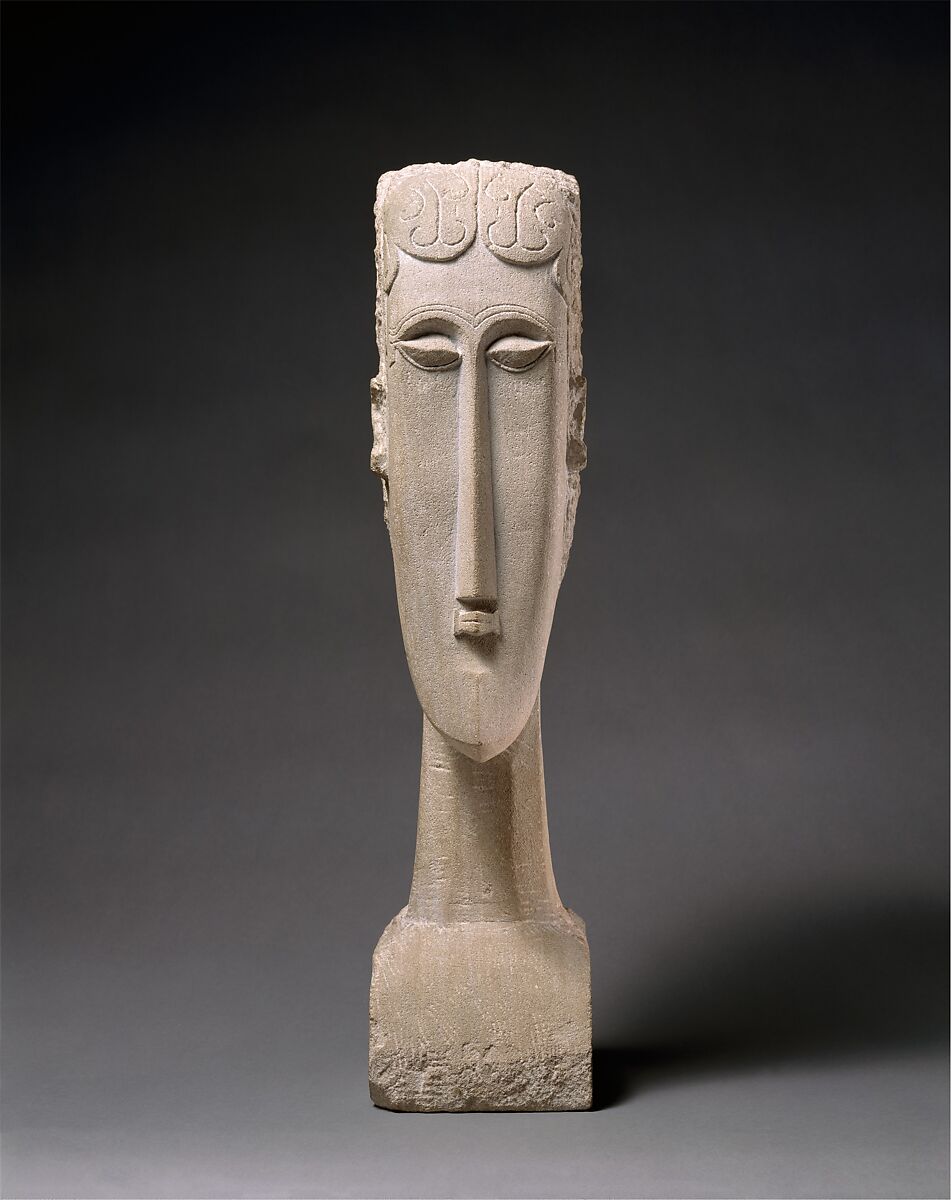
Modigliani’s Tête—limestone carved from Paris construction sites [^2^]
Carved from limestone scavenged from Paris construction sites. 28.75 inches of pure Modigliani—elongated features, mask-like face, that distinctive blend of African art influences and Italian Renaissance traditions.
Here’s the kicker: Modigliani only sculpted for five years. 1909 to 1914. Then he abandoned three-dimensional work entirely for painting. That makes his sculptures impossibly rare. Most are in museums. Very few remain in private hands.
When this hit the block at Sotheby’s in 2014, it set a record that still stands. The buyer knew what they were getting: a piece of art history that can never be replicated, from an artist who walked away from sculpture forever.
#7: The Bunny That Cost $91.1 Million
Rabbit — Jeff Koons, 1986
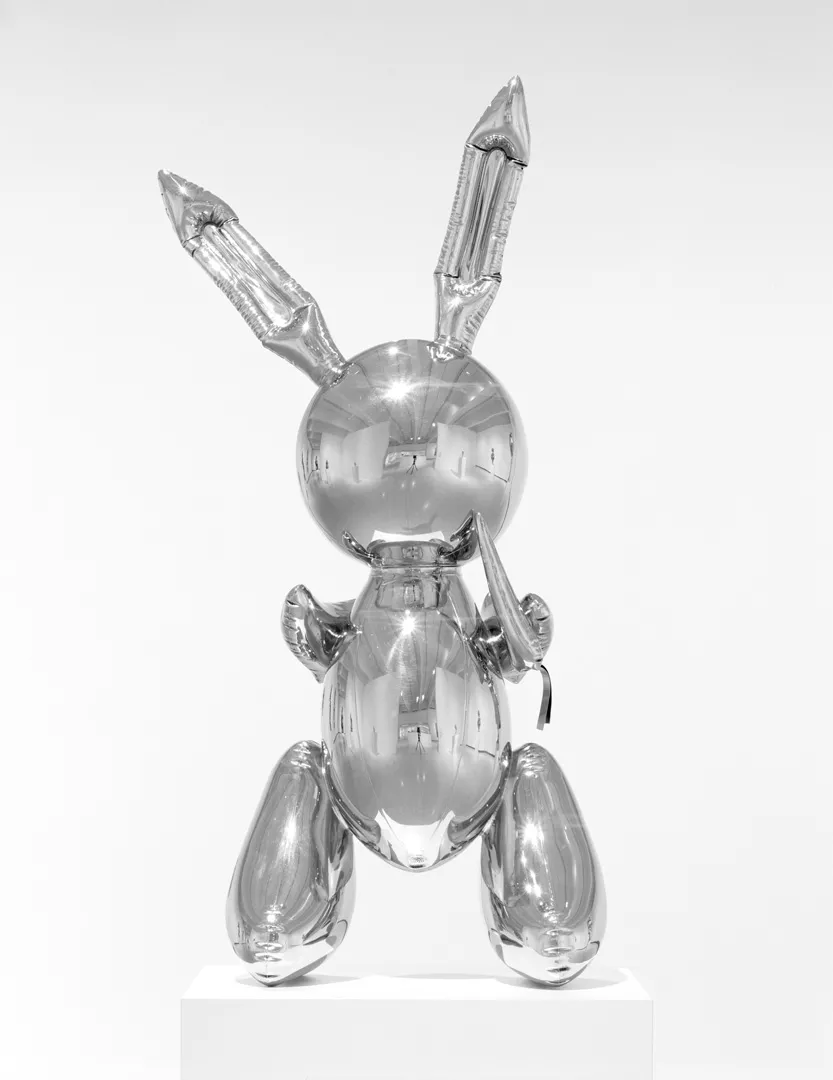
Jeff Koons’ Rabbit (1986)—stainless steel pretending to be a balloon [^1^]
May 15, 2019. Christie’s New York. History made. At $91.1 million, Jeff Koons became the most expensive living artist ever sold at auction. Sorry, David Hockney. Sorry, Gerhard Richter. The King of Kitsch claimed his throne.
Look at it. Really look. It’s a 41-inch stainless steel rabbit that looks exactly like an inflatable balloon toy. Except it’s not inflatable. It’s solid metal, mirror-polished to surgical precision. Koons spent years working with California fabricators to capture every wrinkle, every seam, every sag of the “balloon.”
The piece came from the estate of Samuel Irving Newhouse Jr.—Condé Nast heir, legendary collector. Cohen bought it. Yes, that Cohen. Three casts exist, plus one artist’s proof. The others? One at the Broad Foundation in LA. Another in a private collection. This was the last one available.
— Jeff Koons
Heavy stuff for a bunny.
#8: The Balloon Dog That Started It All
Balloon Dog (Orange) — Jeff Koons, 1994-2000
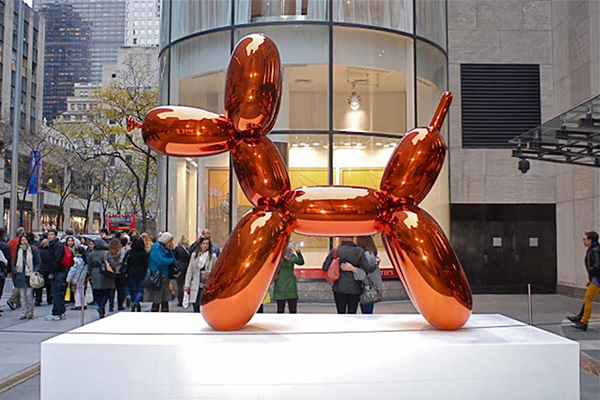
Balloon Dog (Orange)—10 feet of mirror-polished stainless steel [^5^]
November 12, 2013. Christie’s New York. Before the Rabbit, there was the Dog. Ten feet tall. $58.4 million. Then a record for a living artist.
Five exist: blue, magenta, orange, red, yellow. The orange one is the most famous, probably because of this sale. Jay-Z rapped about it in “Picasso Baby”: “Jeff Koons balloons, I just wanna blow up.”
The engineering is insane. Each one weighs tons but looks weightless. That’s the trick—making heavy metal look like air. Making permanence look like it could pop at any moment.
#9: Brâncuși’s Sleeping Muse
La Muse Endormie (Sleeping Muse) — Constantin Brâncuși, 1913
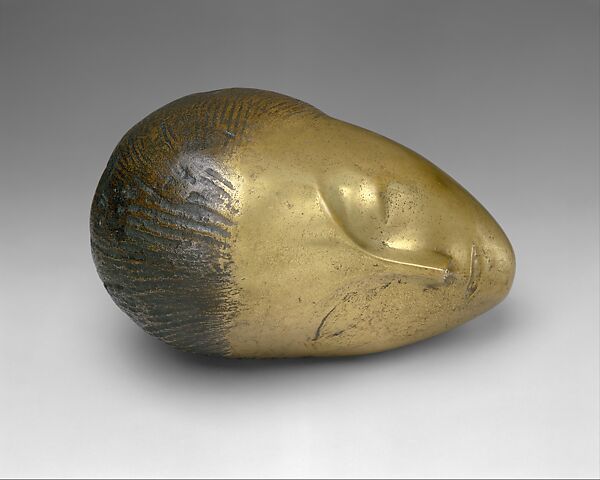
Sleeping Muse—9 inches of bronze that fetched nearly $60 million [^7^]
May 2017. Christie’s New York. Nine inches of bronze. An oval head depicting a sleeping woman. That’s it. No body. No elaborate base. Just serenity cast in metal.
Brâncuși spent years perfecting this form—multiple versions in marble and bronze, each slightly different. This particular cast had been hidden away for decades. When it emerged, it fetched nearly $60 million.
Provenance. Rarity. The name Brâncuși. That’s all it takes.
#10: The 5,000-Year-Old $57.2 Million Lioness
Guennol Lioness — Ancient Mesopotamian, c. 3000-2800 BCE
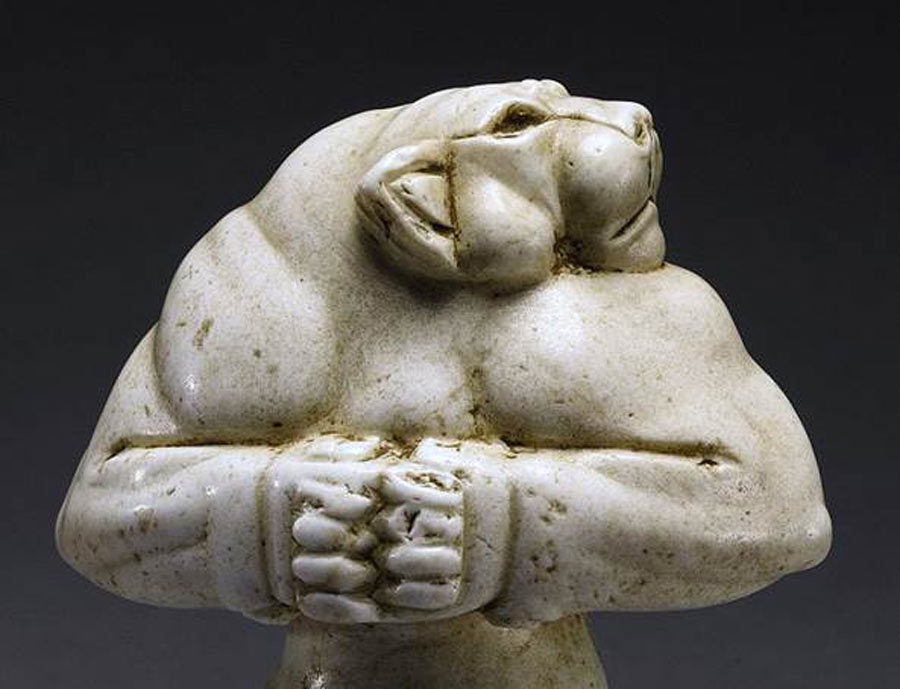
The Guennol Lioness—3.25 inches, 5,000 years old, $57.2 million [^2^]
December 5, 2007. Sotheby’s New York. This one breaks every rule.
It’s tiny—3.25 inches. It’s ancient—over 5,000 years old. It’s not by a “famous artist” in any modern sense. It’s a Proto-Elamite limestone figurine of a lioness with human features, discovered near Baghdad.
The Brooklyn Museum exhibited it from 1948 until the sale. Then it went to a private collector for $57.2 million—still the record for antiquities at auction.
Controversial? Obviously. Questions about provenance, cultural heritage, whether ancient artifacts belong in private collections at all. But the market spoke. $57.2 million for something older than the pyramids, smaller than your phone.
#11: Henry Moore’s Royal Record MARCH 2026
King and Queen — Henry Moore, 1952-53
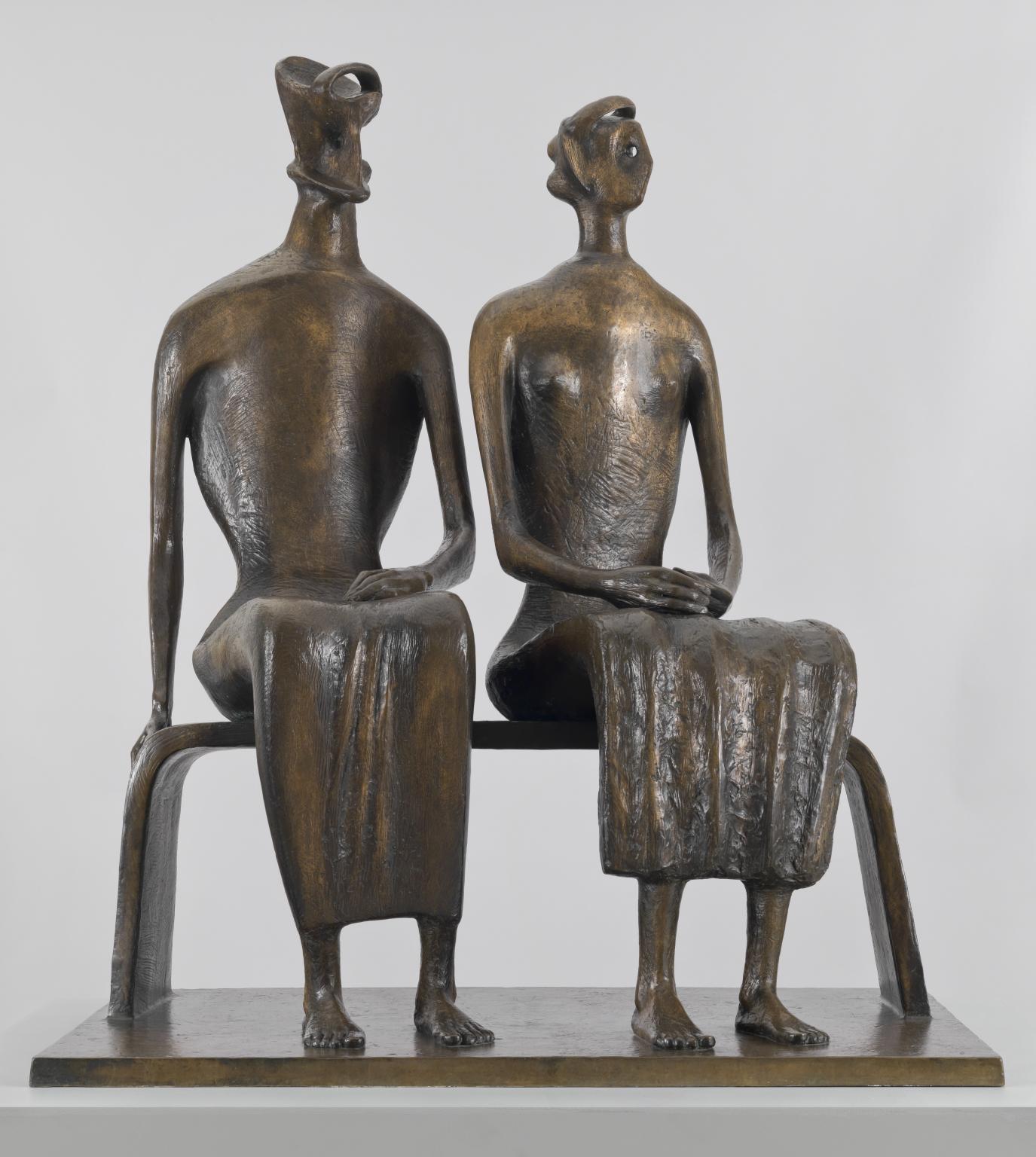
Henry Moore’s King and Queen—the last private cast, sold March 2026 [^3^]
March 5, 2026. Christie’s London. I watched this one live. Eight minutes of bidding. Six bidders. The price started at £6 million and climbed in £2 million chunks, then half-steps, before hammering at £22.5 million. With fees? £26.3 million. $35.2 million. A new record for Moore.
The sculpture had stayed in one family since 1954. They bought it directly from Moore. Seventy-two years. That’s not collecting—that’s stewardship.
Here’s why the price exploded: it’s the last cast in private hands. The other four? Hirshhorn Museum in DC. Moa Museum in Japan. Middelheim in Belgium. Norton Simon in California. When something this significant surfaces, collectors don’t just bid—they fight.
Moore said he wanted to capture “the contrast between human grace and the concept of power in primitive kingship.” Two elongated figures on a bench, looking up at something we can’t see. Art critic Robert Melville called it “Moore’s finest achievement since the war.” [^1^]
The timing matters. This sale came during Christie’s marathon London week—three sales totaling £197.5 million, up 52% year-on-year. The market is back. And sculpture is leading the charge. [^1^]
#12: The Spider That Represents All Women
Spider (Maman) — Louise Bourgeois, 1996
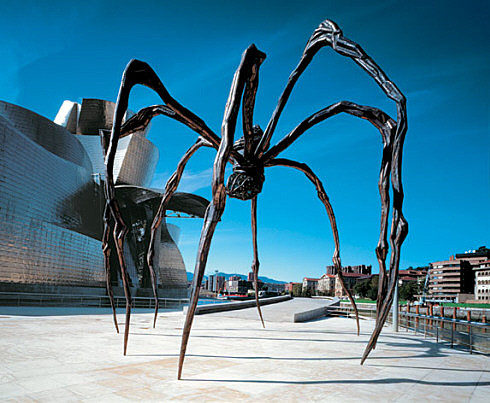
Bourgeois’ Maman at Guggenheim Bilbao—18 feet of maternal terror [^6^]
2019. This sale made Louise Bourgeois the highest-selling female sculptor at auction. A record that still stands.
Bourgeois’ spiders are everywhere now. Massive, intimidating, weirdly maternal. She called them “Maman”—French for “Mommy.” For Bourgeois, the spider represented her mother: protective, clever, patient, slightly terrifying.
This one spans over 18 feet. Bronze legs with a polished patina. A hollow abdomen containing marble eggs. Industrial and organic. Mechanical and biological. Bourgeois was in her 80s when she created this series—decades of psychoanalysis distilled into arachnid form.
The market for women sculptors is still undervalued. Bourgeois cracked the door open. Barbara Hepworth, Rachel Whiteread, Eva Hesse—they’re coming next.
What These Prices Actually Mean (Besides “Rich People Have Money”)
“In 1945 I swore to myself that I didn’t want to let my figures get smaller and smaller, not even by an inch… You don’t feel your weight. I wanted – without having thought about it – to reproduce this lightness, and that by making the body so thin.”
— Alberto Giacometti
Let’s be real. $141 million for bronze sounds absurd. But sculpture operates differently than painting. Always has.
A painting is a surface. An image. Light hits pigment and reflects back into your eye. But sculpture? Sculpture occupies space. It casts shadows that change throughout the day. It exists in three dimensions, occupying the same physical reality as you. You walk around it. It walks around you.
Then there’s the technical reality. Paintings are usually made by one person. Sculptures—especially monumental ones—are industrial operations. Foundries. Engineers. Fabrication teams. Months or years of work to realize one vision.
Koons doesn’t polish his own stainless steel. He can’t—it’s physically impossible. His Rabbit required a team of California engineers with precision equipment. That costs money. Serious money. So when you buy a Koons, you’re buying the execution, the fabrication, the technical mastery. You’re buying the fact that someone figured out how to make metal look like a balloon.
The Giacometti Monopoly
Four of the top twelve. Four! By the same dead Swiss guy. Why?
Rarity, first. Giacometti made small editions—six casts plus one artist’s proof. Most are in museums now. MoMA. The Tate. When one hits the private market, it’s an event.
But it’s more than scarcity. Giacometti captured something essential about the 20th century—existential anxiety, the fragility of existence, the isolation of modern life. His elongated figures look like they’ve been worn down by existence itself. Stretched thin. Universal yet deeply personal.
Plus—they photograph well. Instantly recognizable. That’s crucial in the art market. Collectors want pieces that announce themselves. Giacometti’s walking men and pointing figures? Iconic. That’s worth a premium.
The Living Artist Premium
Koons holds two spots. Unprecedented for a living artist. Most records belong to dead masters—Giacometti, Brâncuși, Modigliani. But Koons is alive. Still working. Still producing.
What does that tell us? Contemporary sculpture is hot. Collectors aren’t just looking backward; they’re betting on the future. Koons speaks to now—consumerism, childhood, mass production, spectacle. It’s art about the world we actually inhabit.
There’s also the investment angle. Living artists can create more work. Have retrospectives. Win prizes. Generate headlines. Dead artists can’t. Buying a major Koons is partly a bet on continued cultural relevance.
Market Trends: The 2025-2026 Recovery
The numbers don’t lie. The top 100 auction lots in 2025 totaled $2.13 billion—up from $1.8 billion in 2024. [^4^] That’s an 18% jump. Confidence is returning.
The Henry Moore sale in March 2026 confirmed it. £197.5 million across three Christie’s sales in London. Up 52% year-on-year. [^1^] When a single sculpture doubles its estimate and sets a new artist record, that’s not a fluke. That’s momentum.
What should serious collectors watch?
- Brâncuși sleepers: If another major Bird in Space or Sleeping Muse surfaces, expect $70-80 million range.
- Rodin gaps: Auguste Rodin is weirdly underrepresented here. A major Gates of Hell cast or unique marble could surprise everyone.
- Women sculptors: Bourgeois proved the market exists. Barbara Hepworth, Rachel Whiteread, Eva Hesse—they’re still undervalued relative to male counterparts.
- Ancient antiquities: The Guennol Lioness proved appetite exists. Museum deaccessions could supply rare pieces.
Why Sculpture Endures
I’ve been tracking art markets for fifteen years. Paintings trend. Photography spikes and crashes. Digital art—who knows. But sculpture? Sculpture endures.
There’s something primal about it. Humans made sculptures 40,000 years ago, long before we painted caves. The Venus of Willendorf. Egyptian colossi. Greek marbles. Renaissance bronzes. Modernist abstractions. Contemporary steel monsters.
When you buy a sculpture, you’re not just buying an investment. You’re buying physical space. Weight. Presence. That $141 million Giacometti? It will still be pointing toward the ceiling when everyone who witnessed its sale is dust. Bronze doesn’t fade. It doesn’t tear. It doesn’t corrupt. It just… remains.
In a world of NFTs and virtual reality and digital everything, there’s something radical about owning something you can touch. Something that weighs as much as a car. Something that requires cranes to move and climate control to preserve.
Sculpture is stubborn. Inconvenient. Demanding.
That’s exactly why it commands these prices.
Explore More Elite Art Market Insights
Discover the world’s most valuable artworks, auction records, and investment-grade collectibles.
Visit MostExpensives.com →Sources & References
All auction prices include buyer’s premium and are verified through official auction house records. Data current as of April 2026.
• Christie’s Auction House — Sale records for Giacometti, Koons, Moore, Brâncuși [^1^]
• Sotheby’s Auction House — Sale records for Walking Man I, Modigliani, Guennol Lioness [^13^]
• HENI News — Giacometti record details and creation story [^13^]
• The Value — Henry Moore 2026 sale coverage and market analysis [^1^]
• Artsy — 2025 auction market data ($2.13B top 100) [^4^]
• Guggenheim Museum — Louise Bourgeois Maman [^6^]
• MoMA — Giacometti Chariot [^4^]
• Ancient Origins — Guennol Lioness history [^2^]
Last updated: April 10, 2026 • All images courtesy of respective museums and auction houses • MostExpensives.com
12 Most Expensive Sculptures in the World — Verified Prices, Market Drivers & What Comes Next
World’s Most Expensive Art Auctions: Billion-Dollar Records
Most Expensive Rings in the World 2026: The $71.2M CTF Pink Star Still Reigns – Ranked by Verified Auction Records
Inside a $500 Million Superyacht: What Pure Luxury Actually Looks Like
Most Expensive Modern Art 2025—Record Prices Revealed
The Most Expensive NFT Art Ever Sold: What Happened After the Hype
The World’s Most Expensive Private Islands
Leave a Reply